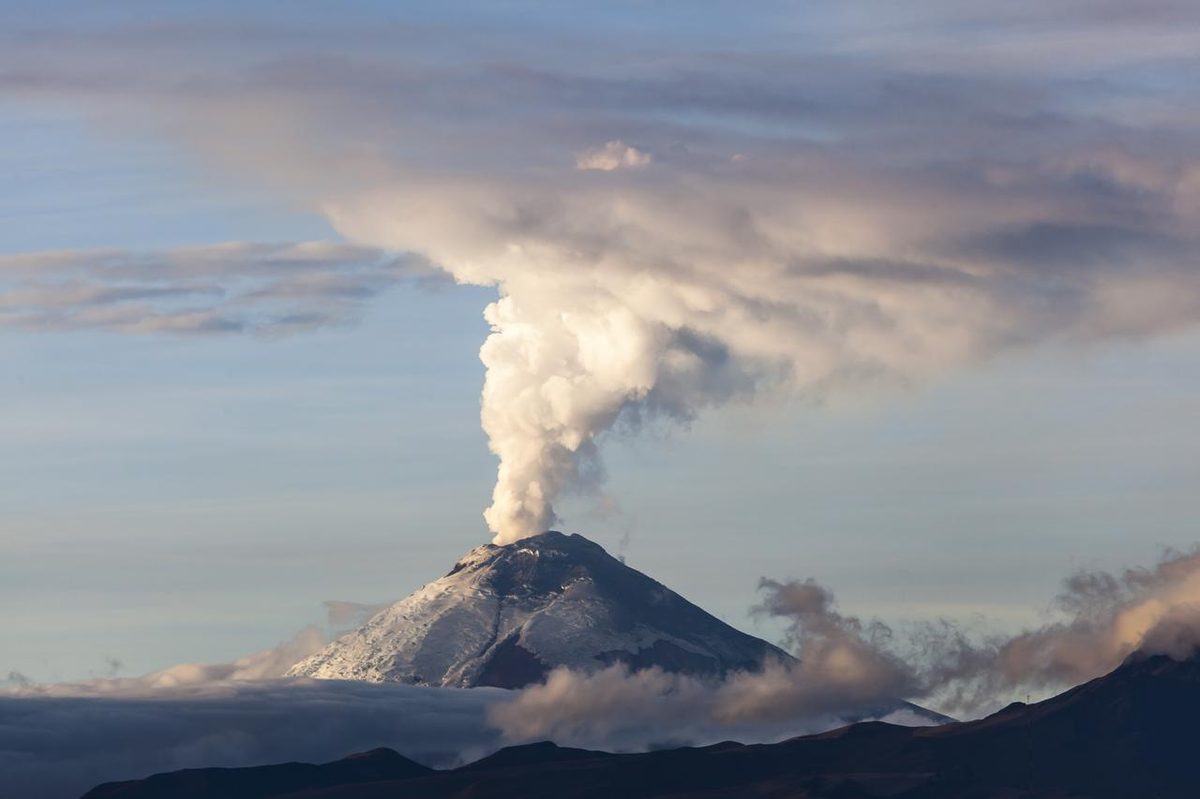
The most powerful volcanic eruptions do not only destroy landscapes. They actively cool the climate for years. This happens because they pump chemical particles into the atmosphere, thereby fundamentally changing its composition. These large events release large amounts of gas and ash. Both elements are directly responsible for climate effects.
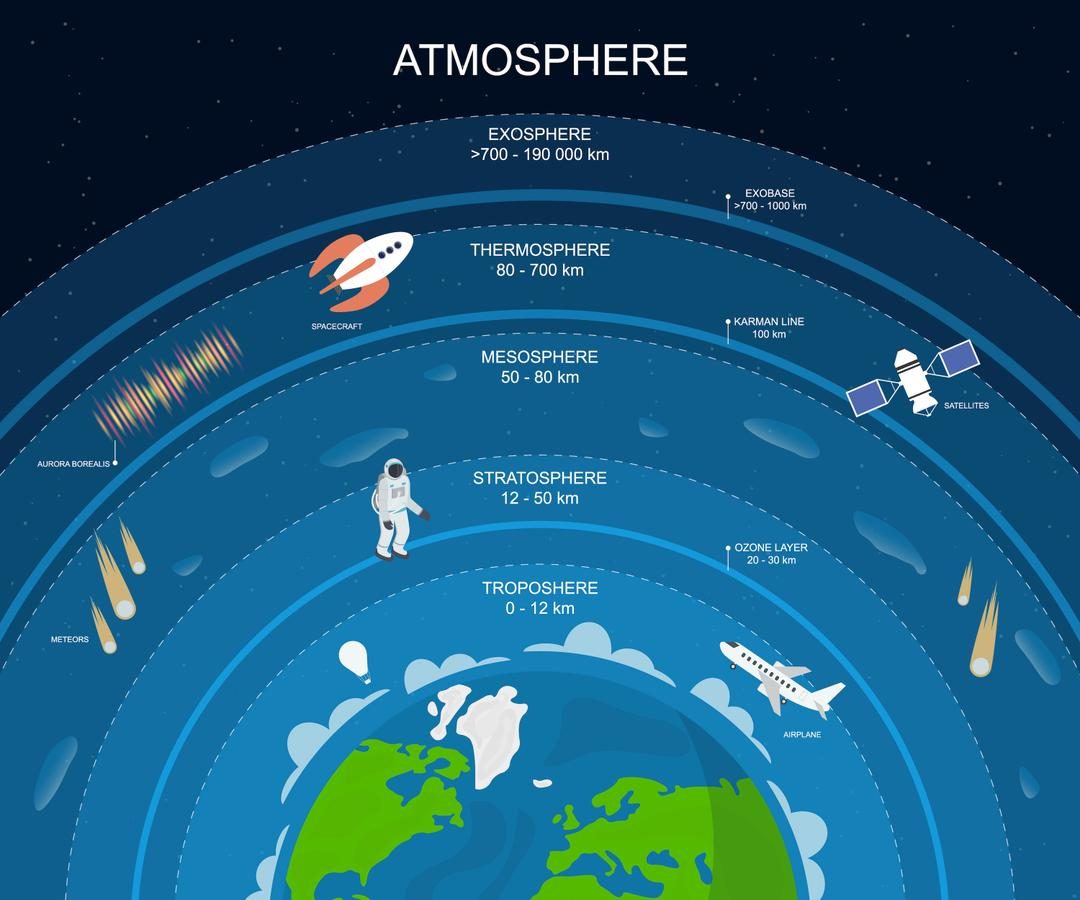
They can linger in the troposphere. This layer is located between 5 and 15 kilometers above sea level. During this time, they reduce the solar radiation reaching the earth. Temperatures are dropping. Even the trajectories of weather disturbances change.
How aerosols block solar radiation
Sulfur dioxide is thrown into the stratosphere. This layer is 12-50 kilometers high. There it mixes with atmospheric water vapor. The gas turns into liquid sulfuric acid. It becomes an aerosol. These are fine, solid or liquid particles that float in the air.
At this altitude, the winds are strong. They ensure that ash and gases circulate around the world in just three weeks. However, the negative “radiative forcing” lasts longer. This is the process by which particles block solar radiation from reaching the Earth. It can take two to three years.
Ash also contributes to the formation of clouds. This leads to rain. You might know these as acid rains.
Aerosols absorb and reflect solar radiation back into space. The stratosphere warms a few degrees. In the lower layer of the atmosphere, the troposphere, the temperature drops sharply. The energy absorbed from the earth’s surface decreases by 5-10 percent.
Global temperatures may drop in the months and years following an eruption. The drop varies from a few tenths of a degree to 1°C in the strongest events. This mechanism explains why history remembers certain eruptions, not only for their destruction, but also for the cold that followed. Air holds its breath. Then the long cold begins.
Mount Pinatubo: Volcano Thermometer Drop
The clearest example of a volcano actually changing global climate patterns is Mount Pinatubo. On June 15, 1991, the volcano in the Philippines exploded. The amount of material pushed out was amazing. It is estimated that the mountain pumped about 20 million tons of sulfur dioxide (SO2) high into the stratosphere – up to 20 kilometers above the surface.
It wasn’t just smoke. It was chemical protection.
The sulfur dioxide gas spread and created a fog that blocked sunlight. Depending on the location, solar radiation decreased by 1-5%. The result was measurably cold. The Earth’s average temperature decreased by 0.1-0.6 degrees Celsius. In some places, the decrease was 1.3 degrees Celsius over the next three years.
The cooling did not happen everywhere at the same time. It started in the tropics. Then it moved. It spread to the middle latitudes. Eventually it reached high latitudes. It only took a few years for this change to take over the world.
The Pinatubo volcanic eruption proves that massive volcanic events can at least temporarily override other climate factors.
Scientists use this event to understand how atmospheric aerosols work. They act like little mirrors in the sky. If you spray enough of them into the upper atmosphere, they will reflect heat back into space. It’s a natural, albeit violent, form of solar radiation management.
Pinatubo’s data remains the crucial benchmark. It shows how quickly the climate system can respond to sudden changes in the atmosphere. And it highlights the difference between global averages and local effects.
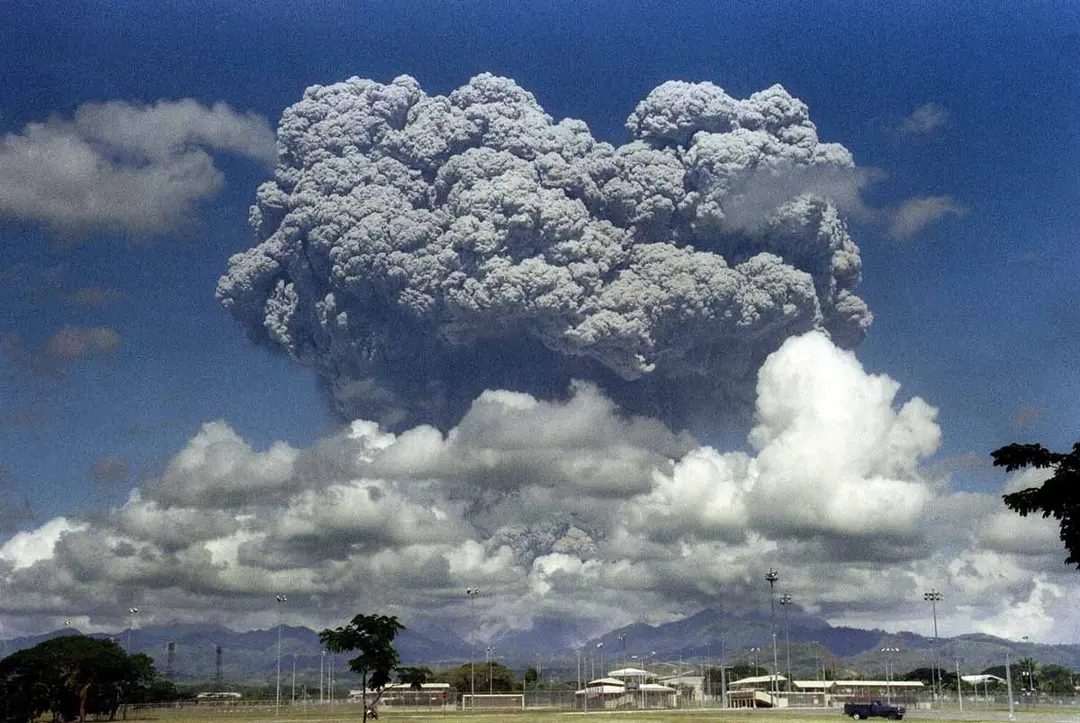
Volcanic eruptions are part of the puzzle of natural climate variability. But not every big blast changes the weather.
Scientists have studied patterns in past eruptions. Some led to “volcanic winters”. The Toba supervolcano in Indonesia erupted 73,000 years ago. It could have triggered an ice age. The result was a massive decline in population and biodiversity.
The impact on the climate depends on several factors. The power of the eruption matters. Duration matters. The height of the ash cloud matters. Location is most important.
Equator vs. high latitudes
An eruption at the equator has a greater effect on the climate. The eruption of Pinatubo in the Philippines is a prime example. Ash and aerosols spread to both hemispheres. That spreads the cooling effect.
High-latitude eruptions at high latitudes have less global impact. The Katmai volcano in Alaska erupted in 1912. It stayed mostly in its own region. Cooling was limited.
Location determines range. Spread equals impact.
The Height Barrier
Not all ash clouds rise high enough to be important. Iceland’s Eyjafjallajökull volcano shut down air traffic in 2010. It got national attention. It did not change the climate.
The ash cloud only reached 11 kilometers. That is too low. It did not enter the stratosphere. The particles fell back down too quickly. They did not block enough sunlight.
Height is everything.
The Hunga Tonga Surprise
The Hunga Tonga eruption on January 15, 2022 was spectacular. It was also powerful. 400 million kilograms of sulfur dioxide into the air. The cloud reached 30 kilometers high.
You would think that would cool the planet. Denison University’s Department of Geosciences disagrees. They say it wasn’t strong enough to lower global temperatures.
The sheer volume of gas was high. The height was exceptional. Yet the climate response was muted. Why? The chemistry of the injection may have offset the cooling potential. Or the distribution was uneven. The data suggest that no significant cooling occurred.
Real-World Implications
Understanding these nuances helps us predict future risks. We cannot assume that every eruption brings a cold snap. We need to look at the details. Height. Latitude. Chemical composition.
Climate science is not just about size. It is about context. A small eruption in the right place can have a bigger impact than a huge one in the wrong place.
The Hunga Tonga event reminds us that nature is complex. Simple rules don’t always apply. We watch the skies. We measure the clouds. We wait to see what happens next.
The atmosphere doesn’t care about our expectations. It responds to physics. And physics is rarely straightforward.