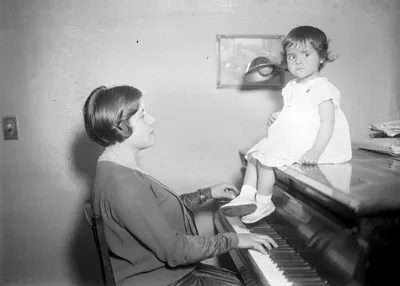
Guiomar Novaës didn’t just play the piano. He has bent it to his will.
Born on February 28, 1896 in the quiet town of São João da Boã Vista, Brazil, he became one of the most important classical musicians of the 20th century. His life ended on March 7, 1979 in São Paulo. But for decades, her hands were the main event.
He was particularly famous for his interactions with romance heavyweights. In particular, his interpretations of Frédéric Chopin and Robert Schumann were legendary. People just didn’t listen; they knew the music.
From São Paulo to Paris
His journey did not start in the conservatory hall. It started with early studies in São Paulo under Luigi Chiafarelli. But the Brazilian government saw something rare in his talent. They sent him to Paris.
The Paris Conservatoire in 1909 was a completely different beast. It was competitive. It was reckless.
Novaës entered and placed first in the entrance exams. It was no accident. He studied under the influential Isidor Philippi. In 1911, he completed his studies with first prize. He had arrived.
Global rise
His debut in Paris in 1911 was a breakthrough. Then came London in 1912. New York City followed in 1915. Every city greeted them with praise. He built a concert career that spanned over 50 years. That’s a long time to attract an audience.
But he was not just a stranger in European music circles. He was the master of the sound of his homeland. He performed works by Brazilian composers. She even defended her husband Octavio Pinto’s music. It wasn’t just background noise. It was an ID.
The voice of grace
You might wonder why he isn’t a household name these days. The answer can be found in the recordings.
After the early 1920s, he made many records. But few of them really capture what made them special. Her style was graceful. It was poetic. It was extremely lyrical. You have to listen closely to find the moments where the magic shines through.
Most recordings from this period compress the dynamic range. They even out the nuances. Novaës’ touch was too subtle for the technology of the time. The full strength of their artistic work remains hidden in the gaps between the notes.
What did he actually hear in the score? We can only guess. But the recordings suggest it was someone who wasn’t calling for applause. He played the music himself.
The rest is silence.