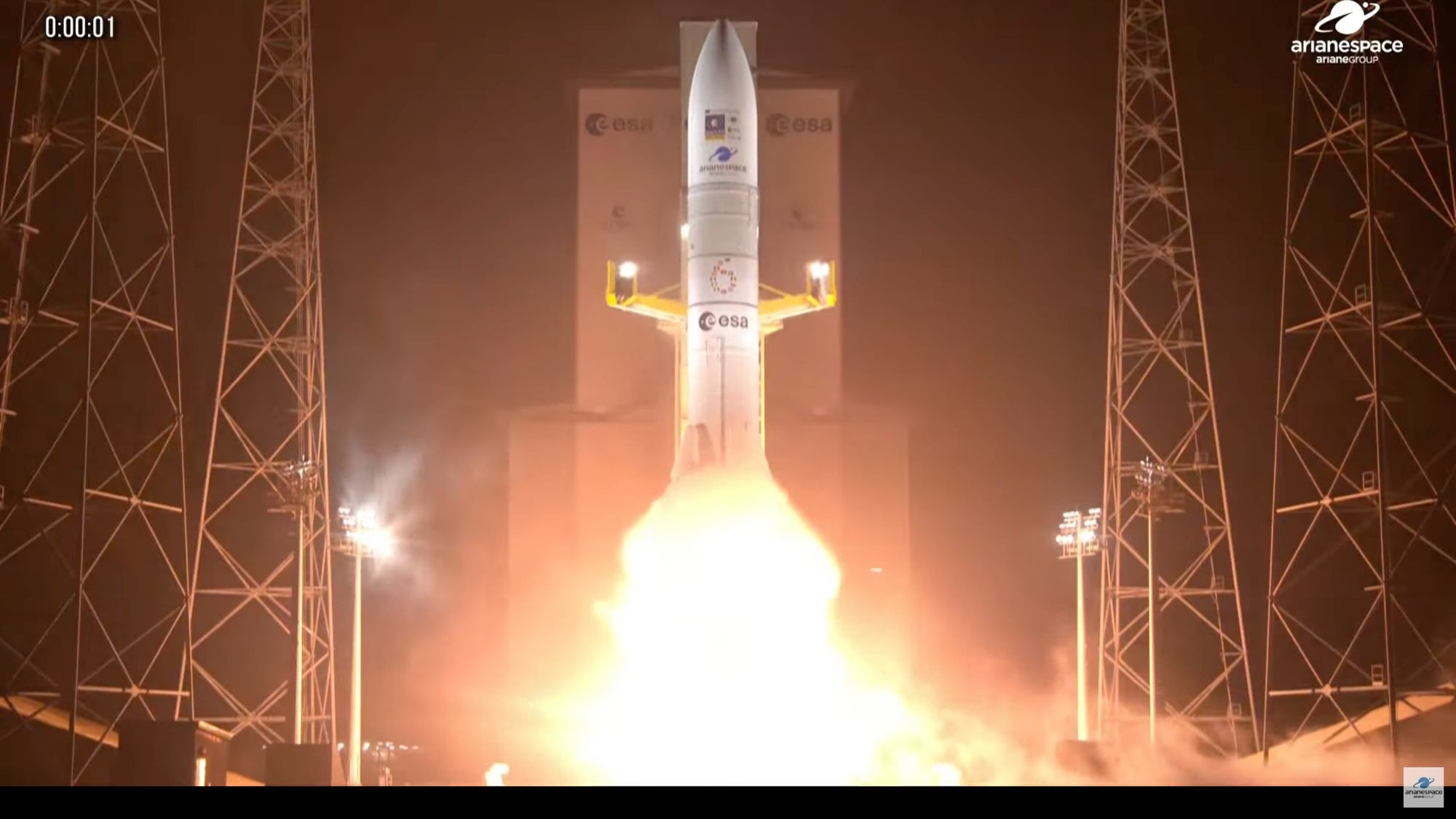
Europe has taken a major step toward securing its independent access to space and bolstering its Galileo navigation system with the successful launch of two new satellites aboard the Ariane 6 rocket. The launch, which occurred on December 17th from Kourou, French Guiana, marks a turning point for European space capabilities.
Reasserting European Space Independence
For years, Europe relied on a mix of its own Ariane 5 rockets, Russian Soyuz boosters, and, more recently, SpaceX’s Falcon 9 to deploy its Galileo satellites – the continent’s alternative to the U.S.-operated Global Positioning System (GPS). Following Russia’s invasion of Ukraine in 2022, access to Soyuz was cut off, leaving Europe dependent on American launch services. The operational Ariane 6 now allows Europe to conduct these missions independently.
Galileo Constellation Expansion
The two newly launched satellites (Galileo L14) will join the existing constellation of 26 operational spacecraft orbiting at an altitude of 14,429 miles (23,222 kilometers). After a 3-hour and 20-minute deployment process, the satellites will spend three days unfolding their solar arrays and testing core systems. Over the next four months, they will drift into their final orbital positions before becoming fully operational.
Ariane 6: A Reliable Heavy-Lift Solution
This mission was the fifth successful launch for the Ariane 6, with the program demonstrating increasing reliability over the past year. The 1,610-pound (730 kilograms) Galileo satellites represent a critical payload for the new rocket, proving its capacity for heavy-lift operations. The Ariane 5, which previously handled these missions, was retired in 2023.
The successful deployment of Galileo satellites via Ariane 6 signifies Europe’s renewed confidence in its own space infrastructure and its commitment to maintaining an independent global navigation system. This launch not only expands the Galileo constellation but also secures Europe’s strategic position in the evolving space landscape.