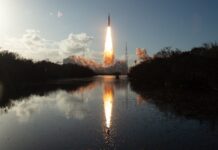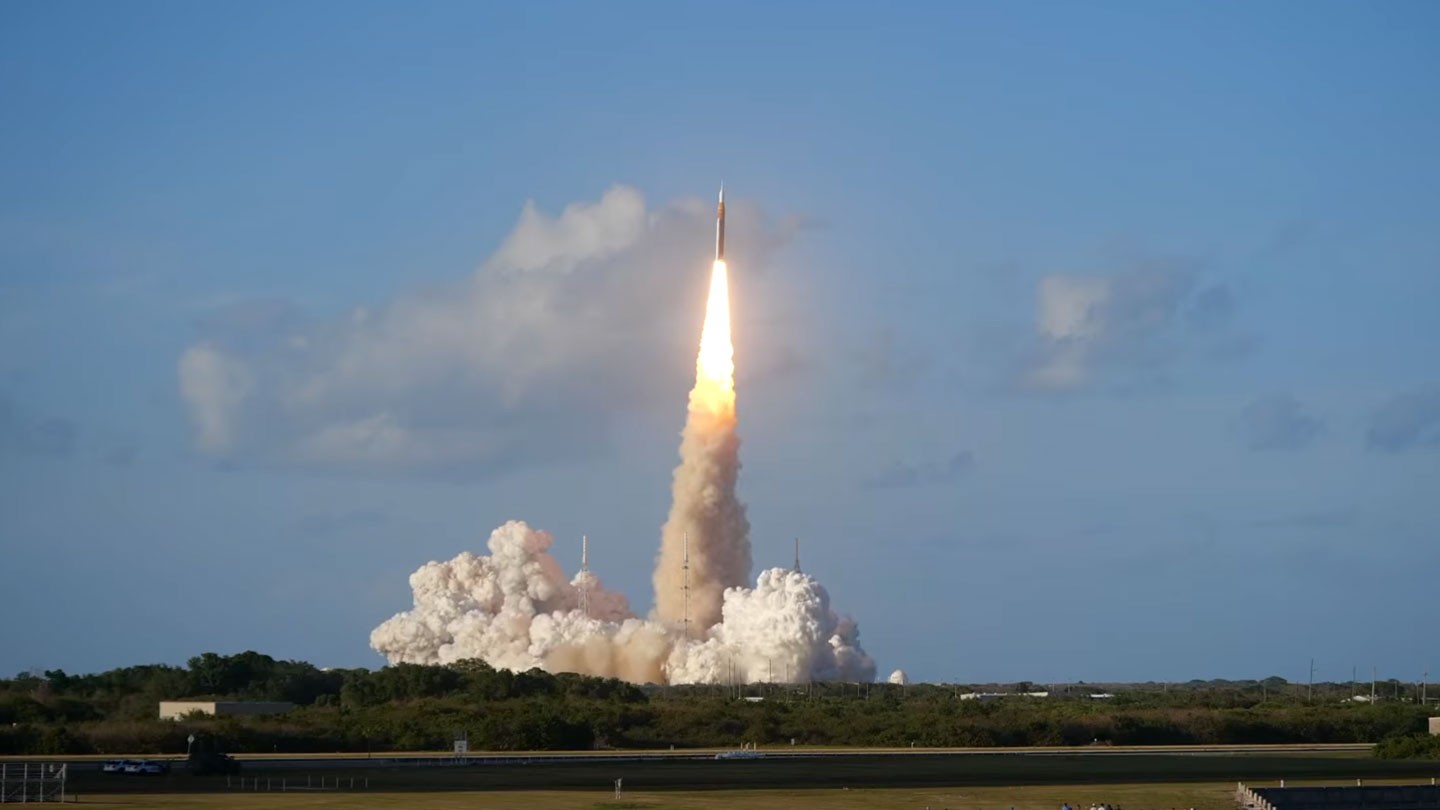
For the first time in over 50 years, a crewed mission has departed Earth bound for the Moon. On April 1, 2026, NASA’s Artemis II launched from Florida’s Kennedy Space Center, initiating a ten-day journey that will carry four astronauts farther into space than any human before – exceeding 400,000 kilometers from Earth.
Historic Voyage and Mission Goals
This mission marks a pivotal step in NASA’s Artemis program, which aims to establish a sustainable human presence on the Moon. Artemis II isn’t designed to land; rather, it serves as a critical test flight for the Space Launch System (SLS) rocket and the Orion spacecraft’s deep-space capabilities. These systems are essential for future Artemis missions, including Artemis IV and V, which are slated to land astronauts on the lunar surface in 2028.
The crew – Commander Reid Wiseman, Victor Glover, Christina Koch, and Canadian astronaut Jeremy Hansen – will fly within 8,000 kilometers of the Moon’s surface. Their primary objective is to validate the performance of SLS and Orion in a high-stress environment.
Initial Launch and In-Flight Adjustments
The SLS rocket propelled Artemis II into space in approximately eight minutes, after which its main engines detached. The crew reported a toilet malfunction shortly after reaching orbit, but it was resolved within hours. Orion then executed manual flight tests by approaching and circling the detached rocket stage before handing control back to mission controllers on Earth.
Lunar Trajectory Confirmed
As of April 2, Orion has successfully entered a lunar trajectory after a nearly six-minute engine burn. The spacecraft is expected to reach its closest approach to the Moon around 7:00 p.m. Eastern time on April 6. NASA officials suggest the crew may witness a rare solar eclipse as Orion passes behind the Moon, blocking the sun. Real-time tracking of the mission is available via the Artemis Real-time Orbit Website and NASA’s mobile app.
A New Generation of Explorers
Artemis II carries significant symbolic weight. Victor Glover is the first person of color to venture beyond low Earth orbit, and Christina Koch is the first woman to do so. Experts like Lindy Elkins-Tanton of UC Berkeley emphasize the unifying power of space exploration, stating that distinctions such as “gender, race, background, nationality… fade into the background when you become a great team.”
Delayed Launch and Future Ambitions
The launch was initially scheduled for February but faced delays due to hydrogen fuel leaks and helium flow issues. Despite these setbacks, NASA has announced plans to accelerate lunar missions over the next seven years, with the long-term goal of establishing a permanent lunar base. As Koch stated, “Our strong hope is that this mission is the start of an era where everyone… can look at the moon and think of it as… a destination.”
The Artemis II mission represents not just a technological feat, but also a continuation of humanity’s enduring drive to explore beyond our planet. It is a symbolic step toward establishing a lasting presence on the Moon and beyond.