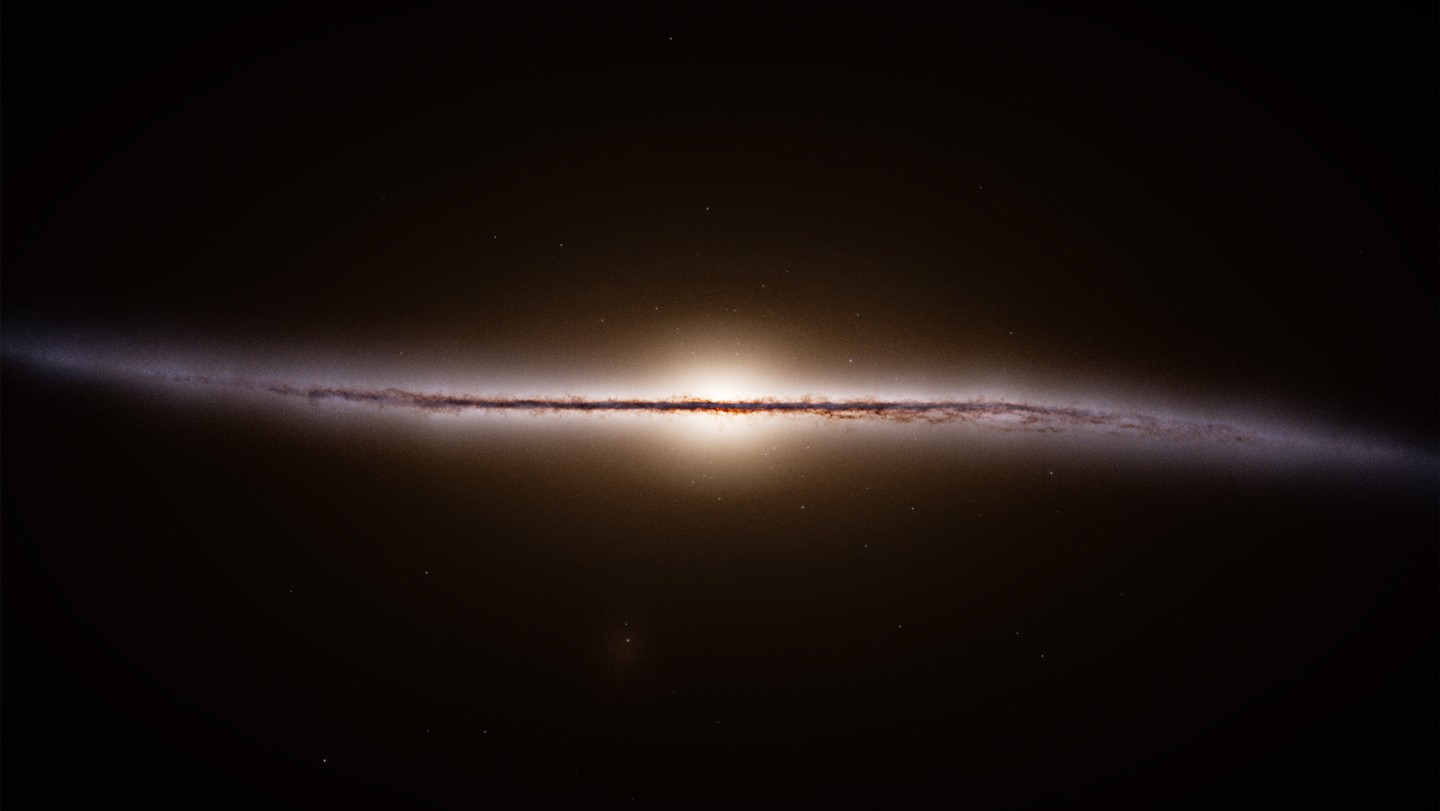
Our galaxy, the Milky Way, isn’t just a swirl of stars; it’s a relentless emitter of neutrinos – tiny, almost undetectable subatomic particles. Scientists have now calculated the sheer volume of these neutrinos bombarding Earth from distant stars, revealing a cosmic downpour that has yet to be directly observed.
Neutrino Flood: Numbers and Origins
Roughly 1,000 neutrinos from stars other than our sun pass through your body every second. This may seem substantial, but it pales in comparison to the 100 million times more abundant solar neutrinos. The sun, being so close, dominates the neutrino background. However, the combined output of the Milky Way’s billions of stars creates a detectable – yet elusive – galactic neutrino flux.
Why does this matter? Neutrinos are fundamental to understanding stellar processes and galactic evolution. They reveal what’s happening inside stars that light cannot. The fact that we haven’t detected these galactic neutrinos yet doesn’t mean they aren’t there; it means our detection methods must improve.
How the Calculation Works
Researchers combined data from the European Space Agency’s Gaia spacecraft (which maps stars with unprecedented precision) with models of galactic formation and stellar lifecycles. The calculations show that a significant portion of these galactic neutrinos originate from the densely packed galactic center, meaning that directional detectors could isolate them.
The Challenge of Detection
The main difficulty is distinguishing these galactic neutrinos from the overwhelming flood of solar neutrinos. Physicists propose using detectors capable of pinpointing the direction of incoming particles. Focusing on neutrinos arriving from the galactic center, rather than the sun, would be a key strategy.
Why Detect Galactic Neutrinos?
Detecting these neutrinos isn’t just about confirming their existence; it would validate our understanding of:
- Stellar Evolution: How stars live and die.
- Neutrino Physics: The behavior of these elusive particles.
- Galactic Formation: The history of our galaxy.
“It’s proving that we understand our galaxy, the stars in our galaxy — things we see in the sky every night.” – Pablo Martínez-Miravé, University of Copenhagen.
In essence, detecting these neutrinos would be a powerful confirmation of our cosmological models. The universe is full of signals, but many are too faint or too obscured to detect easily. This is one such case.