Researchers captured the first-ever footage of a sperm whale giving birth, revealing a complex social behavior previously unseen in non-primates. Meanwhile, NASA is pushing forward with its Artemis program, openly acknowledging astronauts will serve as experimental subjects in long-duration space missions. These seemingly disparate events highlight how little we still know about the fundamentals of life – from deep-sea reproduction to human endurance in extraterrestrial conditions.
Sperm Whale Birth: A Collaborative Event
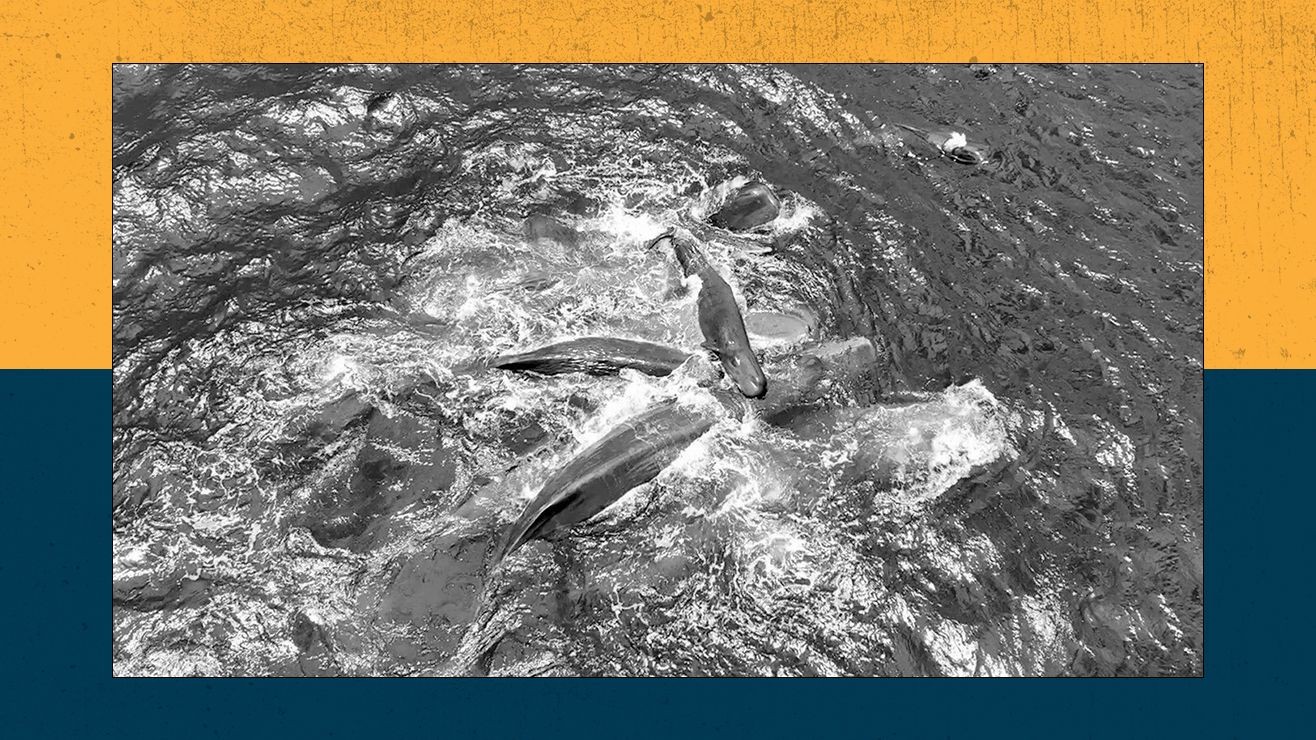
For the first time, scientists have documented a sperm whale birth in the wild. The event, filmed by drones in July 2023, showed the mother surrounded by roughly ten other females from her social group. These females actively assisted the birth by taking turns lifting the calf to the surface, ensuring it could properly inflate its lungs and gain buoyancy.
This behavior is critical because sperm whale social structures are deeply matriarchal: mothers, daughters, and unrelated females form lifelong bonds. Males, by contrast, largely roam the oceans alone, resulting in extreme segregation between the sexes. The collaborative birth suggests that these social bonds extend to supporting reproduction, a dynamic researchers previously only understood in primates. This discovery underscores how much remains unknown about the deep-sea behavior of these intelligent creatures.
NASA’s Human Testing Program
NASA is accelerating plans for a permanent lunar base and a nuclear-powered rocket, just weeks before the Artemis II mission to the moon. While officially framed as preparation for eventual Mars missions, the Artemis program also involves extensive human experimentation.
Astronauts will be closely monitored for the effects of radiation, isolation, and microgravity. NASA intends to leverage these missions to understand how the human body degrades under extreme conditions. This is not just about survival; it’s about pushing the limits of human endurance for future deep-space travel. The agency’s approach to astronauts as test subjects raises ethical questions about the balance between scientific progress and individual risk.
Related Developments
Recent research highlights further gaps in our understanding of evolution and human health:
- Neanderthal Extinction: A new study suggests that all European Neanderthals except one lineage died out around 65,000 years ago, indicating a major disruption in their history.
- Brain Aging: Research suggests that brain aging results from a loss of gene regulation control.
- Ancient Ape Discovery: The discovery of Masripithecus – an 18-million-year-old fossil – may rewrite our understanding of ape evolution.
Artemis Countdown
NASA’s Artemis II rocket is ready for launch from Florida, poised to send a four-astronaut crew on a 10-day lunar orbit mission as early as April 1. The mission represents a major step toward the agency’s goal of establishing a sustained presence on the moon.
“From the moment a sperm begins its journey to the moment an embryo starts to develop, gravity appears to play a role we are only starting to uncover. Gravity is not just a backdrop to life, it is deeply embedded in the biological processes that create it.”
– Nicole McPherson, Adelaide University
These events underscore the interconnectedness of scientific discovery: from the depths of the ocean to the vastness of space, our understanding of life remains incomplete. The exploration of both environments requires pushing boundaries – sometimes at the expense of the very subjects involved.