




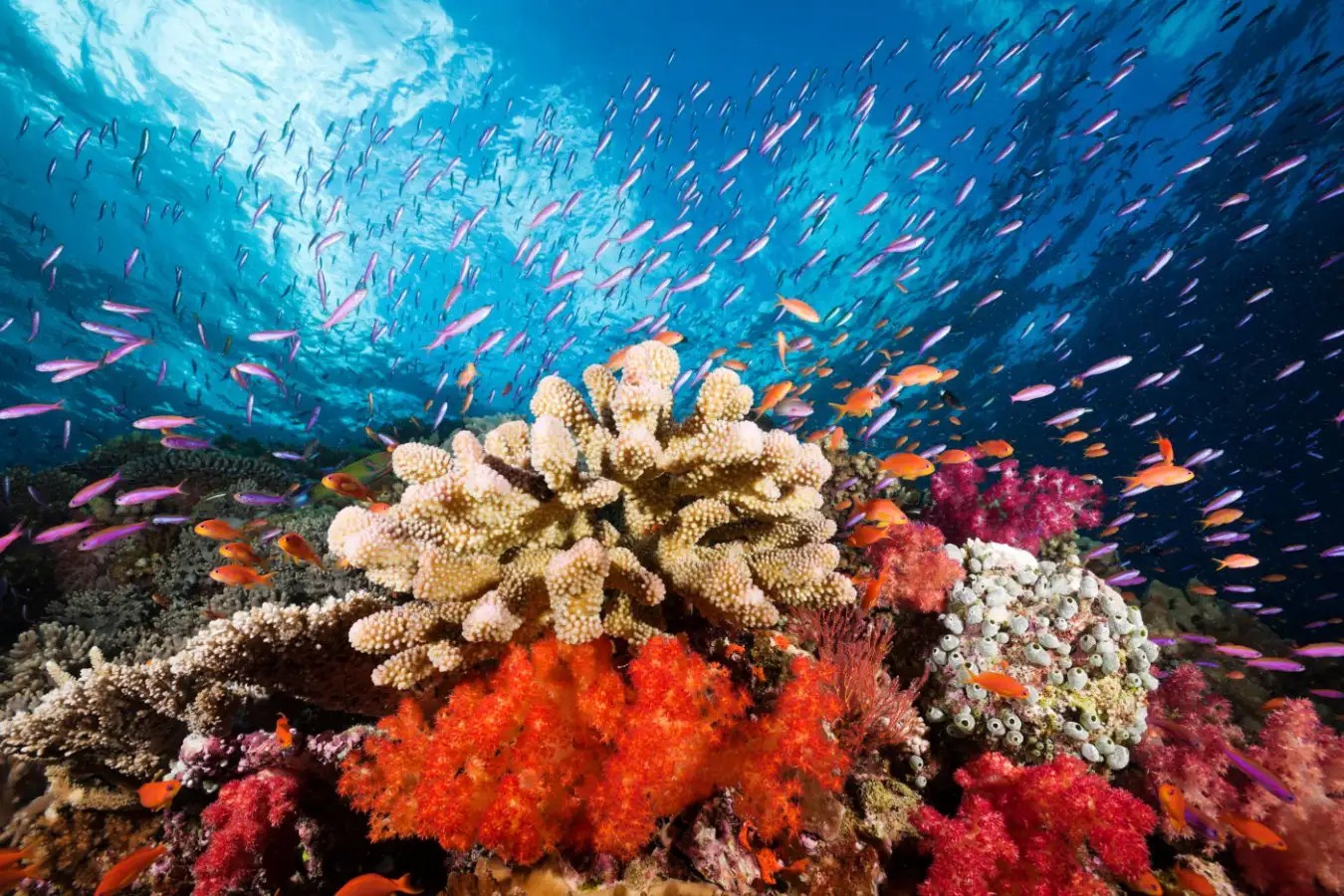
Coral reefs, often seen as vibrant ecosystems under threat, have historically played a surprising role in driving global warming trends over the past 250 million years. New research reveals that extensive coral growth, while seemingly benign, disrupts natural carbon cycles, leading to significant temperature increases. This isn’t a modern issue; it’s a deep-time pattern embedded in Earth’s geological history.
The Carbon Cycle Disruption
Coral reefs generate carbon dioxide (CO2) as a byproduct of building their calcium carbonate skeletons. When reefs expand across shallow marine environments, they compete with deep-sea plankton for essential calcium and carbonate ions. Plankton bury these minerals, effectively locking away carbon; reefs prevent this, releasing it into the atmosphere.
This imbalance isn’t merely theoretical. Researchers, including Tristan Salles at the University of Sydney, modeled this interplay using plate tectonics, climate simulations, and sediment data. Their findings pinpoint three major historical disruptions – during the mid-Triassic, mid-Jurassic, and late Cretaceous periods – where widespread coral growth coincided with substantial temperature rises.
Long-Term Imbalance
The crucial takeaway is that once this balance shifts, recovery isn’t swift. Re-establishing equilibrium can take hundreds of thousands to millions of years, far exceeding human timescales. This means past disruptions have left lasting imprints on the planet’s climate, and current changes are accelerating this process.
Modern Implications
Today, the situation is drastically different. Human CO2 emissions are causing warming and acidification at a rate too fast for natural carbonate feedback loops to compensate. Both corals and plankton are dying off, creating an ecological crisis with unpredictable consequences.
While corals can absorb excess nutrients, the speed of modern change renders this benefit insignificant. As Alexander Skeels of the Australian National University puts it, this research demonstrates a “deeply intertwined feedback cycle between life and climate.” Species aren’t just reacting to the climate; they are actively shaping it.
Beyond Corals: A Deeper Pattern
The influence extends beyond corals. Ancient microbial colonies, like stromatolites, have also modulated atmospheric carbon over geological time. The connection between biological life and climate is fundamental, challenging the notion that climate is solely governed by “immutable physical and chemical processes.”
Ultimately, understanding these deep-time feedbacks is crucial: Earth’s temperature isn’t just a matter of physics; it’s a co-evolving loop where life itself plays a significant role.