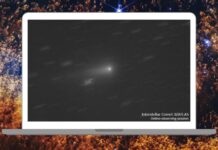
For millennia, sudden bright flashes in the night sky were seen as omens. Ancient Chinese astronomers called them “guest stars,” believing they signaled major shifts in the world. Today, we recognize these as supernovae – the spectacular deaths of stars – but the underlying idea remains: the universe isn’t static. It changes, and sometimes those changes are fleeting.
From Serendipity to Systematics
Historically, discovering these cosmic events relied on luck. Astronomers had to be looking at the right place, at the right moment, to witness a stellar explosion or other transient phenomenon. But in the 21st century, that approach has transformed. Rather than waiting for chance encounters, scientists now actively search for these temporary events, a field known as transient astronomy.
This shift is crucial because the universe isn’t just vast in space, but also in time. Many cosmic events last mere fractions of a second, while others unfold over decades or centuries. Ignoring this temporal dimension means missing much of the action.
The Automated Hunt for Cosmic Blinks
To overcome this, astronomers have built automated systems that scan the sky relentlessly. One early example was the Palomar Transient Factory (2009-2012), which operated like a conveyor belt: one telescope identified a flash, another investigated further. The goal wasn’t just to find something interesting, but to catch events that would otherwise be missed.
This approach has spawned a new generation of observatories. The Zwicky Transient Facility, a successor to Palomar, and the Pan-STARRS survey in Hawaii (which has amassed 1.6 petabytes of data) are designed specifically to hunt for these temporary phenomena.
The Universe in Motion
The results have been astonishing. These telescopes have captured a flood of data revealing a universe far more dynamic than previously imagined. The discoveries include:
- Gamma-ray bursts: The most powerful explosions in the universe.
- Fast radio bursts: Mysterious, millisecond-long pulses of energy from distant galaxies.
- Gravitational waves: Ripples in spacetime caused by colliding black holes and neutron stars.
- Stellar explosions: Stars tearing themselves apart or being consumed by black holes.
From Still Images to Cosmic Cinema
Transient astronomy is reshaping our understanding of the cosmos. As Jason Hessels of the University of Amsterdam puts it, “We started with drawings, then photographs, then stop-motion film.” Now, we are getting closer to a full-fledged movie of the universe. Every new survey and telescope adds more frames to this cosmic time-lapse, revealing a reality far more dynamic and chaotic than we ever imagined.
This ongoing process of discovery suggests that the universe is not just expanding in space, but also unfolding in time. The more we look, the more we realize how much we still don’t know.