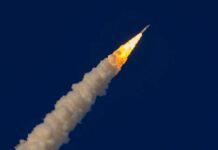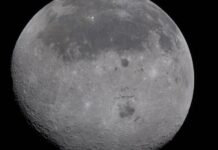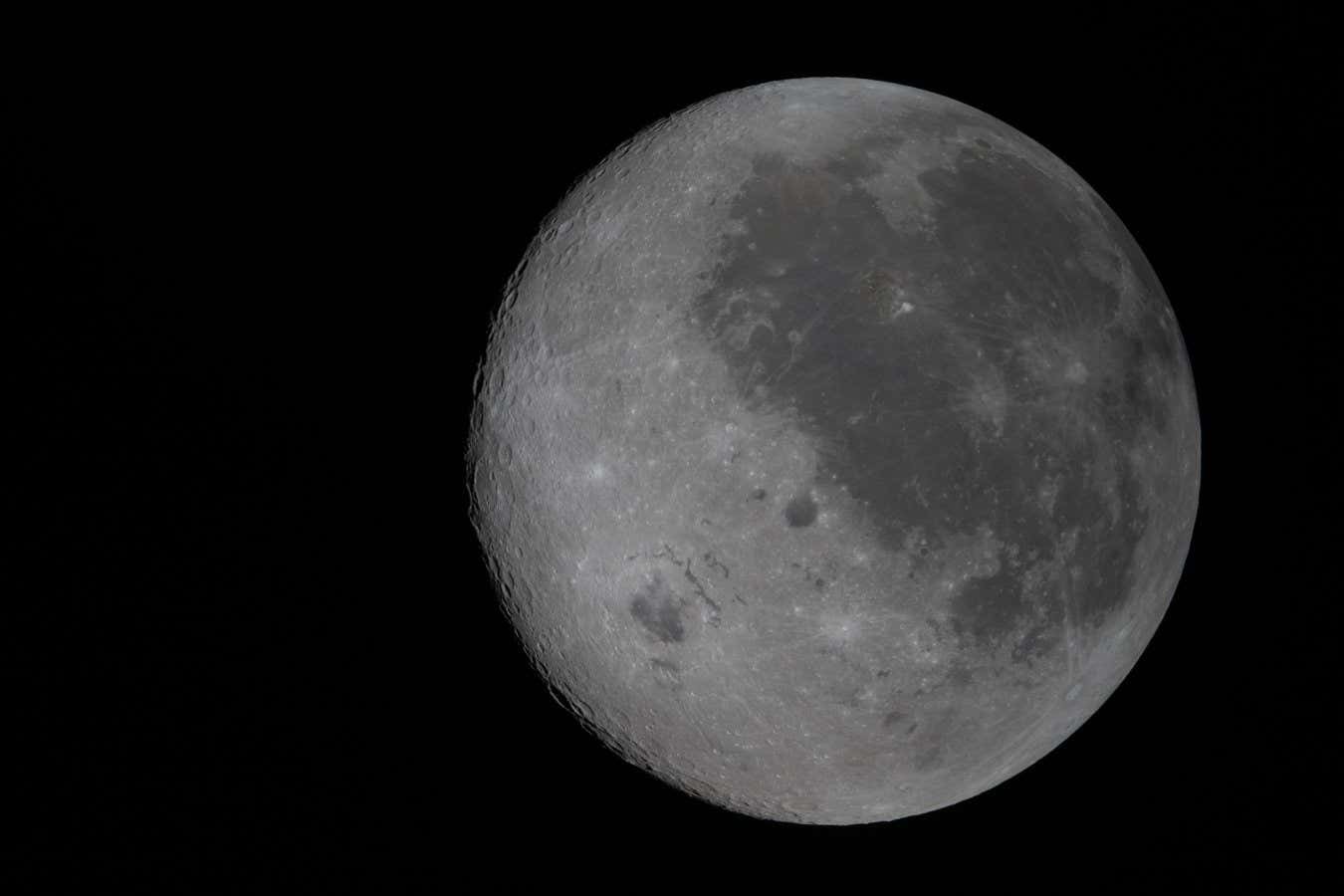
For the first time in over five decades, humans have ventured beyond Earth’s immediate orbit to circle the Moon. On April 6, the four astronauts of NASA’s Artemis II mission completed a high-altitude flyby of the lunar far side, marking the furthest distance humans have ever traveled from our home planet.
This mission represents a pivotal bridge between the era of Apollo and the future of deep-space exploration. While the Apollo missions proved we could reach the Moon, Artemis II is designed to prove we can stay—and eventually live there.
Breaking Records and Setting New Names
As the Orion capsule moved past the Moon, the crew surpassed the long-standing distance record of 400,171 kilometers, originally set by the Apollo 13 crew in 1970. Mission commander Reid Wiseman emphasized that this milestone is merely a stepping stone rather than a final destination.
“We most importantly choose this moment to challenge this generation and the next to make sure this record is not long-lived,” Wiseman stated during the NASA livestream.
In a gesture of personal and professional tribute, the crew proposed names for two newly observed craters:
– Integrity : Named after the Orion capsule itself.
– Carroll : Named in memory of Wiseman’s late wife.
A Unique Scientific Vantage Point
The crew—comprised of NASA astronauts Wiseman, Christina Koch, and Victor Glover, alongside Canadian Space Agency astronaut Jeremy Hansen —utilized their unique position to conduct observations impossible from Earth’s surface.
1. The Lunar Solar Eclipse
As the capsule moved behind the Moon, the crew witnessed a solar eclipse from a perspective unencumbered by Earth’s atmosphere. By using darkened eclipse glasses, they were able to observe the solar corona (the sun’s outermost layer) with unprecedented clarity, free from the distortion caused by terrestrial air.
2. The Colors of the Moon
While the Moon appears as a monochromatic grey sphere from Earth, the astronauts reported a much more vibrant reality. Due to varying chemical compositions in the lunar dust and rocks, they observed patches of green, brown, and even orange across the surface.
3. The “Magic” of the Terminator
Much of the mission’s visual data came from observing the terminator —the moving line that divides the lunar day from the night. This boundary creates long, dramatic shadows that reveal the Moon’s rugged topography. Astronaut Victor Glover described the experience as “visually captivating,” noting how deep valleys appeared like “black holes” in the landscape.
From “Poster in the Sky” to a Real Destination
One of the most profound takeaways from the mission was the psychological shift in how the crew perceived the Moon. Rather than a distant, flat object in the sky, the astronauts experienced it as a tangible, three-dimensional world.
“The truth is, the Moon really is its own body in the universe – it’s not just a poster in the sky that goes by, it is a real place,” remarked Christina Koch.
The Road Ahead
At its closest approach, the Orion capsule passed within 6,545 kilometers of the lunar surface. This proximity provides critical data for the next phases of the Artemis program. The crew is scheduled to splash down in the Pacific Ocean off the coast of California on April 10.
The data, photographs, and scientific notes gathered during this flight will serve as the foundation for Artemis IV, currently planned for 2028, which aims to land humans on the lunar surface once again.
Conclusion: The Artemis II flyby successfully transitioned lunar exploration from the historical legacy of Apollo into a new era of deep-space capability, proving that the Moon is not just a destination to visit, but a complex world to be studied and inhabited.