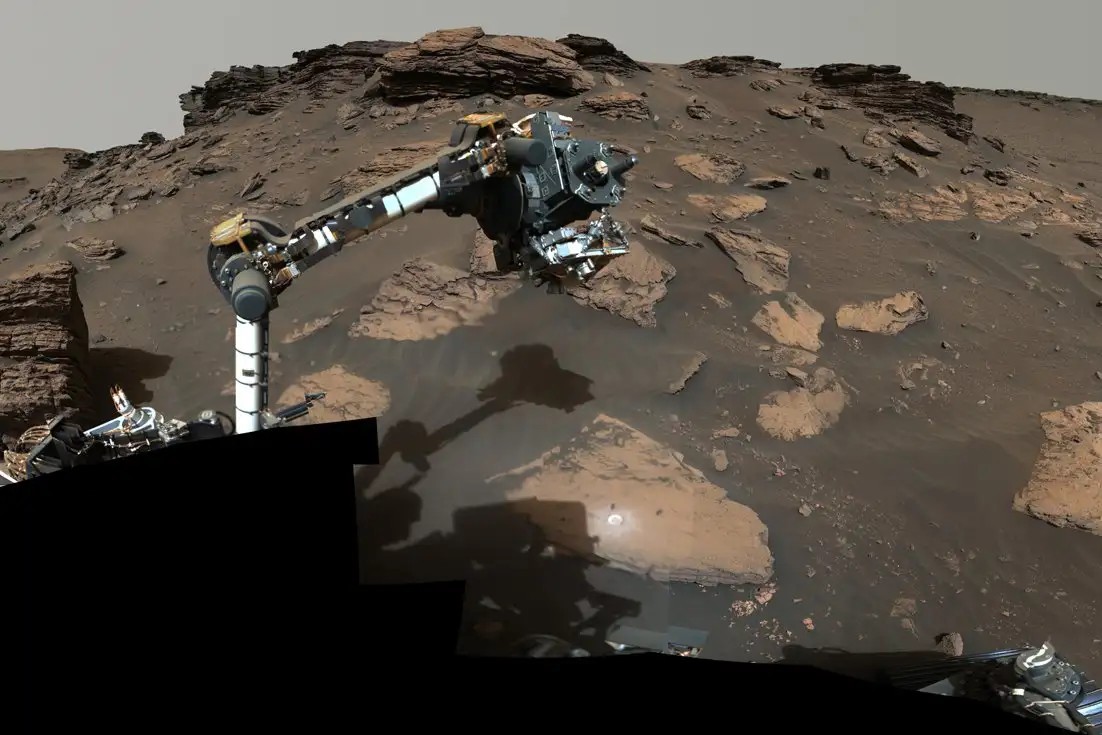
The Perseverance rover has made an unprecedented discovery on Mars: microscopic grains of ruby and sapphire embedded within Martian pebbles. This marks the first confirmed presence of these precious gemstones on the planet, challenging existing assumptions about Martian geology.
Unexpected Composition
Researchers led by Ann Ollila at Los Alamos National Laboratory spotted the telltale signs of corundum—the mineral family that includes rubies and sapphires—while using Perseverance’s SuperCam instrument. The SuperCam uses lasers to analyze rock composition, burning off surfaces or inducing luminescence to reveal underlying materials. Analysis of rocks named Hampden River, Coffee Cove, and Smiths Harbour yielded results nearly identical to those from lab-tested rubies, confirming the presence of corundum grains.
Why This Matters: Martian Geology Reconsidered
The discovery is significant because corundum formation on Earth is typically linked to tectonic activity, which Mars lacks. Earth’s rubies and sapphires form under intense pressure and specific chemical conditions created by shifting tectonic plates. Mars, with its stable crust, doesn’t have this process. This suggests that the Martian gemstones likely formed through a different mechanism: high-energy impacts from meteorites compressing and heating aluminum-rich dust.
“I was very surprised,” said Allan Treiman of the Lunar and Planetary Institute, highlighting the unexpected nature of the finding. The presence of aluminum-rich deposits on Mars combined with frequent impacts makes this discovery plausible in hindsight, but still remarkable.
Size and Visibility
The corundum grains are tiny—less than 0.2 millimeters across—making it impossible to determine their exact color (ruby-red or sapphire-blue) from images. Despite their small size, the gems fluoresce brightly when struck by the SuperCam laser, confirming their presence.
The discovery opens new questions about the Red Planet’s mineralogy and the conditions under which precious stones can form in non-tectonic environments. Future research may focus on identifying larger samples for detailed analysis, potentially revealing whether Martian rubies and sapphires exhibit unique properties compared to their terrestrial counterparts.
This find underscores the potential for surprising discoveries on Mars, challenging our understanding of planetary formation and geological processes.