Scientists aboard the International Space Station (ISS) have successfully demonstrated a novel method for extracting valuable metals from meteorites using microorganisms. This breakthrough, led by researchers from Cornell University and the University of Edinburgh, could reshape the economics of long-duration space missions by enabling in-situ resource utilization (ISRU) – essentially, mining in space instead of relying on costly Earth-based shipments.
The Experiment: How Microbes Unlock Space Riches
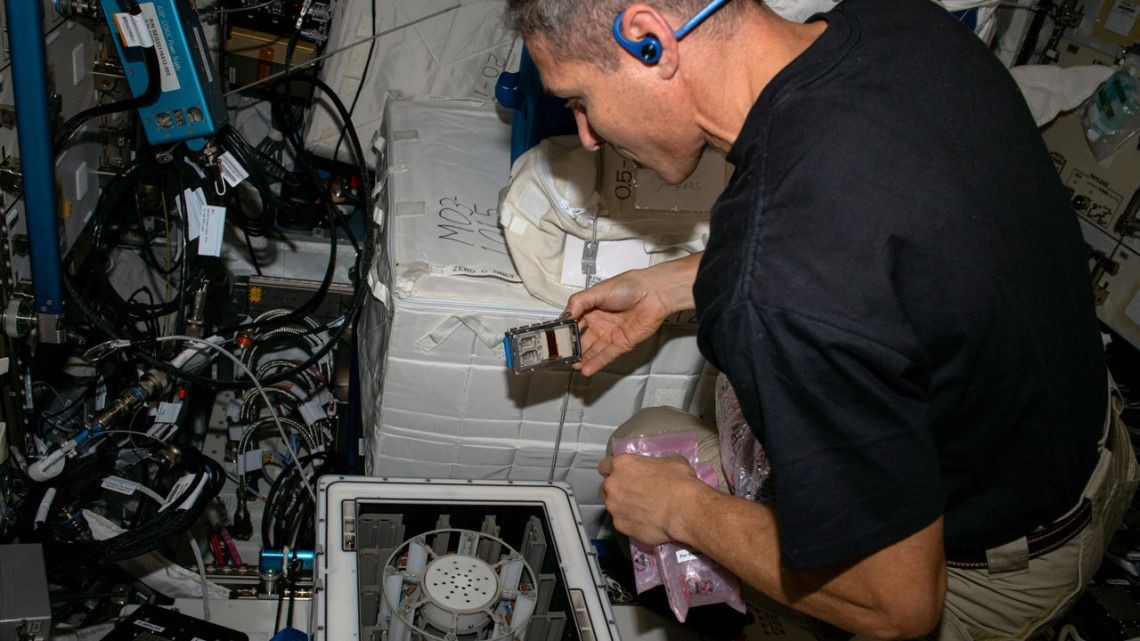
The experiment, conducted by NASA astronaut Michael Scott Hopkins, tested two distinct organisms: the bacterium Sphingomonas desiccabilis and the fungus Penicillium simplicissimum. These were chosen for their contrasting metabolic processes, allowing scientists to study a broader range of extraction techniques. Both organisms work by secreting carboxylic acids, which dissolve minerals within the meteorite samples, releasing valuable metals into a liquid solution.
The goal wasn’t simply to extract metals; it was to understand how microbial behavior changes in low-gravity environments. This is crucial because space travel is expensive, and the ability to harvest resources on-site could dramatically reduce costs.
Space Changes Microbial Metabolism: A Surprising Boost
Results revealed that the fungal metabolism was altered in space, leading to increased carboxylic acid production. This boost enhanced the release of precious metals like palladium, platinum, and other high-value elements. The finding is notable because it suggests that space conditions can actually improve the efficiency of these bio-mining processes.
However, researchers caution that the extraction rate varies significantly depending on both the target metal and the specific microorganism used. The experiment highlights the complexity of ISRU and the need for further study.
Why This Matters: The Future of Space Exploration
The demand for space-based resources is rising. Companies like SpaceX and Blue Origin, alongside agencies like NASA and ESA, are planning long-term missions to the Moon and Mars. These endeavors will require on-site resource production to be economically viable.
Palladium, one of the metals extracted in the experiment, is particularly valuable in technology, with even small quantities fetching high prices. Extracting such materials from asteroids or lunar rocks could offset the massive expense of lifting them from Earth. This research marks an early but significant step toward that future.
This experiment underscores the potential of biological systems for resource extraction in extreme environments. While challenges remain, the concept of microbial mining in space is no longer science fiction; it’s an emerging reality.