




Two robotic rovers recently completed a simulated lunar mission at the German Aerospace Center (DLR) in Cologne, successfully identifying simulated water ice deposits. The mission, dubbed “Polar Explorer,” tested technologies critical for future Artemis astronaut missions, focusing on efficient resource identification to reduce launch costs and maximize astronaut time on the moon.
Why Lunar Water Matters
Water is a game-changer for lunar exploration. Every pound of water carried from Earth adds significant expense to missions. Instead, astronauts can use lunar water for drinking, cooking, and—crucially—converting into rocket propellant. Finding and extracting this water on-site makes long-term lunar presence far more sustainable.
How the Rovers Worked
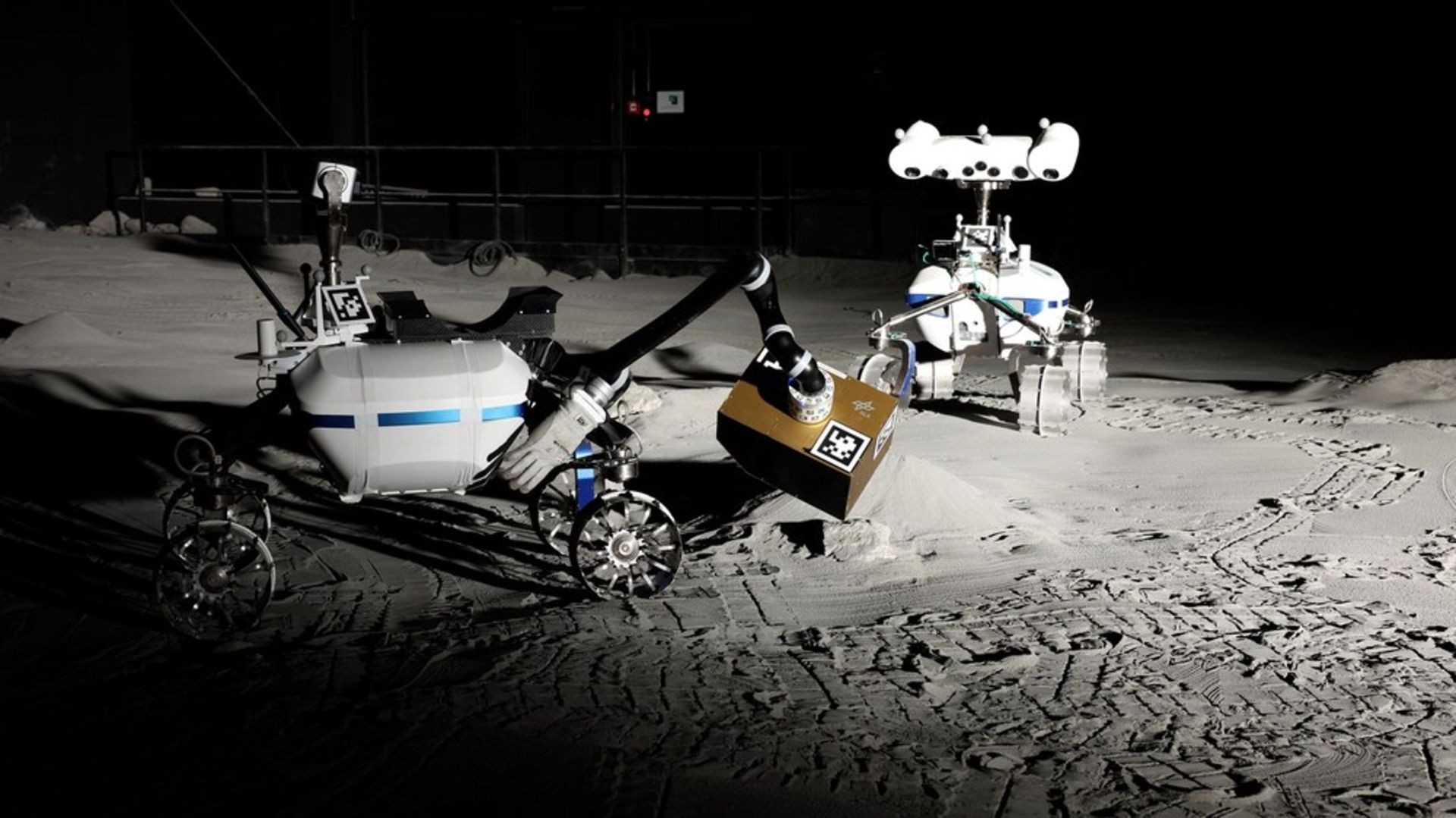
The operation involved two rovers: LRU1, resembling the robot WALL-E, and LRU2. LRU1 used both visual and non-visible light sensors to map the simulated lunar surface. It also towed ground-penetrating radar to scan subsurface deposits. LRU2 followed, using a robotic arm and laser spectroscopy to analyze promising rock samples. This dual approach combines broad-area scouting with targeted analysis.
Key Findings and Challenges
The rovers successfully located the simulated water ice, confirming the viability of their systems. The mission wasn’t without hurdles: some deposits were concealed beneath thick regolith (lunar soil) and required artificial seismic activity to reveal. A mini “moonquake” generated by artificial sources caused vibrations that exposed the water’s signal.
“The combination of different methods offers advantages in learning about the surface and what lies below,” stated planetary scientist Nicole Schmitz of DLR.
Future Prospects
DLR scientists are now analyzing the data and integrating it with findings from previous tests, including a 2022 campaign at Mount Etna volcano. The ultimate goal is to deploy the Polar Explorer system on a future Argonaut lander mission, named after the legendary Greek explorers who sought the Golden Fleece. This would mark a major step towards sustainable lunar exploration.
The success of this simulation underscores the growing readiness of robotic tools for Artemis missions and the increasing feasibility of extracting resources directly from the lunar surface.