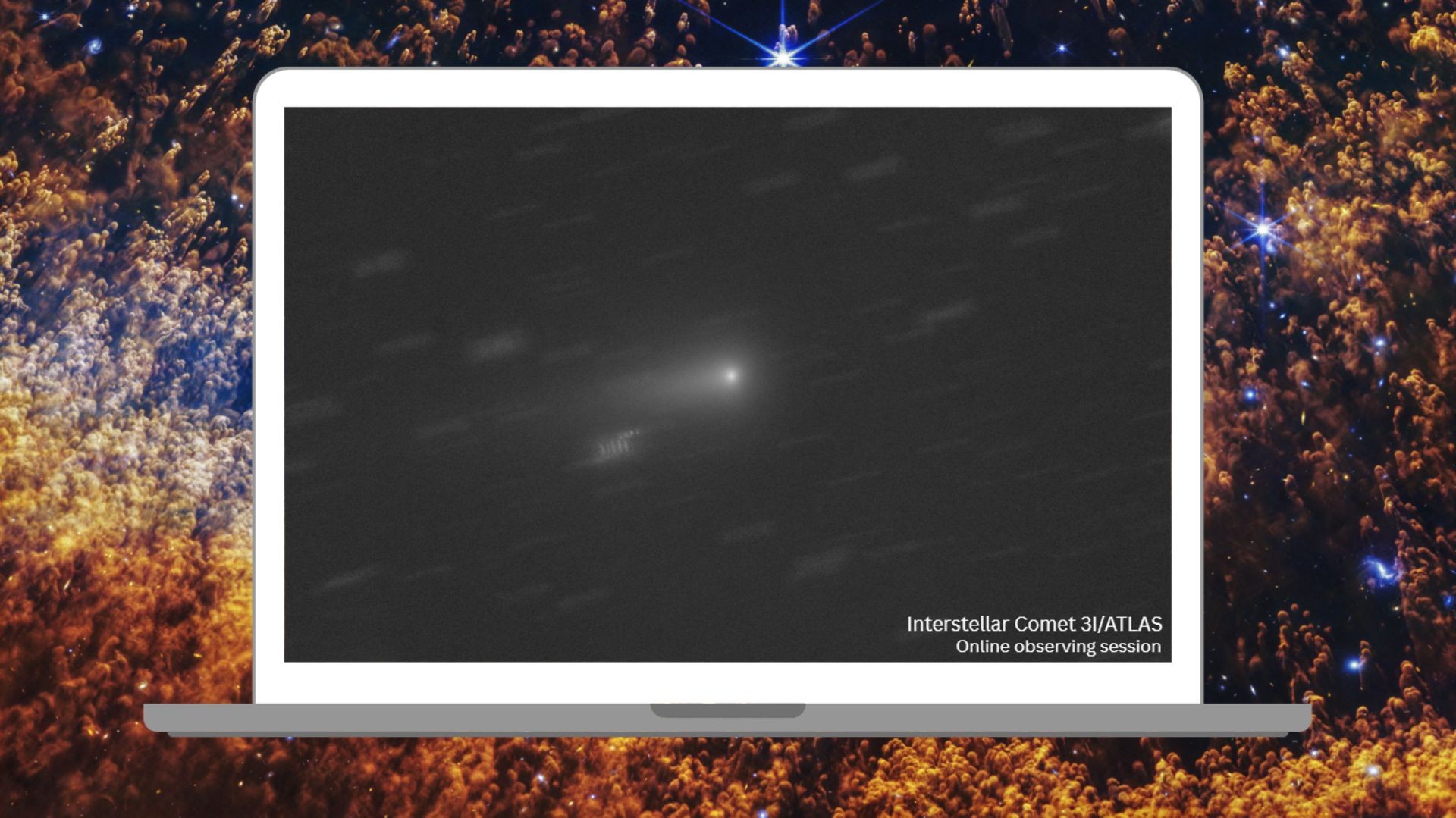
Tonight, January 22nd, offers a unique opportunity to witness interstellar comet 3I/ATLAS as it reaches opposition and continues its journey out of our solar system. The Virtual Telescope Project will host a free livestream beginning at 6:30 PM EST (2330 GMT), showcasing real-time views captured from robotic telescopes in Italy.
What Makes This Comet Special?
3I/ATLAS is only the third confirmed interstellar object to visit our solar system, following the discoveries of 1I/’Oumuamua and 2I/Borisov. It was first identified in July 2025 through the ATLAS project, a NASA-funded program designed to detect asteroids and comets that could pose a threat to Earth. The rapid analysis of its orbit quickly revealed its origin outside our solar system.
Why Opposition Matters
When an object reaches opposition, it appears opposite the sun in Earth’s sky, meaning it’s fully illuminated from our perspective – similar to a full moon. This makes it theoretically the best time for observation. However, 3I/ATLAS will remain too faint to see with the naked eye.
Viewing Details and Brightness
The comet is expected to have a magnitude of +13.2 at opposition, meaning it requires large telescopes to detect. For context:
* Brighter stars are around Mag +1.
* A full moon is -13.
* The sun is -27.
While the livestream provides the best way to view this rare object, cloud cover may still interfere with the observation, as a previous attempt on January 16th was canceled due to weather conditions.
What Does This Mean?
The increasing frequency of interstellar object detections suggests our solar system is not isolated. These visitors offer clues about the composition and dynamics of other star systems, making each observation scientifically valuable. The fact that 3I/ATLAS is leaving the solar system means this is likely our only opportunity to study it up close for now.
The study of interstellar comets provides a unique window into the conditions of other planetary systems. Their composition can tell us what materials exist elsewhere in the galaxy and how they differ from our own.