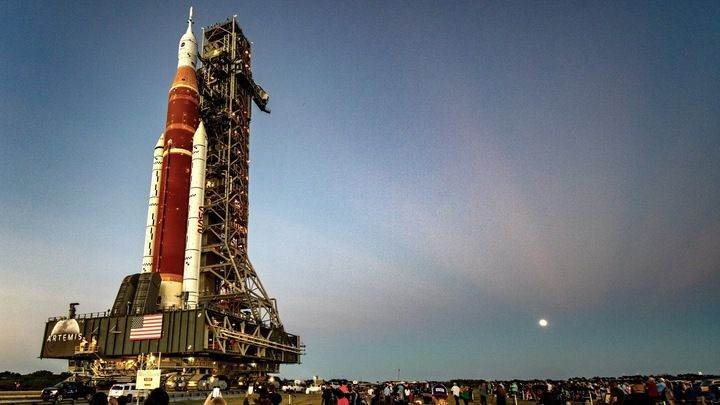
NASA has announced a major restructuring of its Artemis program, shifting the timeline for crewed lunar landings and prioritizing incremental testing over a single, high-risk mission. The decision, revealed last week alongside updates on Artemis 2 repairs, reflects a growing concern within the agency about the ambitious pace of the original plan.
Rethinking the Approach: From Apollo to Artemis
The initial Artemis strategy called for a rapid progression from uncrewed tests to a crewed lunar flyby (Artemis 2) and then a direct landing on the lunar surface with Artemis 3 in 2028. However, experts warned that this approach stacked too many “firsts” onto a single mission, particularly regarding SpaceX’s Starship lander, which is still under development.
As NASA Aerospace Safety Advisory Panel (ASAP) noted in a recent report, “The numerous and unprecedented mission objectives…result in a compounded level of technical and safety risk.” Specifically, Starship requires over a dozen in-orbit refueling flights—a feat never before achieved—just to dock with Orion, land astronauts, and return them safely.
To mitigate these risks, NASA will now conduct Artemis 3 in 2027 as a test run, docking with both SpaceX’s Starship and Blue Origin’s Blue Moon landers in Earth orbit. This mirrors the Apollo program’s phased approach, with incremental missions building confidence and proving technology before attempting a landing. As NASA Administrator Jared Isaacman pointed out, “We didn’t go right to Apollo 11…we had a whole Mercury program, Gemini, lots of Apollo missions before we ultimately landed.”
What This Means for Lunar Exploration
The shift to Artemis 4 as the primary landing mission (still targeting 2028) allows NASA to refine critical technologies, including cryogenic propellant transfer in space—another unprecedented challenge. It also gives SpaceX and Blue Origin time to demonstrate their landers’ capabilities before risking a crewed mission.
NASA is also streamlining its launch cadence, moving away from complex SLS rocket upgrades in favor of a standardized upper stage design. This decision, coupled with a goal of launching SLS rockets every ten months, signals a renewed focus on operational efficiency.
The Future of Artemis: Collaboration and Commercial Partnerships
The agency’s vision for the future includes increased collaboration with commercial partners. NASA’s new illustration depicts Orion alongside SpaceX’s Starship, Blue Origin’s New Glenn, and even commercial landers like Intuitive Machines’ lunar vehicle. The graphic also highlights the potential for lunar bases with Astrolab’s FLEX rover as a key component.
While some experts question whether NASA can meet these aggressive timelines, the reorganization is widely seen as a pragmatic step toward a safer and more sustainable lunar program. As former NASA Deputy Administrator Lori Garver noted, the new plan “increases the probability that the next US moon landing attempt will be successful—even though it is still likely more years away than we hope.”
Ultimately, NASA’s revised Artemis strategy reflects a hard-won lesson: sustainable space exploration demands a cautious, iterative approach. The agency is prioritizing reliability and risk mitigation over speed, setting a more realistic path toward humanity’s return to the Moon.