




Astronomers have been tracking interstellar comet 3I/ATLAS since its discovery in July, making it only the third confirmed object to originate from another star system. Initial excitement, fueled in part by speculation and online rumors during a recent US government shutdown, suggested the comet might be artificial. However, NASA held a briefing last week to dispel these theories and present concrete observations gathered from over 20 missions across the solar system: 3I/ATLAS is a naturally formed comet, not an alien spacecraft.
The Comet’s Origins and Trajectory
Discovered by the NASA-funded ATLAS telescope in Chile, 3I/ATLAS presents a unique opportunity to study material from another star system. Scientists believe the comet originated in a planetary system significantly older than our own, offering a glimpse into cosmic history predating the formation of Earth and the Sun. The object poses no threat to Earth, remaining at a safe distance of 170 million miles during its closest approach.
Collaborative Observation Efforts
Because 3I/ATLAS appeared on the far side of the Sun from Earth, ground-based observations were difficult. NASA coordinated a fleet-wide campaign, utilizing spacecraft in Earth orbit, around Mars, and beyond. This approach allowed scientists to gather a comprehensive dataset, comparing observations like viewing a baseball game from multiple stadium seats.
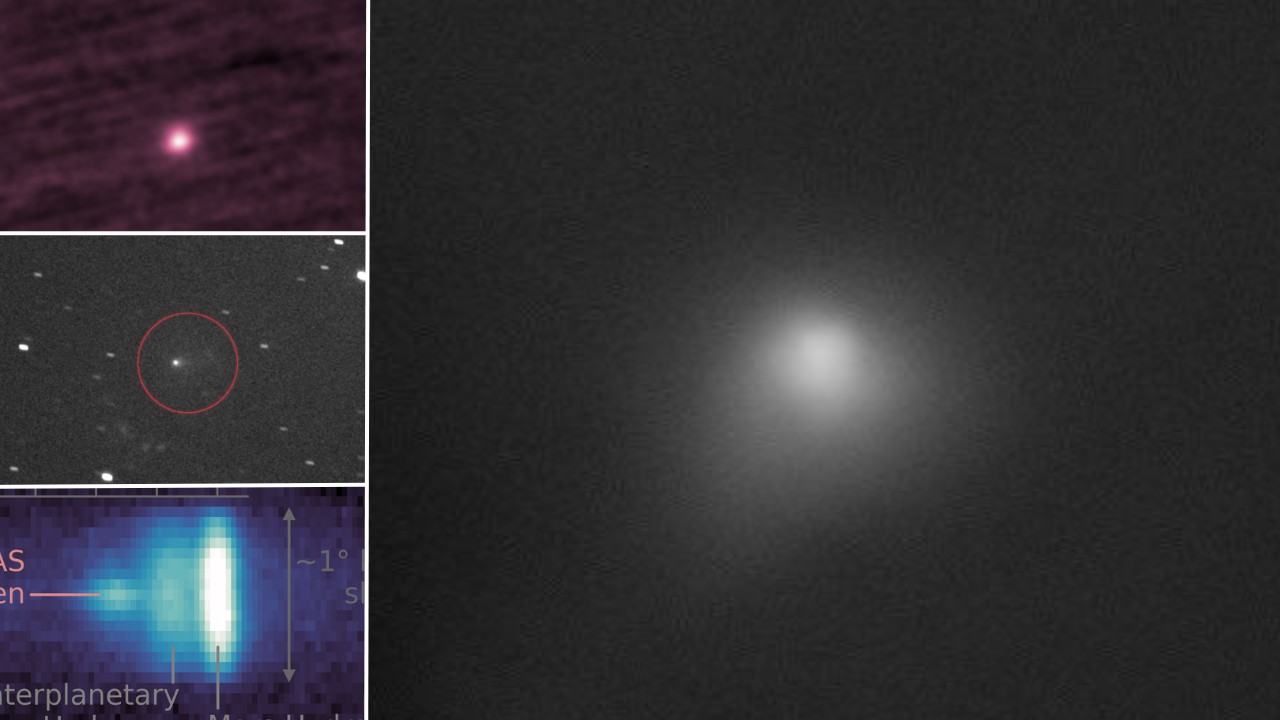
- Mars Reconnaissance Orbiter captured images of the comet’s dust-and-ice coma from 90 million miles away.
- MAVEN detected hydrogen gas released by vaporizing water ice through ultraviolet sensors.
- Psyche and Lucy missions contributed further data, reconstructing the comet’s 3D structure.
- Even the SOHO observatory detected the faint object despite initial expectations.
Chemical Clues from a Distant System
Hubble Space Telescope observations narrowed the comet’s size to between 1,400 feet and 3.5 miles in diameter. The James Webb Space Telescope provided the first infrared look at an interstellar object since its launch, revealing an unusually high ratio of carbon dioxide to water ice compared to our solar system’s comets.
The presence of more carbon dioxide than usual suggests that 3I/ATLAS formed in a harsher radiation environment around an older star. Furthermore, scientists observed a higher concentration of nickel relative to iron in the comet’s composition, as well as atypical dust grain sizes and behavior. The dust was initially blown toward the sun before being pushed back by solar radiation, an unusual sequence compared to local comets.
Implications for Understanding Planetary Systems
The analysis of 3I/ATLAS offers invaluable insights into the formation and evolution of planetary systems beyond our own. The comet’s unique chemical signature and physical properties provide a snapshot of conditions in a distant, older star system, helping scientists refine their understanding of cosmic history.
“This is a new window into the makeups and histories of other solar systems,” stated Tom Statler, NASA’s lead scientist for small bodies.
The ongoing study of 3I/ATLAS exemplifies the scientific process in action, raising new questions and pushing the boundaries of our knowledge about the universe.