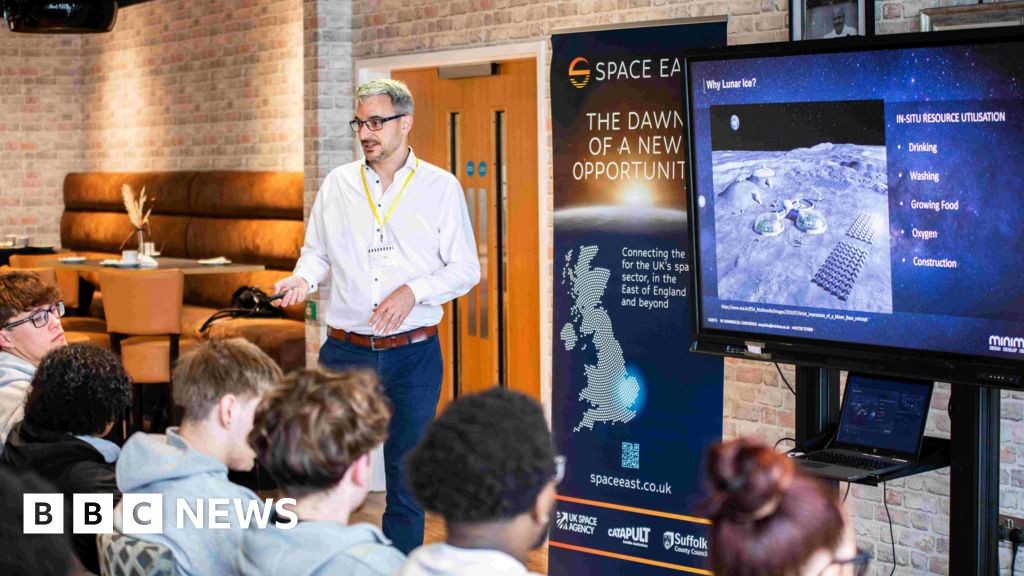
While high-profile missions like NASA’s Artemis program capture the world’s imagination with images of astronauts orbiting the Moon, the reality of the space industry is much closer to home than most realize. At Suffolk New College, a recent initiative has aimed to show students that the path to the stars might actually begin in a local workshop.
Bringing the Space Sector Down to Earth
Recently, approximately 50 students at the college’s Ipswich campus hosted space industry experts to demystify the sector. The focus was not on piloting spacecraft, but on the essential technical skills required to build them. The discussions centered on critical roles in welding, engineering, and manufacturing —the foundational trades that make space exploration possible.
The visit highlighted a vital truth about the industry: the principles of engineering used on Earth are the same ones used to build hardware for the lunar surface. As Matt Bagley from Space East explained:
“Everything that exists on Earth also exists in space—so the engineers on Earth today will be the space engineers of tomorrow.”
A Growing Local Hub
For many students, the scale of the local industry was a revelation. Despite the “out-of-this-world” nature of the work, the opportunities are deeply rooted in the region.
- Regional Strength: There are currently more than 800 companies linked to the space sector operating in the East of England.
- Local Presence: Organizations like Space East, based at Adastral Park in Ipswich, are actively working to connect local talent with these specialized roles.
- Student Impact: For students like Daniel, an 18-year-old welding student, and Henry, a 17-year-old engineering student, the event served as a wake-up call to the high-tech career paths available right in their own backyard.
Why This Matters: The Economic Context
The timing of this educational push is no coincidence. The global space economy is on a massive upward trajectory, with projections suggesting the market will grow from £270bn to £490bn by 2030.
This rapid expansion creates a significant “skills gap.” As space technology becomes increasingly commercialized, there is a surging demand for a highly skilled workforce capable of handling advanced materials and complex engineering tasks. By “putting space careers on the radar” of vocational students, Suffolk New College is attempting to ensure that the local workforce is prepared to capture a piece of this multi-billion pound global market.
Conclusion
By connecting traditional trades like welding and engineering to the burgeoning space economy, Suffolk New College is helping students realize that a career in space exploration is a tangible, local possibility rather than a distant dream.