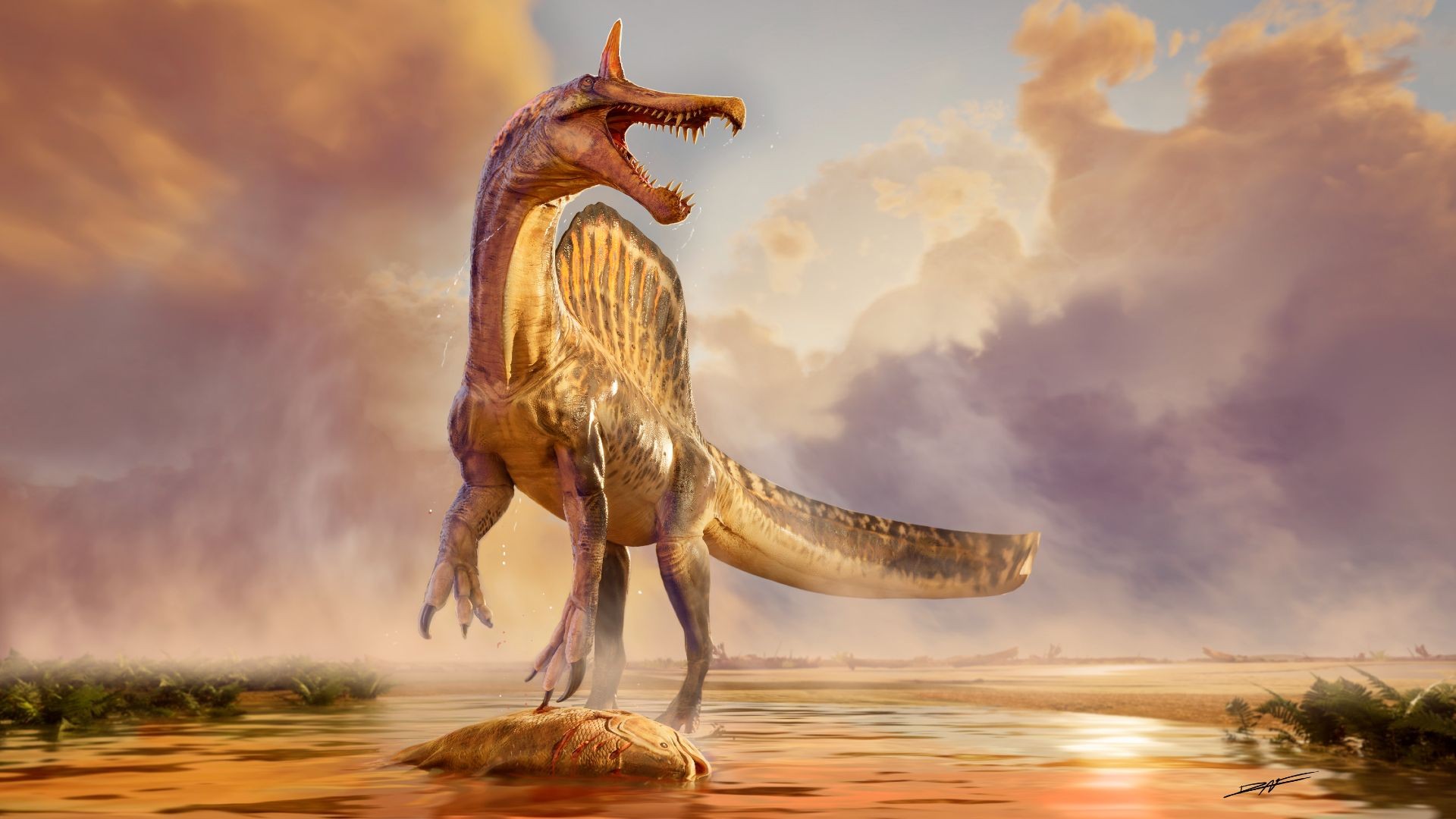
A newly identified species of Spinosaurus, named Spinosaurus mirabilis, is reshaping our understanding of this iconic dinosaur. Unearthed in Niger, Africa, the 95-million-year-old fossils reveal a creature adapted to wade through inland rivers rather than actively hunt in the open ocean. This discovery resolves a long-standing debate regarding the aquatic behavior of Spinosaurus and its relatives.
The Astonishing Crest
The most striking feature of S. mirabilis is its tall, blade-like crest atop its head, reaching up to 20 inches in height. CT scans confirmed the crest contained fossilized blood vessels and was likely covered in a keratin sheath in life, suggesting a vibrant, decorative structure. Researchers propose the crest served a display function, aiding in species recognition during mating or territorial disputes along riverbanks. The asymmetrical shape of the crest initially puzzled paleontologists until additional skeletal remains were uncovered in 2022.
Inland Predator: A ‘Hell Heron’ of the Sahara
The fossil’s location deep inland, within a river deposit, is a crucial piece of evidence. Study lead Paul Sereno emphasizes, “There’s just no way that you’re going to find… essentially an aquatic animal hundreds of miles from the shoreline.” S. mirabilis shared its riverbed habitat with long-necked sauropods, confirming its inland lifestyle. The team argues it functioned more like a heron, stalking shallow waters for fish rather than swimming like a marine predator. The large, sail-like structure on its back, while iconic, would have hindered agility in deep water, supporting the wading hypothesis.
Resolving the Aquatic Debate
Recent research has suggested Spinosaurus engaged in underwater hunting, citing its specialized teeth (protruding lower jaw teeth fitting between upper jaw teeth). However, S. mirabilis presents a different picture. Its body shape, combined with its fossilized location, places it between semiaquatic waders and diving predators like penguins. The team’s analysis suggests Spinosaurus sacrificed agility for its unique features, indicating an adaptation to wading rather than deep-water swimming.
“It shows the process of science evaluating evidence and new evidence appearing,” says Sereno, highlighting the dynamic nature of paleontological research.
The discovery of Spinosaurus mirabilis underscores the importance of fossil context. The black color of the bones (due to high phosphate concentration) was also a peculiar feature. This finding demonstrates that paleontological research is an ongoing process, driven by new evidence and reevaluation of existing theories.
Ultimately, this fossil provides compelling evidence that Spinosaurus was not a marine hunter but rather a specialized predator adapted to the rivers of ancient Africa.