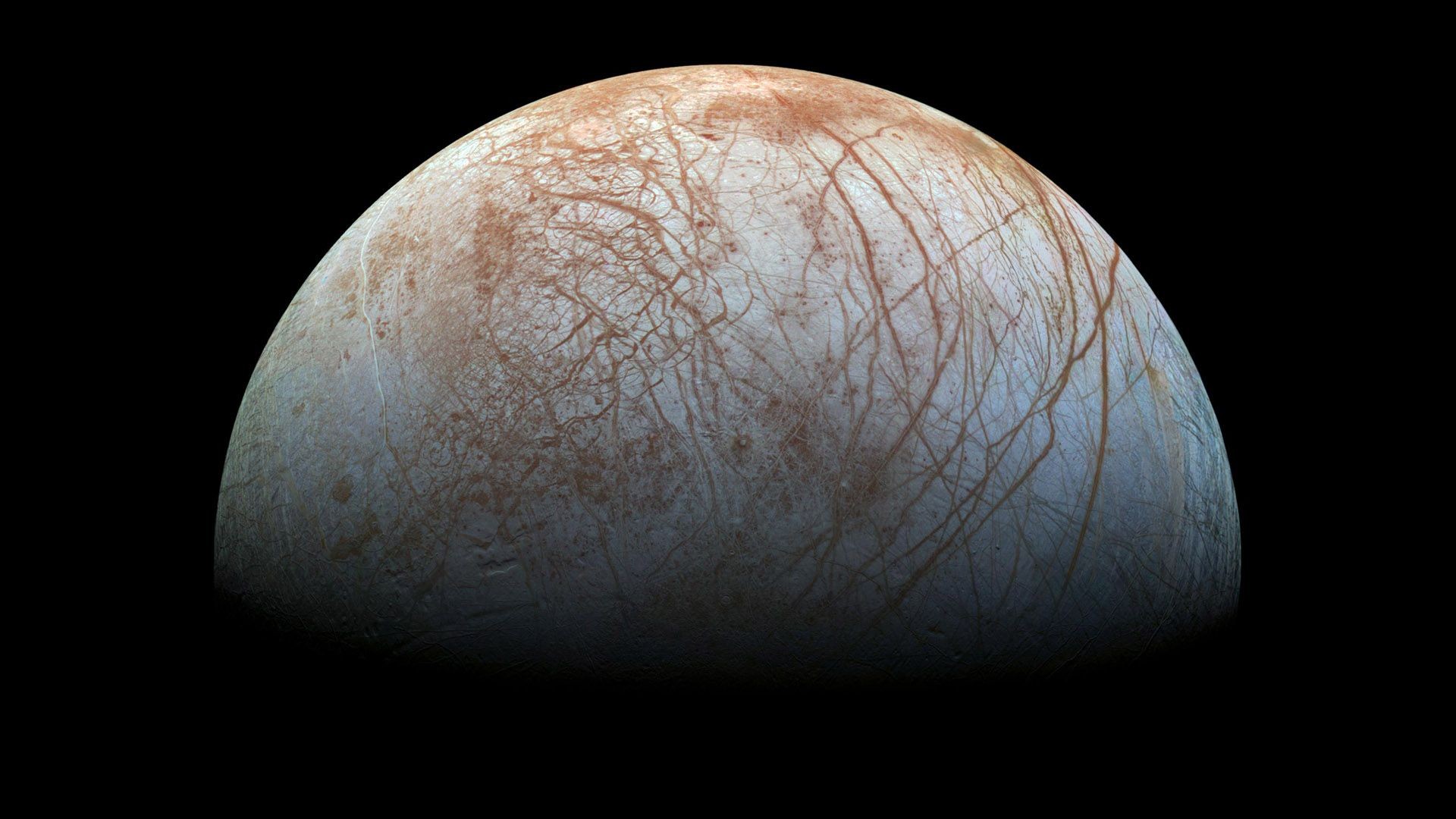
New research suggests that Jupiter’s moon Europa may be a less hospitable environment for life than previously thought. A recent study modeling the ocean floor beneath Europa’s icy shell indicates that tectonic activity – the kind that drives essential chemical reactions – is likely minimal. This significantly reduces the likelihood of sustained microbial life within its hidden ocean.
The Problem with Europa’s Ocean Floor
For life to exist in Europa’s subsurface ocean, it needs a consistent energy source. On Earth, this comes primarily from hydrothermal vents created by tectonic activity where seawater interacts with rock, releasing vital nutrients. However, Europa appears to lack the necessary geological processes to maintain such activity.
The study, led by Paul Byrne of Washington University in St. Louis, examined stresses from Jupiter’s gravity, the moon’s internal cooling, and heat convection within the mantle. The conclusion? None of these factors are strong enough to drive significant tectonic movement. Europa’s orbit is not eccentric enough to create the necessary tidal forces, and its core hasn’t contracted sufficiently to fracture the seafloor deeply.
Why This Matters
The absence of tectonic activity is critical because it limits the renewal of chemical energy sources. Without fresh rock exposure, nutrient supply dwindles, making long-term microbial survival difficult. While some cooler hydrothermal systems could exist, they would be far less energetic than those on Earth, and their longevity is uncertain.
“Ultimately, without fracturing and faulting, it’s not clear to us how fresh rock would be exposed to the ocean to allow for the kinds of continued chemical reactions that microbes would need to sustain themselves.” – Paul Byrne
What About Other Energy Sources?
Alternative energy sources, such as radioactive decay or nutrients from meteorite impacts, remain theoretical. However, their feasibility is unknown. NASA’s Europa Clipper mission, currently en route to Europa, aims to gather data that could resolve these uncertainties.
Implications Beyond Europa
This finding has broader implications for the search for life on other icy moons in the solar system. Byrne’s team is preparing a follow-up study that suggests similar limitations may apply to most of them, with Saturn’s moon Enceladus being a notable exception.
Despite these challenges, Byrne emphasizes that this doesn’t rule out life altogether. Instead, it underscores that finding life on Europa will be more difficult than initially believed. The search continues, but the odds just got longer.