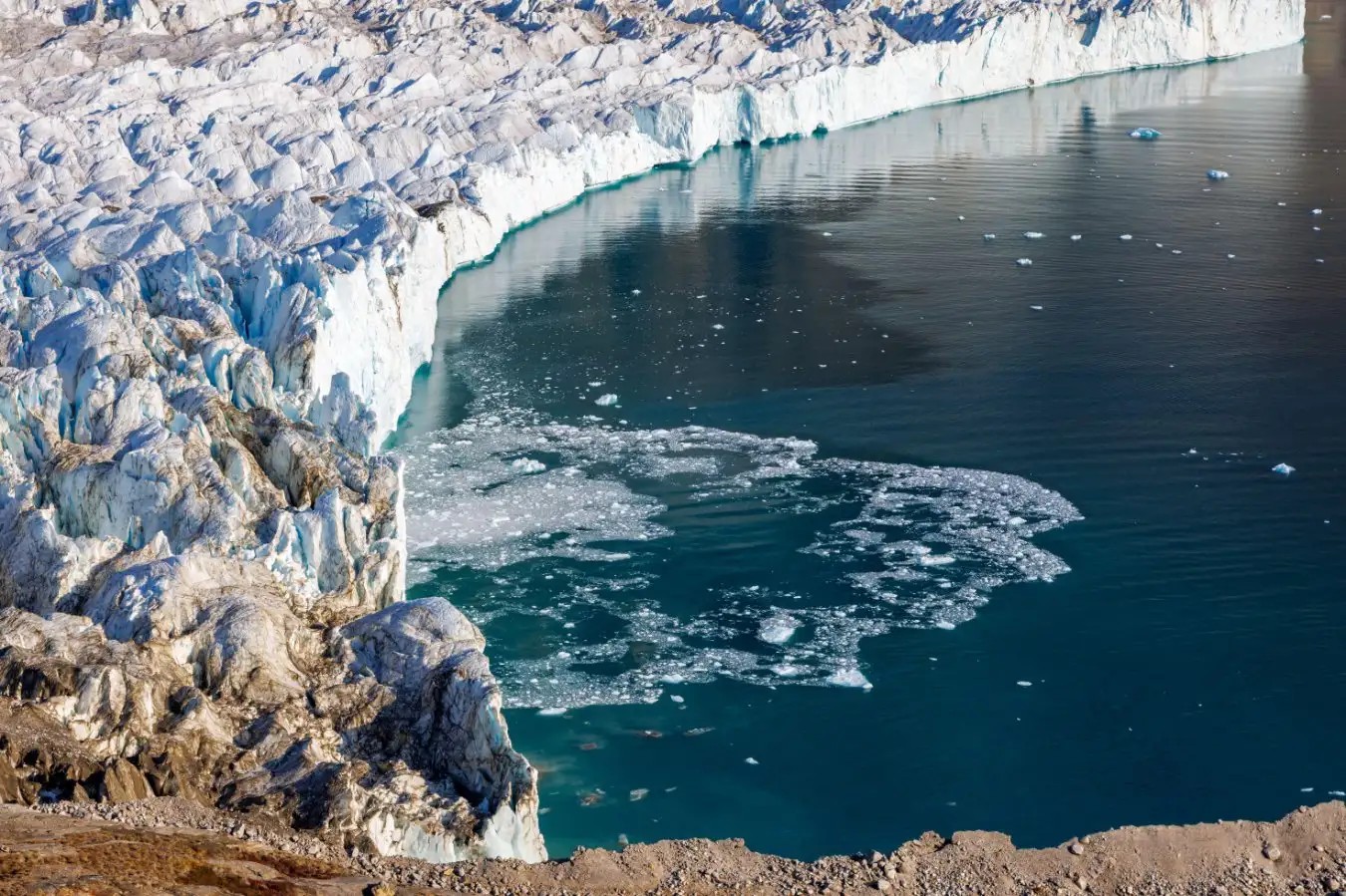
The Arctic region is locked into at least 1.5°C of additional warming, regardless of whether global atmospheric carbon dioxide levels return to pre-industrial levels. This means even if aggressive climate action were taken today and succeeded in reducing CO2, the Arctic would still experience significant, long-term warming.
The Ocean’s Thermal Inertia
The primary driver behind this irreversible change is the massive heat absorption by the world’s oceans. Approximately 90% of the excess heat from global warming has been stored in the ocean, which will continue to warm the Arctic for centuries even if the atmosphere cools. This thermal inertia is a critical factor: while atmospheric CO2 can be reduced relatively quickly, the ocean’s heat content changes far more slowly.
This effect is compounded by positive feedback loops, such as the loss of sea ice. With less ice, more open water absorbs sunlight, further accelerating warming.
Precipitation Patterns Will Shift
Beyond temperature, the Arctic is also predicted to retain approximately 0.1 millimetres per day of excess precipitation even under aggressive carbon dioxide removal (CDR) scenarios. This suggests that changes in the Arctic’s hydrological cycle are also locked in, regardless of future emissions reductions. The study used 11 independent climate models to predict these outcomes.
The Limits of Carbon Dioxide Removal
Many experts are sceptical that large-scale CDR projects will significantly reduce atmospheric CO2 anytime soon, given the immense financial and energy costs involved. The study tested extreme scenarios, including quadrupling CO2 levels before attempting removal. Results show the Arctic remains 1.5°C warmer than pre-industrial levels, even in these scenarios.
The Atlantic Meridional Overturning Circulation (AMOC)
The models also predict localized cooling in a strip of ocean south of Greenland and Iceland. This is linked to a potential slowdown in the Atlantic Meridional Overturning Circulation (AMOC), a major ocean current that transports heat from the tropics. A weakening AMOC could bring colder winters to Europe, as it would deliver less warm water to the region.
Long-Term Impacts and Uncertainties
The study did not directly model permafrost thaw or the Greenland ice sheet melt, but these effects are expected to continue regardless. While the Arctic will eventually cool over many centuries, the next few hundred years are likely to see continued warming and destabilization.
The Arctic’s fate is not solely determined by atmospheric CO2 levels. The ocean’s accumulated heat, combined with feedback loops and shifting ocean currents, creates a situation where some changes are effectively irreversible in the near term.
This research underscores the urgency of aggressive climate action, even as it acknowledges that certain impacts are already locked in. The Arctic is not merely a victim of future warming; it is a region undergoing irreversible change now.