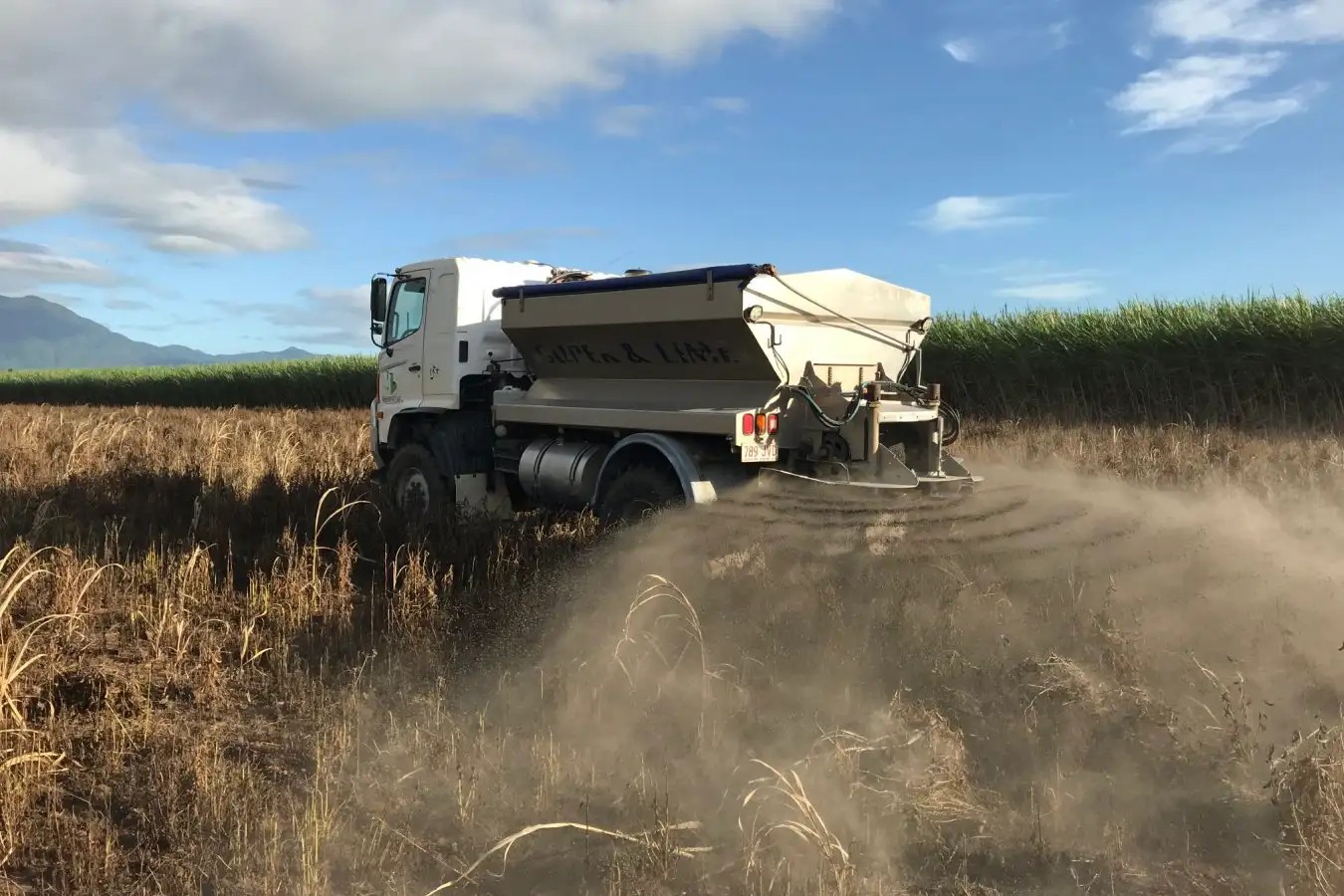
Spreading crushed silicate rocks on farmland has emerged as a potentially significant tool for carbon removal, with estimates suggesting it could sequester up to 1.1 billion tonnes of CO2 annually by the end of the century. This technique, known as enhanced rock weathering (ERW), accelerates a natural process where rocks break down in rainwater, locking away carbon dioxide in stable bicarbonate ions that eventually reach oceans and sediments. While promising, the real-world feasibility of these numbers is debated.
How Enhanced Rock Weathering Works
The core principle behind ERW is simple: crush rocks like basalt to increase their surface area, then spread them on agricultural land. Rainfall dissolves atmospheric CO2, forming carbonic acid that reacts with the rock’s minerals (silicon dioxide and metals) to create bicarbonate. This bicarbonate washes into waterways, effectively storing the CO2 for millennia. Farmers already use crushed limestone to enrich soil nutrients, making ERW a conceptually familiar practice.
Beyond carbon removal, ERW offers additional benefits: supplementing soil nutrients with magnesium and calcium, potentially reducing fertilizer dependence. Several nations, including Brazil, have begun promoting the practice as a dual-win for climate mitigation and agricultural efficiency. Last year, the start-up Mati Carbon won a $50 million prize for its carbon removal potential in Elon Musk’s XPRIZE competition, underscoring the growing interest in the field.
Realistic Scaling and Regional Variations
Initial projections estimated ERW could remove up to 5 billion tonnes of CO2 per year this century. However, a recent study led by Chuan Liao at Cornell University suggests more conservative figures: 350–750 million tonnes by 2050, rising to 700 million–1.1 billion tonnes by 2100. This adjustment accounts for adoption rates (similar to irrigation) and regional differences in weathering efficiency.
The distribution of carbon removal will likely shift over time. Europe and North America will lead initially, but Asia, Latin America, and sub-Saharan Africa are expected to surpass them as supply chains develop and costs decrease. Warmer climates with higher rainfall accelerate weathering, potentially allowing farmers in these regions to capitalize on carbon credit markets.
Key Uncertainties and Challenges
Despite the potential, significant hurdles remain. Marcus Schiedung at the Thünen Institute cautions that current projections may be overly optimistic. Carbon removal effectiveness can drop by up to 25 times in dry conditions. In high-pH soils, weathering may revert back to carbonates, releasing CO2 rather than sequestering it. Low-pH soils can also hinder carbon removal due to natural acidity reactions.
Mining and transporting the rock itself could offset carbon removal gains if not managed carefully. Some silicate rocks, like olivine, contain heavy metals (nickel and chromium) that could contaminate the food supply. Sourcing 5 gigatonnes of rock annually—required for 1 gigatonne of CO2 removal—poses a logistical challenge, as existing mines often contain metal contaminants, potentially necessitating new quarry development.
“We need to be sure that the CO2 is taken up. Otherwise, we get into the risk that we measure something [removing carbon], but somewhere else it’s released again, which is, in this geochemical complex system, likely to happen.”
– Marcus Schiedung, Thünen Institute of Climate-Smart Agriculture
Ultimately, enhanced rock weathering represents a promising yet complex carbon removal strategy. While the potential for large-scale CO2 sequestration exists, careful consideration of regional conditions, mining impacts, and soil chemistry is crucial to ensure net-positive climate benefits.