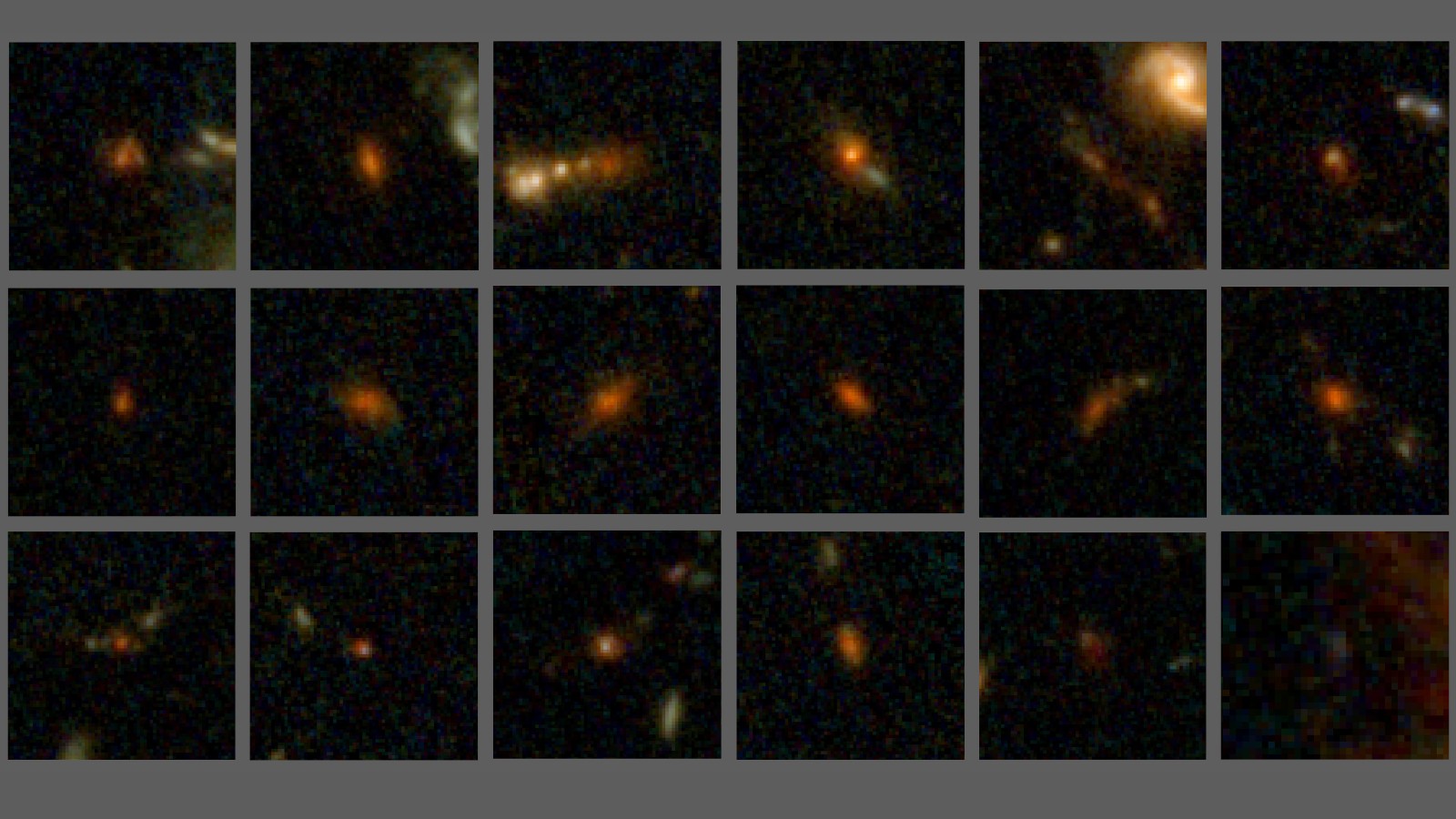
Astronomers using the James Webb Space Telescope (JWST) and the Atacama Large Millimeter/sub-millimeter Array (ALMA) have discovered 70 ancient, dusty galaxies that formed surprisingly early in the universe’s history. These galaxies, observed as they existed less than one billion years after the Big Bang, contain unexpectedly high levels of heavy elements (“metals”)—challenging current models of galactic evolution.
Unexpected Metal Richness
Current cosmological models predict that heavy elements should not have been present in such abundance so early in the universe. Stars forge these heavier elements through nuclear fusion, and the initial generations of stars were expected to be relatively metal-poor. However, these newly discovered galaxies were already rich in metals, implying that star formation began sooner and more efficiently than previously thought.
According to Jorge Zavala of the University of Massachusetts Amherst, “Dusty galaxies are massive galaxies with large amounts of metals and cosmic dust… And these galaxies are very old, which means stars were being formed in the early universe, earlier than our current models predict.”
How the Discovery Happened
The research began with ALMA identifying a population of 400 bright, dusty galaxies. Subsequent JWST observations narrowed this list down to 70 faint candidates at the edge of the observable universe—many never seen before. Combining data from both telescopes, astronomers confirmed these galaxies formed as early as 500 million years after the Big Bang. This timeline forces a reassessment of how quickly galactic structures developed after the universe’s birth.
Connecting the Dots
These ancient galaxies appear linked to two other previously discovered types of galaxies: extremely bright, star-forming galaxies and older, “quiescent” galaxies that no longer produce stars. Zavala compares this to having “snapshots of the lifecycle of these rare galaxies.” The bright galaxies represent youth, the quiescent galaxies represent old age, and the newly discovered dusty galaxies fill the gap as young adults.
This connection suggests that our understanding of galactic evolution is incomplete. If these three populations are indeed related, then star formation must have started earlier and proceeded more rapidly than existing theories allow.
More research is needed to solidify these connections, but the current evidence implies that our cosmic timeline needs revision. The discovery of these early, metal-rich galaxies raises fundamental questions about how stars formed and galaxies matured in the universe’s infancy.