
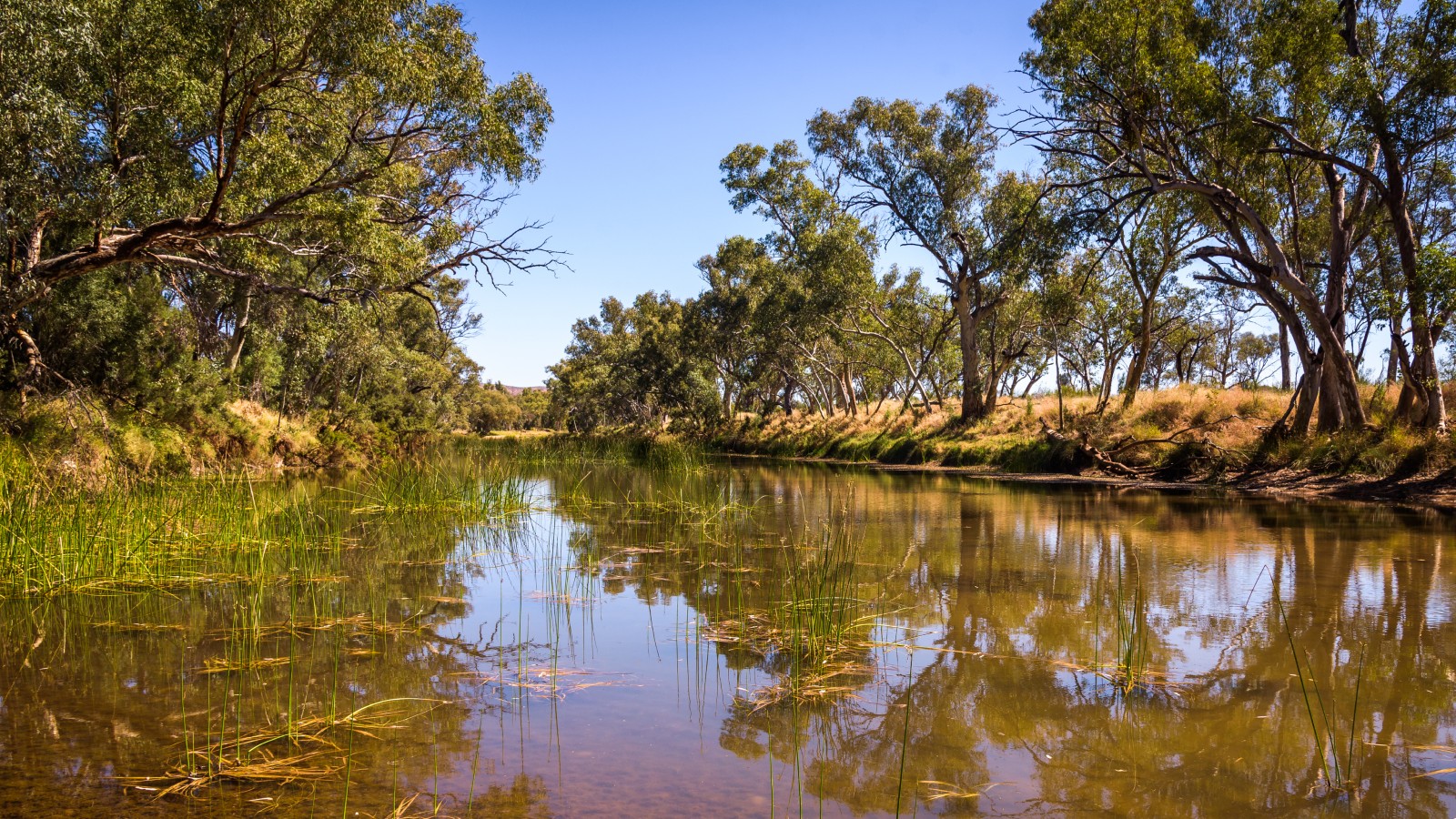
The oldest rivers on Earth are not necessarily the largest or most well-known. Many rivers form, flourish, and eventually disappear as landscapes evolve. Yet, one river has endured for an astonishing length of time: the Finke River in Australia.
A River Older Than Dinosaurs
The Finke River, known as Larapinta in the Arrernte Indigenous language, is estimated to be between 300 and 400 million years old, predating even the earliest dinosaurs. This network of streams stretches over 400 miles (640 kilometers) across the Northern Territory and South Australia. Unlike many rivers, the Finke flows intermittently, existing primarily as isolated waterholes in the arid Australian outback.
How Scientists Dated the River
Geological records, weathering patterns, and the analysis of radioactive isotopes in surrounding rocks have allowed scientists to pinpoint the Finke’s age to the Devonian or Carboniferous periods (419–299 million years ago). A key indicator is a phenomenon called cross-axial drainage. Rather than following the easiest paths along softer rock formations, the Finke cuts directly through resistant quartzite structures in the MacDonnell Ranges. This suggests that the river existed before the mountains rose, carving its course as the land uplifted.
“There is some suggestion that there was a preexisting drainage that was flowing as this range was building up,” explains geomorphologist Victor Baker. “The river is there before the mountains form and as the crust is being thrust up, the river is cutting down.”
Why Has It Lasted So Long?
Rivers typically disappear due to sediment buildup, tectonic shifts, or climate change. The Finke’s remarkable longevity is due to Australia’s geological stability. The continent sits on the Australian Plate, which has experienced minimal tectonic activity for at least 100 million years. This uninterrupted stability has allowed the river system to evolve without major disruptions.
Erosion and weathering further support this age, generating unique chemical profiles that indicate the river’s interaction with the atmosphere and water flow over millennia. Radioactive isotopes in the surrounding rocks act as a natural clock, allowing scientists to estimate their age by analyzing decay rates.
The Future of Ancient Waters
While the Finke has persisted for an extraordinary duration, its future is uncertain. Human water consumption and climate change pose increasing threats to dryland rivers. Ellen Wohl, a geologist at Colorado State University, notes that the Finke, like many similar waterways, faces growing pressures from water usage.
If the Finke were to disappear, the New River in the United States—estimated at approximately 300 million years old—may be the next oldest. However, the Finke remains a remarkable testament to the power of geological stability and a rare survivor in Earth’s ever-changing landscape.