




Archaeologists in France have uncovered a remarkably well-preserved Roman-era cremation tomb, complete with silver coins, gold jewelry, and a unique gold ring bearing what appears to be the deceased’s family name. The find sheds light on burial practices and elite life in Roman Gaul, raising questions about the region’s cultural connections.
Unexpected Discovery at Medieval Site
The tomb was discovered during excavations beneath medieval silos in Lamonzie-Saint-Martin, southwestern France. The site, overseen by the French National Institute for Preventive Archaeological Research (INRAP), revealed an unusual burial that predates the medieval structures by centuries. The discovery highlights how archaeological work often unearths unexpected historical layers beneath later settlements.
Bustum: A Direct Cremation Ritual
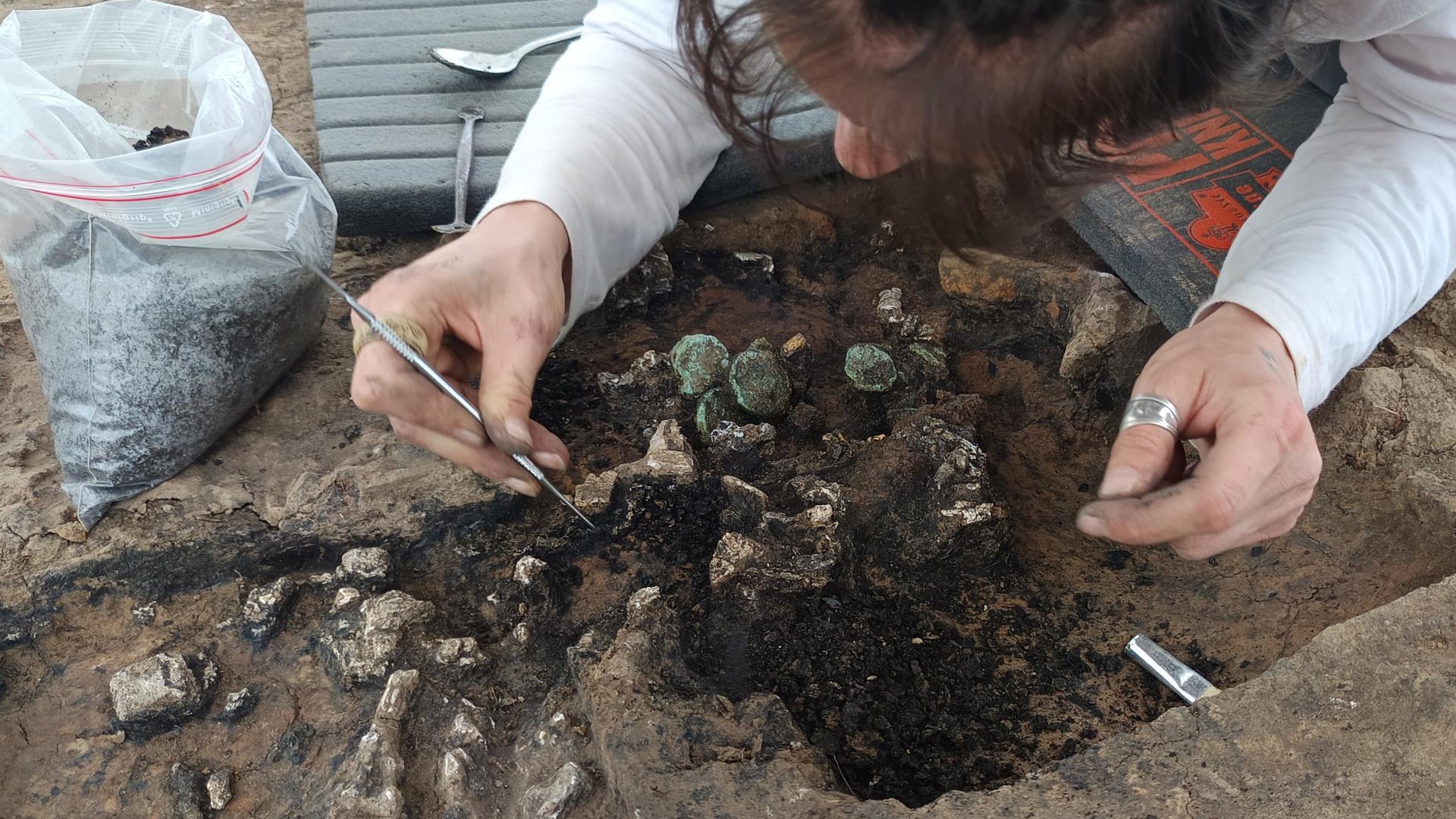
The grave is a bustum, a Roman funerary practice where the body was cremated directly over the burial pit and then interred. This particular bustum measured roughly 7.2 by 3.4 feet (2.2 by 1.05 meters) and was filled with offerings to accompany the deceased into the afterlife. The practice itself demonstrates a direct connection between death and remembrance in Roman society, where elaborate burials were a sign of status and respect.
Rich Grave Goods: Coins, Jewelry, and Horse Tack
The burial contained a variety of grave goods, including:
– Ten silver and bronze coins, suggesting wealth and trade connections.
– Small gold sheets, likely from a decorated purse or container.
– Lozenge-shaped crystals, remnants of a bejeweled leather accessory.
– A corroded iron object, possibly part of a horse bit, implying equestrian interests or status.
These objects highlight the deceased’s affluent lifestyle and potential military or aristocratic connections.
The Inscribed Ring: A Possible Surname?
Among the most intriguing finds were a gold bulla (an amulet given to newborn Roman boys) and a deformed gold ring. The ring matches an inscribed rock crystal, or intaglio, bearing the Greek inscription ΑΛΛΑΛΛΗ (Allallé). Archaeologists believe this may be the deceased’s family name, suggesting a possible Greek or Hellenized Roman heritage. The use of Greek inscriptions in Gaul points to extensive cultural exchange and the presence of Greek communities or elites within the Roman Empire.
Future Research and Broader Implications
Researchers will analyze surviving bone fragments to determine the deceased’s sex and age at death. Further excavations will seek additional graves and dwellings to understand the context of this lavish burial and its placement in this specific region of France. The discovery underscores the importance of archaeological research in revealing forgotten histories and complex cultural interactions.
This find is significant not only for its material wealth, but also for the linguistic clue it provides. The presence of a Greek surname suggests a deeper cultural tapestry than previously understood, highlighting the interconnectedness of the Roman Empire.
The rich and well-preserved cremation tomb offers valuable insights into Roman funerary practices, social hierarchies, and cultural exchange in Gaul. The ongoing investigation promises to unveil further details about the deceased and the world they inhabited.