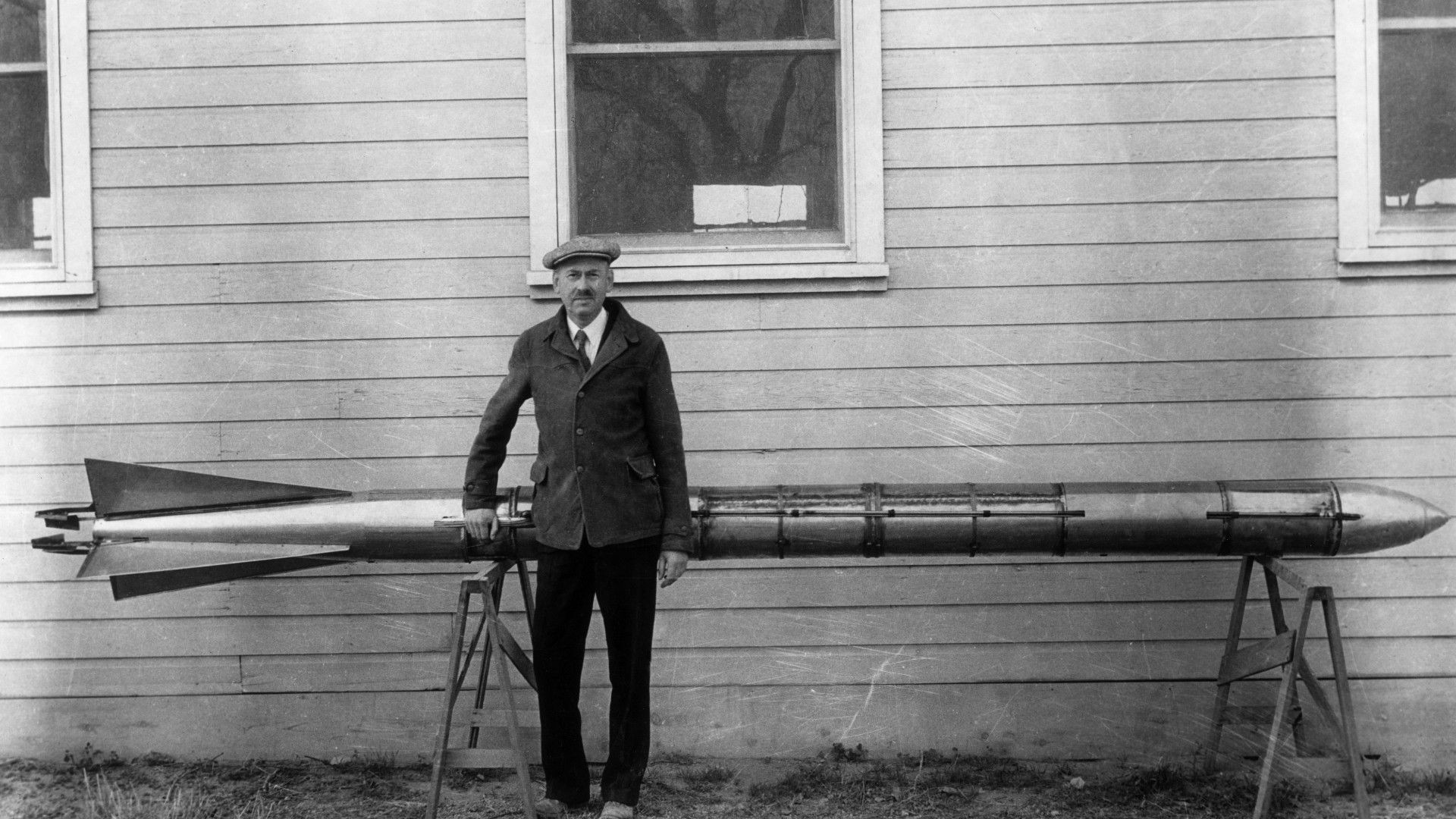
One hundred years ago, on March 16, 1926, a small rocket launched from a cabbage field in Auburn, Massachusetts. Designed by physicist Robert Goddard, this first liquid-fueled flight marked the true beginning of modern rocketry—a leap that would propel humanity to the Moon within half a century.
Today, NASA is building on that same foundation to send astronauts back to the lunar surface with the Artemis program.
The Genesis of Modern Flight
Goddard’s 40-foot rocket wasn’t just a curiosity; it introduced technologies that remain essential. Turbopumps, gimbaling engines, and gyroscopic guidance —all pioneered by Goddard—are still at the core of today’s launch vehicles. These innovations moved rocketry beyond unreliable solid propellants toward controlled, powerful liquid-fueled systems.
Liquid propellants allow for throttling and precise control, unlike solid boosters which burn until depleted. While solid boosters remain in use (like those on NASA’s Space Launch System, or SLS), liquid fuels offer superior performance. The SLS, at 322 feet tall, uses the same basic principle Goddard demonstrated: ignite liquid oxygen and fuel for controlled thrust.
The Artemis Mission: A Return to the Moon
The Artemis program represents a direct continuation of Goddard’s legacy. NASA’s upcoming Artemis 2 mission, scheduled for no earlier than April 1, will carry astronauts Reid Wiseman, Victor Glover, Christina Koch, and Canadian astronaut Jeremy Hansen on a 10-day lunar flyby. This is the first crewed mission in the program, designed as a full system check before the ultimate goal: establishing a permanent human presence on the Moon.
“Artemis 2 is a crucial stepping stone,” explains NASA. “It’s not about just reaching the Moon, but building the infrastructure for long-term exploration.”
The Artemis program follows a carefully staged approach. After Artemis 2 tests Orion’s life support systems, Artemis 3 (planned for 2027) will practice lunar lander rendezvous in Earth orbit. The first crewed lunar landing, Artemis 4, is tentatively scheduled for 2028. The SLS rocket is currently being moved to the launchpad in Florida, with a launch window from April 1-6.
The technologies that carried humans into space during the 1960s, and which continue to develop today, have their roots in Goddard’s original design. The Artemis missions, like their predecessors, are built on the foundations laid a century ago—from a cabbage field to a new era of lunar exploration.