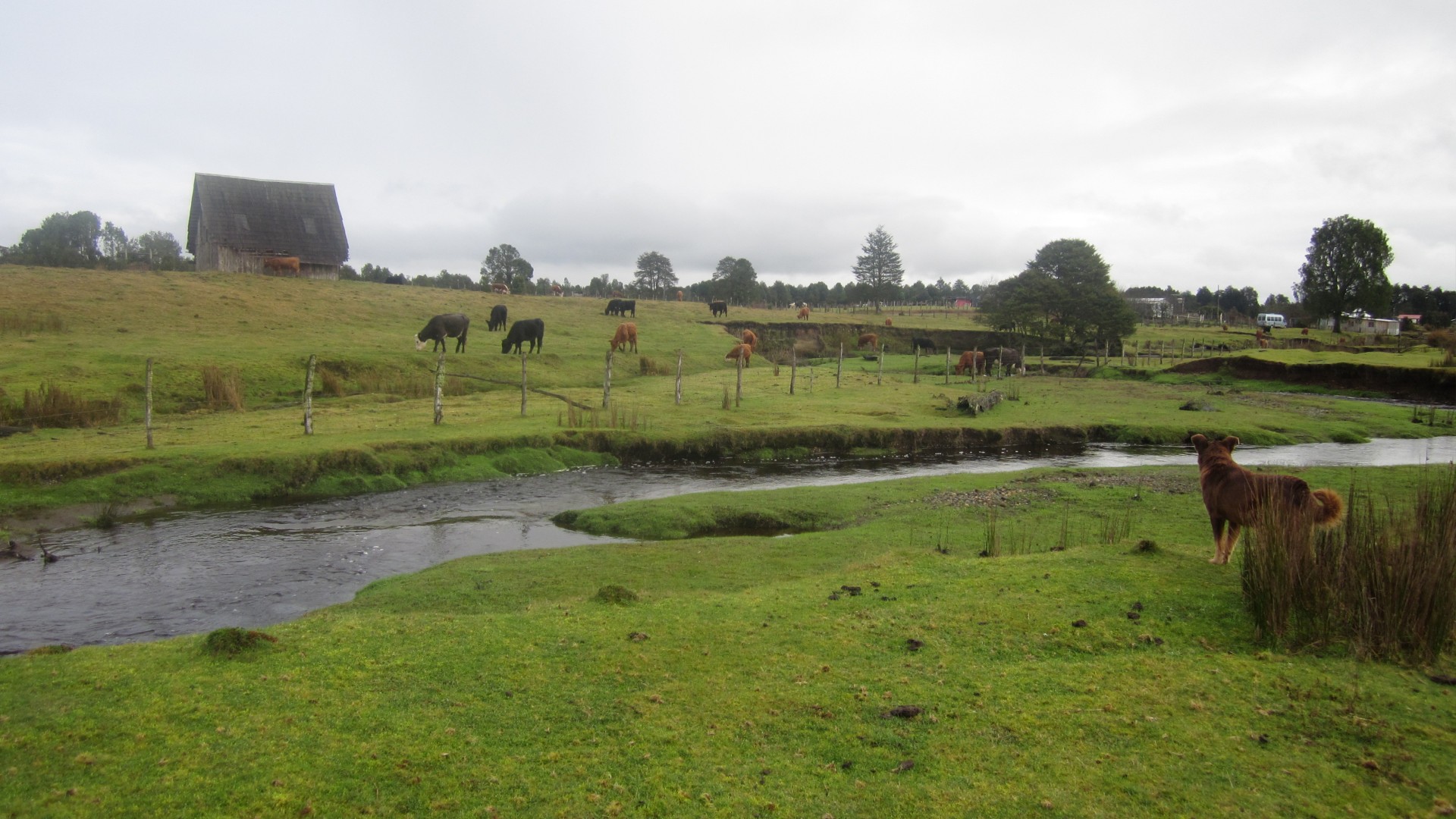
A recent study is challenging the established timeline of early human settlement in South America, claiming that the Monte Verde archaeological site in Chile is significantly younger than previously believed. The claim, published in Science, suggests the site was occupied between 4,200 and 8,200 years ago, rather than the widely accepted 14,500 years. However, the findings have been met with sharp criticism from other archaeologists, who call the methodology “egregiously poor geological work.”
The Significance of Monte Verde
Monte Verde holds a critical position in archaeological debates about the peopling of the Americas. Discovered in 1976, the site yielded well-preserved artifacts – including stone tools, wooden structures, and even human footprints – that initially supported the theory that humans inhabited South America before the Clovis culture in North America. The Clovis theory proposed that the first Americans arrived through an ice-free corridor around 13,000 years ago. Monte Verde’s initial dating suggested an alternative: a coastal migration route predating Clovis.
This matters because it affects our understanding of how and when humans spread across the continent, and challenges the long-held assumption that the Clovis culture represents the earliest widespread presence of humans in North America. Other pre-Clovis sites, like Paisley Caves in Oregon and White Sands in New Mexico, have also challenged the Clovis-first model.
The New Dating Controversy
The researchers behind the new study, led by Todd Surovell of the University of Wyoming, re-examined the geological context of Monte Verde. They argue that the site sits on a landform no older than 8,000 years, and that older dated materials found nearby were likely redeposited due to erosion. The key evidence cited is a layer of volcanic ash (Lepué Tephra) deposited around 11,000 years ago.
Surovell claims the site’s position relative to this ash layer indicates it was settled after the eruption. “The so-called 14,500-year-old archaeological component… actually comes from a landform that’s at best 8,000 years old,” he stated.
Expert Pushback
The findings have sparked strong opposition. Tom Dillehay of Vanderbilt University, who has spent decades studying Monte Verde, disputes the geological analysis, stating that there is no evidence of the 11,000-year-old ash layer underneath the site. Michael Waters of Texas A&M University criticized the study as “egregiously poor geological work,” arguing that essential analyses – such as micromorphology and paleosol examination – were omitted.
The debate highlights a fundamental tension in archaeology: dating complex sites requires careful consideration of geological processes, and even small methodological errors can dramatically alter interpretations. David Meltzer of Southern Methodist University noted that the study’s sampling was conducted far from the original site, potentially skewing results.
Broader Implications and Ongoing Debate
The controversy extends beyond Monte Verde itself. Surovell has previously questioned the dating of other pre-Clovis sites, suggesting that “downdrift” of artifacts may artificially inflate their apparent age. This stance aligns with a resurgence of interest in the “Clovis First” theory, though many archaeologists remain skeptical.
Kenneth Feder, author of Native America, acknowledges that questioning established science is healthy, but maintains that regardless of Monte Verde’s exact age, the probability remains that coastal migration played a role in the peopling of the Americas.
Ultimately, the debate over Monte Verde underscores the inherent uncertainty in reconstructing the past. While the new study presents a provocative challenge to established narratives, it is unlikely to overturn decades of research without further rigorous validation. The scientific community awaits a detailed response from the Monte Verde Project team, promising a systematic rebuttal of the study’s claims.