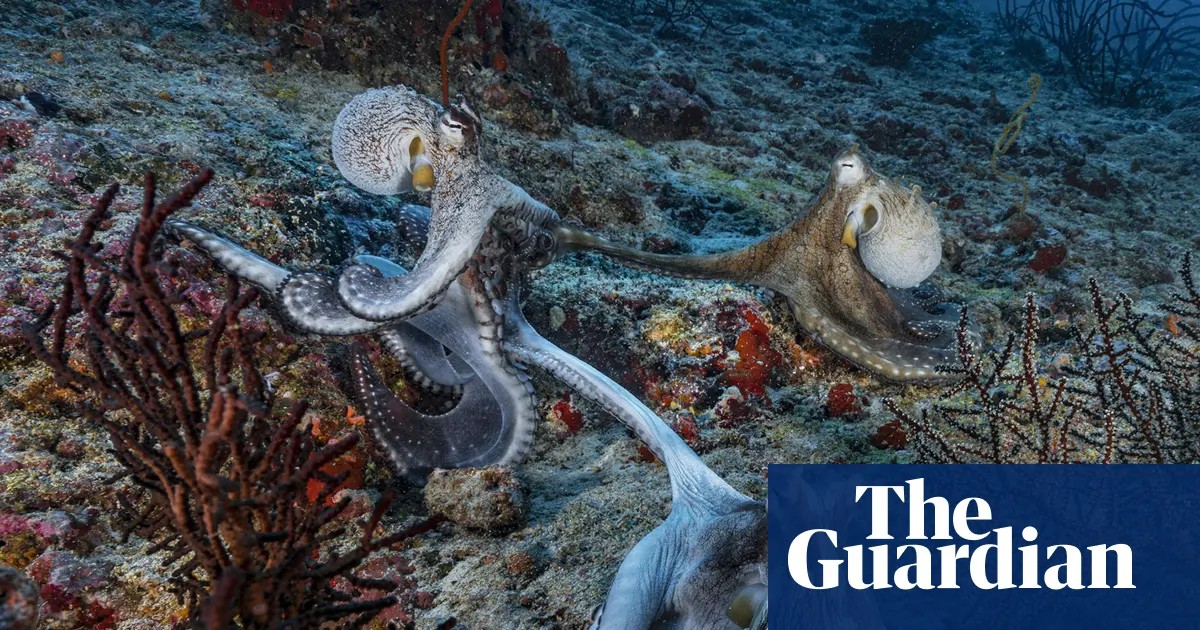
Scientists have discovered that male octopuses use a specialized arm, the hectocotylus, to mate, guided not by sight but by the detection of female hormones. This remarkable adaptation allows them to locate and fertilize mates even in total darkness or without direct visual contact. The findings, published in Science, reshape our understanding of octopus reproduction and sensory evolution.
The Sensory Arm: More Than Just a Mating Tool
For years, researchers knew male octopuses transfer sperm using the hectocotylus, but how this arm finds its target remained a mystery. Octopuses are largely solitary creatures, making frequent close encounters rare. The research team, led by Professor Nicholas Bellono at Harvard University, hypothesized that the arm must function as both a sensor and a mating organ to succeed in these infrequent interactions.
To test this, the scientists designed an experiment using California two-spot octopuses. They separated a male and female behind an opaque barrier with small holes for arm access. Unexpectedly, the male immediately extended its hectocotylus through a hole, located the female’s reproductive tract, and initiated mating. This occurred repeatedly, even in darkness, confirming the arm’s ability to navigate without sight.
Progesterone as the Key Signal
Further investigation revealed that the male octopus’s arm is sensitive to progesterone, a hormone released by female octopuses during mating readiness. When amputated hectocotyli were exposed to progesterone, they exhibited movement, while other hormones had no effect.
The researchers then isolated the hormone in a tube and placed it behind the barrier. Males readily explored and attempted to mate with the progesterone-filled tube, proving that the chemical signal alone is sufficient to trigger mating behavior. This suggests that octopuses rely heavily on pheromonal cues in reproduction.
Rapid Evolution of Sensory Receptors
The study also identified specialized receptors on the hectocotylus tip that bind to progesterone. These receptors appear to have evolved rapidly within cephalopods, suggesting that different species may be fine-tuned to detect unique chemical signals for reproductive compatibility.
“This raises the intriguing possibility that these chemical cues help encode both sex and species identity,” Bellono explained. This could explain how species maintain reproductive barriers or, conversely, how crossbreeding leads to the emergence of new species.
Accidental Discovery
Notably, the researchers stumbled upon this discovery while studying octopus mating behavior in the lab. The initial goal was simply to observe mating attempts, but the animals revealed the sensory function of the arm through their behavior.
The findings underscore the importance of following observations in scientific research. The study not only illuminates octopus reproduction but also highlights how sensory systems evolve to meet reproductive challenges in solitary species.
In conclusion, male octopuses have evolved a sophisticated method for mating at arm’s length, guided by the detection of female hormones. This adaptation underscores the remarkable sensory capabilities of these creatures and offers insights into the evolution of reproductive barriers and species identity.