The crew of the Artemis II mission is on the verge of a historic milestone. As they continue their journey through deep space, astronauts Reid Wiseman, Victor Glover, Christina Koch, and Jeremy Hansen are poised to become the farthest humans from Earth in history, surpassing the record previously held by the crew of the Apollo 13 mission.
While this mission is not designed for a lunar landing, it serves as a critical “pathfinder” for NASA. By testing life support systems and conducting scientific observations in deep space, the crew is paving the way for future Artemis missions that will eventually place humans on the lunar surface.
The Lunar Flyby: A Journey into the Unknown
On Monday, the mission enters its most intense phase: the lunar flyby. This period involves a close approach to the Moon, offering a unique vantage point that no human has experienced before.
- The Distance Record: The crew will reach their maximum distance from Earth at 7:07 p.m., looping around the Moon before beginning their return journey.
- The Radio Blackout: As the spacecraft passes behind the far side of the Moon, the lunar mass will block all radio signals from Earth. This communication blackout is expected to last approximately 41 minutes, starting around 6:44 p.m.
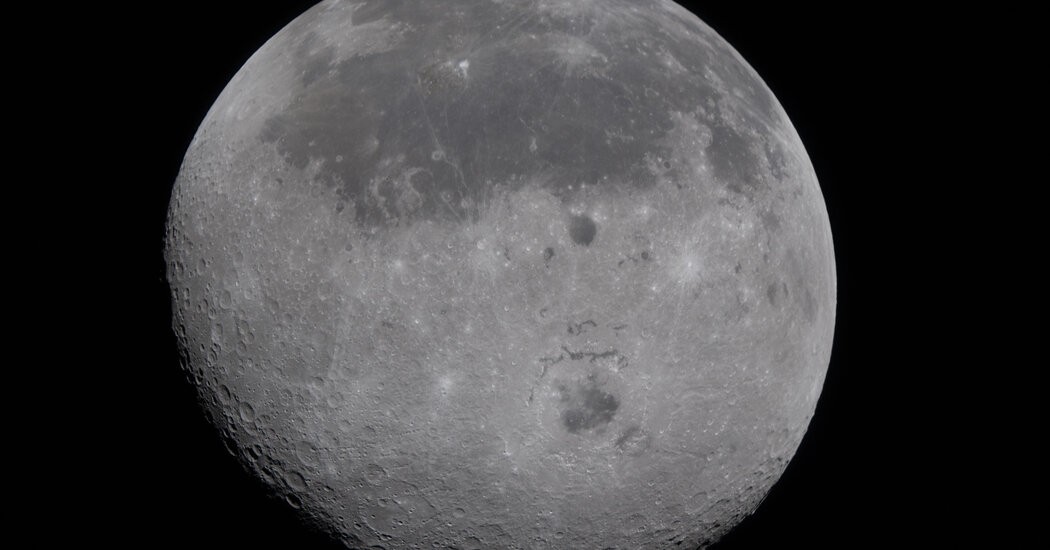
- A New Perspective: Unlike the “near side” of the Moon that we see from Earth, the far side is characterized by heavy cratering and a lack of volcanic material. Scientists expect it to appear brighter due to light reflecting off impact craters, yet potentially “grayer” in tone.
“Seeing it with human eyes would add a deep dimension and physical reality to it—making it seem more like a place we can explore and discover,” says Dr. Julie Stopar of the Lunar and Planetary Institute.
Science in Deep Space: From Geology to Biology
The Artemis II crew are not merely passengers; they are acting as field scientists. While orbiting satellites provide high-resolution imagery, the human eye offers a level of nuanced color and texture observation that machines cannot yet replicate.
Geological Observation
The astronauts will document ancient lava flows, mountain ranges, and impact craters. They will also keep a watchful eye on the dark, unilluminated regions of the Moon, looking for “flashes” caused by meteoroids striking the lunar surface.
Biological Research: The AVATAR Experiment
Beyond geology, the mission is conducting vital biological research through the AVATAR (A Virtual Astronaut Tissue Analog Response) experiment.
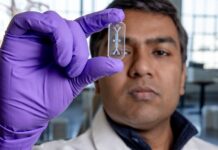
– The Tech: Scientists are using “organs on a chip”—tiny devices the size of a thumb drive—containing bone marrow samples.
– The Goal: Researchers want to understand how microgravity and exposure to deep-space radiation (outside Earth’s protective magnetic field) affect blood cell formation and DNA. This data is crucial for ensuring the long-term health of astronauts on much longer journeys to Mars.
The Logistics of Life in Orbit
Living in a compact spacecraft requires a delicate balance of nutrition, safety, and morale. To prevent floating debris, NASA food scientists have engineered meals that minimize crumbs.
The crew’s menu is a far cry from the “toothpaste-tube” meals of the early space age. Their current diet includes:
– Main Courses: Scrambled eggs, breakfast sausage, couscous, and even beef brisket or macaroni and cheese.
– Morale Boosters: To combat the isolation of deep space, the crew has access to coffee, chocolate, and various sweets.
As astronaut Christina Koch noted, sharing these meals provides a sense of “togetherness,” turning the high-stakes mission into something as communal as a “camping trip.”
Summary: The Artemis II mission represents a massive leap in human spaceflight, moving beyond low-Earth orbit to test the biological and technical limits of deep-space travel. By breaking distance records and observing the lunar far side, this crew is providing the essential data needed to turn Moon landings—and eventually Mars missions—into a reality.