The Artemis II mission is entering its most historic phase yet. After five days of traveling through space, the four-person crew—Reid Wiseman, Victor Glover, Christina Koch, and Jeremy Hansen —is preparing to travel farther from Earth than any human in history, surpassing even the record set by the Apollo 13 astronauts.
While this mission is not a landing attempt, it serves as a critical “pathfinder” for NASA, testing the limits of human endurance and spacecraft systems as we prepare to return to the lunar surface.
The Lunar Flyby: Seeing the Unseen
On Monday, the crew will transition into the lunar flyby phase, a period of intensive scientific observation. As the Orion spacecraft loops around the Moon, the astronauts will experience several unique phenomena:
- Maximum Distance: At 7:07 p.m., the crew will reach their furthest point from Earth.
- Radio Blackout: As the Moon passes between the crew and Earth, radio signals will be blocked. This communication blackout is expected to last approximately 41 minutes, starting at 6:44 p.m.
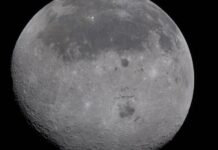
- The Far Side Perspective: Unlike the familiar “near side” of the Moon, the far side is characterized by heavy cratering and a lack of volcanic material. Scientists expect it to appear brighter and grayer than what we see from Earth.
- A Solar Eclipse: Following the flyby, the crew will witness a 53-minute solar eclipse, offering a rare view of the solar corona and unique perspectives of Earth and other planets.
“Seeing [the far side] with human eyes would add a deep dimension and physical reality to it—making it seem more like a place we can explore and discover,” says Dr. Julie Stopar of the Lunar and Planetary Institute.
Turning Astronauts into Field Scientists
Although the crew will remain in orbit—roughly 4,000 to 6,000 miles above the surface—their role is much more than passive observers. NASA is essentially training these astronauts to act as field scientists.
Using high-resolution photography, the crew will document ancient lava flows, mountain ranges, and impact craters. Because the human eye can detect subtle nuances in color and texture that orbiting satellites might miss, their observations will be vital in mapping the Moon for future landing missions.
The Biology of Deep Space
A major component of this mission is understanding how the human body reacts to life beyond Earth’s protective magnetic field.
To study this, NASA is utilizing AVATAR (A Virtual Astronaut Tissue Analog Response) chips. These “organs on a chip” contain bone marrow samples from the crew. By analyzing these in microgravity, researchers hope to understand:
1. Bone Density Loss: How deep space affects the structural integrity of human bones.
2. Blood Cell Development: How the formation of red and white blood cells changes.
3. DNA Alterations: How radiation and microgravity affect telomeres—the sections of DNA linked to aging.
The Logistics of Survival: Space Food and Morale
Living in a compact capsule requires meticulous planning, even for something as simple as breakfast. The crew’s menu is a highly engineered balance of nutrition, safety, and psychological comfort.
To prevent floating crumbs from damaging sensitive electronics, meals are carefully formulated. The menu includes items like breakfast sausage, couscous, and mango salad, alongside various coffee and tea options.
Beyond mere calories, NASA food scientists emphasize that nutrition is a tool for morale. In the isolation of deep space, shared meals serve as a vital social anchor. As astronaut Christina Koch noted, sharing meals in orbit feels “like a camping trip,” providing a sense of togetherness in an environment that is anything but ordinary.
Conclusion
The Artemis II mission represents a massive leap in human spaceflight, transitioning from low-Earth orbit testing to deep-space exploration. By breaking distance records and conducting advanced biological research, this crew is laying the essential groundwork for the next era of lunar habitation.