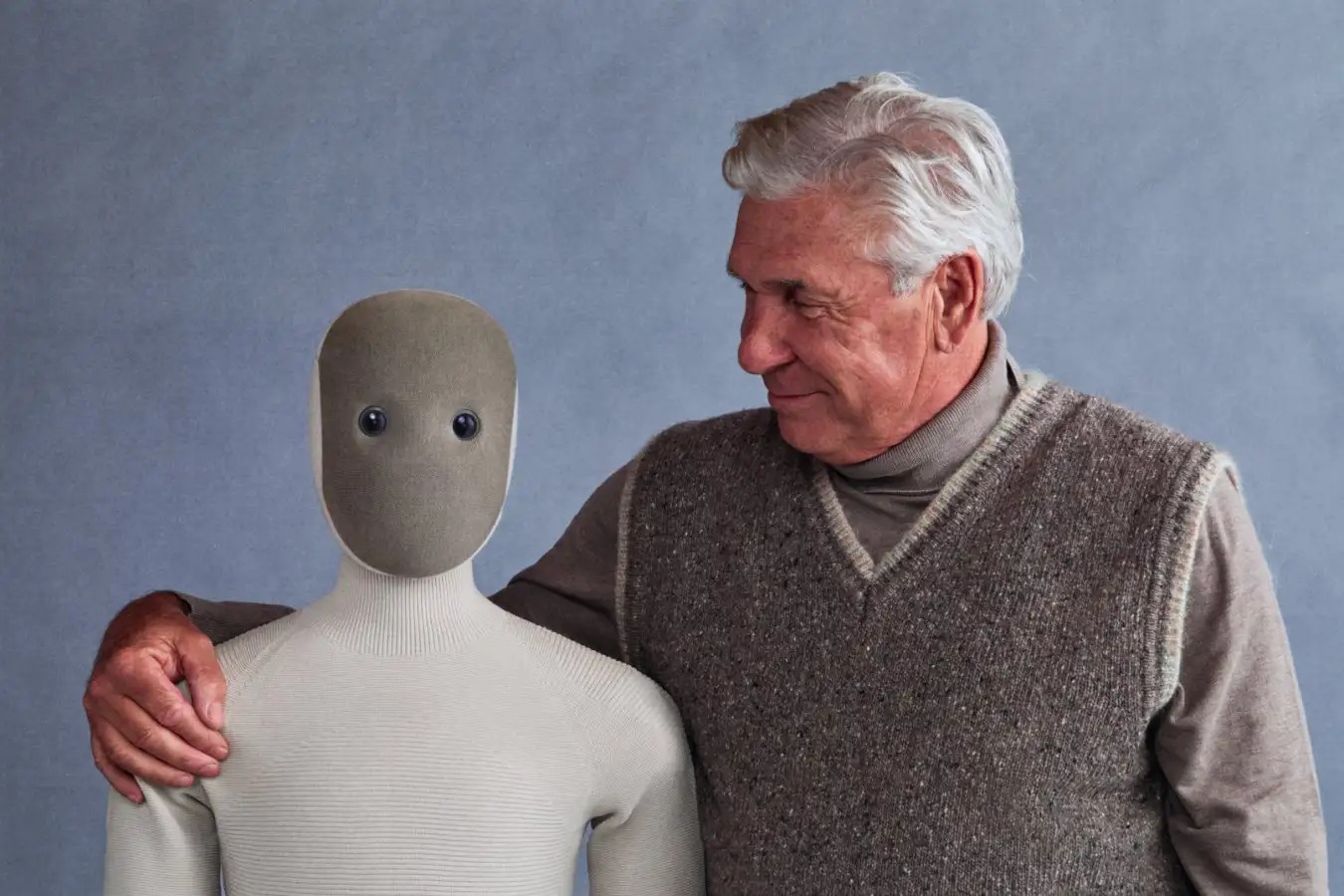
For decades, humanoid robots have been a staple of science fiction – from the sarcastic Bender in Futurama to the cunning Ava in Ex Machina. Yet, the idea of a fully functional, walking, talking robot with arms and legs felt like a distant dream. Today, that dream is rapidly becoming reality. Last year’s World Humanoid Robot Games in China showcased machines running, boxing, and even playing football (though with occasional tumbles). More importantly, companies are now pre-selling humanoids designed for practical use: helping around the house. 1X Robotics, for instance, opened pre-orders for its NEO robot at the end of 2023, with deliveries expected this year – a significant milestone. With multiple companies now offering humanoid assistants, owning a robot butler is no longer a fantasy. Options are available for just a few thousand pounds, less than the price of a used car.
This guide unpacks the world of consumer humanoid robots, addressing key questions any potential buyer should ask. The reality is, you might get far more or far less than you expect.
The Humanoid Boom: Why Now?
The humanoid robot market is exploding. Over 40 new models were unveiled globally in 2023 alone, with China accounting for 60% of them, according to Morgan Stanley. This surge is fueled by advances in artificial intelligence that enable robots to function more effectively. Investor Cathie Wood calls humanoid robots the biggest opportunity for AI integration into daily life. OpenAI CEO Sam Altman predicts a future where “seven robots” will be commonplace on the streets. Cryptocurrency investor Andrew Kang boldly claims 2024 will be “the year of humanoid robots.”
Five of the most publicized and affordable models are now available for order, or soon will be. Prices are dropping, making them accessible to affluent consumers. Unitree’s R1 starts at around £4,400. 1X Robotics offers the NEO at $20,000 outright or $499 per month as a subscription – a more manageable option for those seeking productivity gains through automation.
Do You Really Need a Humanoid?
The current designs often prioritize form over function. Most models feature a body, head, two arms, and two legs. The key difference lies in “degrees of freedom” – the range of movement in their joints. 1X’s NEO has 22 degrees of freedom in each hand, totaling 75 across the robot. Figure 03, used in BMW factories, has only 30 total degrees of freedom but can still tidy and restock cupboards.
However, experts question the necessity of humanoid form. Jonathan Aitken at the University of Sheffield argues that a human-shaped design isn’t always optimal. “Do they have to be humanoid?” he asks. “No, I don’t think they do.” While the shape fits existing infrastructure (stairs, door handles), it’s not always the most efficient, reliable, or cost-effective solution. Joanna Bryson at the Hertie School in Berlin agrees: “It’s just really bizarre, the whole idea that you want something humanoid.”
For simple tasks like vacuuming, existing robot cleaners are already effective. If you need objects picked up, a mobile platform with a single arm might suffice. Sunday’s Memo robot, with a humanoid upper half on a wheeled base, is one such alternative.
Actuators – the components that power joint movement – remain expensive, costing $500 to $1,000 each. Simpler designs with fewer appendages will inevitably be more affordable. “Imagine a vacuum cleaner with an arm,” says Subramanian Ramamoorthy at the University of Edinburgh. “That kind of robot is much more likely to enter our homes.”
What Can Your Robot Actually Do?
If you insist on a humanoid, carefully consider its capabilities. Payload (the maximum weight it can carry) is critical. The NEO can lift around 70 kilograms while standing but only 25 kg when moving. Many other models manage only a few kilograms.
Battery life is another limitation. The NEO lasts about 4 hours on a full charge, sufficient for slow walking and basic tidying. More demanding tasks drain the battery faster. Cheaper models, like the Unitree R1, last only 1 hour.
However, brawn is useless without brains. Robots rely on AI models to process visual inputs and plan movements. Nvidia’s GR00T operating system is a popular choice, but other companies are developing their own. Figure uses Helix, while 1X combines a proprietary world model with Redwood.
These systems aren’t perfect. A 2024 Tesla Optimus demo was allegedly assisted by humans operating the robot remotely via VR. Even Elon Musk acknowledges that current models may require human assistance for certain tasks. Ramamoorthy warns that “plug-and-play” androids are not yet a reality. Early adopters will likely assist in the robot’s development.
Privacy is also a concern. Unlike fixed webcams, robot sensors operate continuously, potentially recording private conversations and movements. Aitken urges buyers to question data ownership and usage policies. “Who owns that data? Where does it come from? Where does it go?” Bryson warns, “People think they bought a friend, and they just bought a spy.”
Will It Work… and Last?
The initial price tag might be misleading. Some robots, like the Unitree R1, require separate AI installation. The $499 monthly subscription for the NEO might be more sustainable than a one-time $20,000 purchase. Choose wisely, or you could end up with a malfunctioning or useless robot butler.
Finally, consider potential drawbacks. Even with 99% success, the remaining 1% can cause problems. Aitken warns, “What can happen in that 1% of the time?” A mistake in a home environment – with children, pets, and clutter – could be far more disruptive than in a controlled factory.
Ultimately, the robot butler revolution is coming, but it’s still in its early stages. Proceed with caution, realistic expectations, and a healthy dose of skepticism.