To celebrate Sir David Attenborough’s 100th birthday, scientists have paid tribute to the legendary broadcaster by naming an entirely new genus of parasitic wasp after him. The discovery, announced by the Natural History Museum in London, highlights how much remains unknown about the natural world—even within the drawers of major institutions.
A Hidden Gem in the Archives
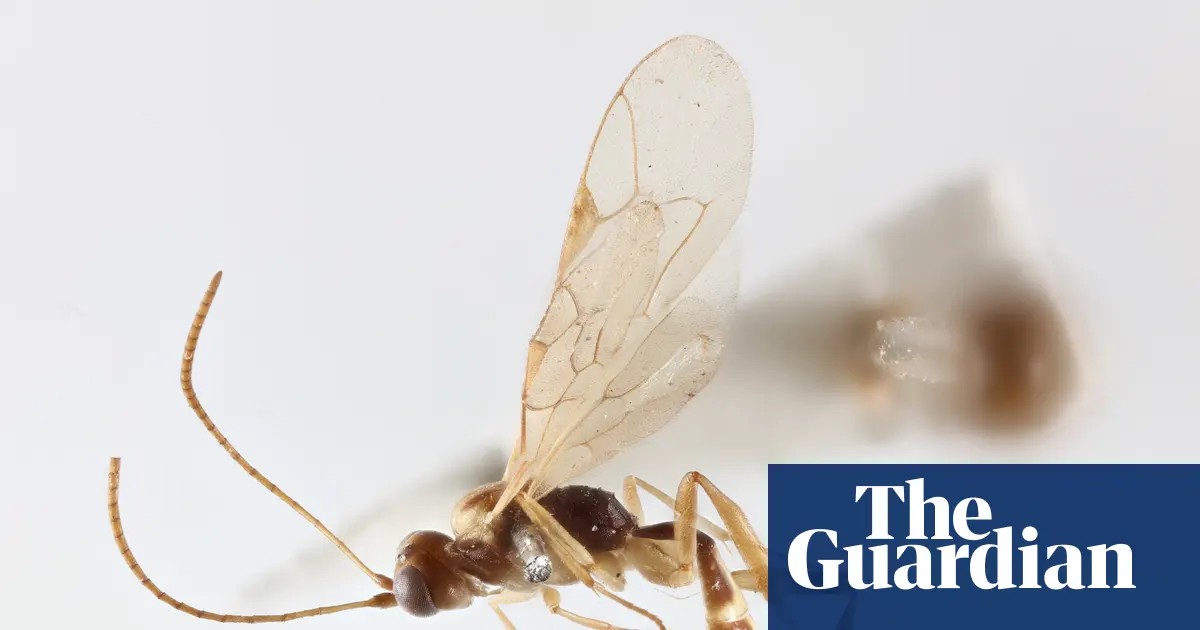
The newly described insect, Attenboroughnculus tau , is a microscopic marvel. Measuring just 3.5 millimeters in length, this enigmatic ichneumon wasp features a distinctive T-shaped marking on its abdomen, which inspired the species name tau.
Despite being collected in 1983 in Chile’s Valdivia province, the specimen remained unidentified for decades. It sat forgotten in an unsorted drawer until recently, when volunteer Augustijn De Ketelaere spotted its unusual characteristics during a routine examination of the museum’s ichneumonid collections.
Why This Discovery Matters
The significance of Attenboroughnculus tau extends beyond its name. Dr. Gavin Broad, principal curator for insects at the Natural History Museum, led the study and determined that the wasp is so distinct from its closest relatives that it cannot fit into any existing genus. This necessitated the creation of a new taxonomic group—a rare honor in the scientific community.
“When I was far too young, I learnt about taxonomy from David Attenborough’s Life on Earth series and resolved to be a taxonomist. Amazingly, I ended up a taxonomist, so I have Sir David to thank for that,” Dr. Broad explained.
This naming serves as a direct link between Attenborough’s early influence on public scientific interest and the modern work of professional taxonomists.
The Mystery of the Parasite
While the physical description of the wasp is complete, its behavior remains a mystery. As a parasitic wasp, it lays its eggs inside another animal, but specific details of its life cycle are unknown.
Dr. Broad noted that a close relative in Australia attacks spider egg sacs, suggesting Attenboroughnculus tau might do the same. However, finding the species in the wild today would be akin to finding a needle in a haystack. Chile is known for its unique biodiversity, but the vast majority of ichneumonid wasps remain undescribed. Even in well-studied regions like Britain, new species are identified every year.
A Call to Reexamine Collections
This discovery underscores a broader trend in biological science: historic collections are goldmines for new knowledge. Scientists hope that this tribute to Attenborough will inspire researchers worldwide to reexamine their own archives. Many unique species may be hiding in plain sight, waiting to be described and understood.
Jennifer Pullar, science communications manager at the Natural History Museum and co-author of the study published in the Journal of Natural History, emphasized the potential impact:
“We hope to inspire global scientists to take another look in their collections to see if there is something small that could contribute to our collective understanding and therefore the future of our natural world.”
Conclusion
The naming of Attenboroughnculus tau is more than a birthday gift; it is a reminder of the endless depth of biodiversity and the importance of meticulous scientific observation. As we celebrate Attenborough’s century of life, this tiny wasp symbolizes the enduring legacy of curiosity and the ongoing quest to understand our planet’s smallest inhabitants.