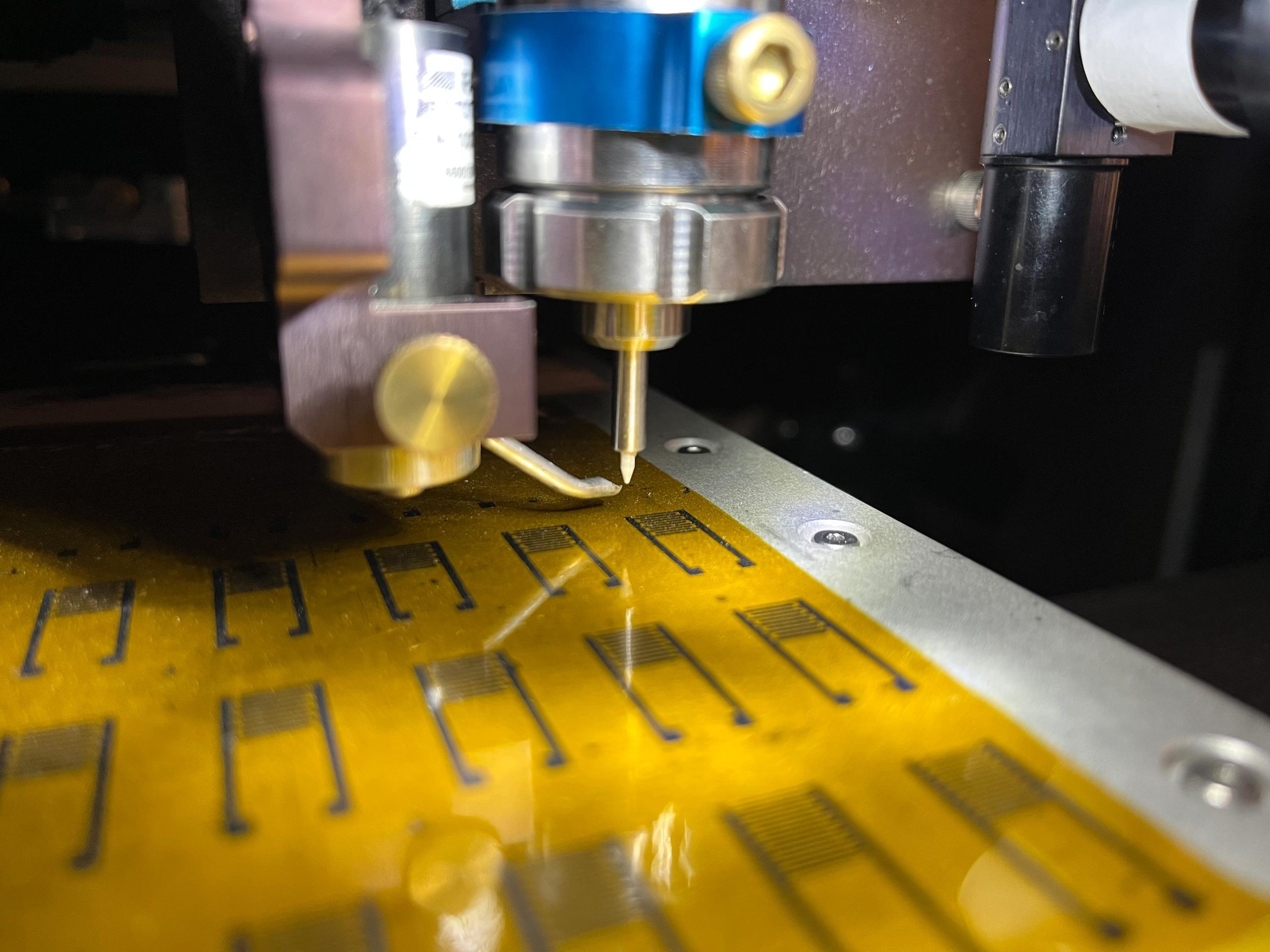
Engineers at Northwestern University have successfully created artificial neurons that can communicate directly with biological brain cells. Unlike previous attempts that produced simplistic or mismatched signals, these new devices generate electrical impulses that closely mimic the timing, shape, and complexity of living neurons. This breakthrough, published in Nature Nanotechnology, marks a significant step forward in creating biocompatible brain-machine interfaces and offers a promising path toward energy-efficient computing hardware inspired by the human brain.
A New Standard for Brain-Computer Interaction
The core challenge in developing brain implants has long been compatibility. Electronic signals often fail to match the nuanced language of biological neurons, leading to poor integration or ineffective stimulation. The Northwestern team, led by Mark C. Hersam and Vinod K. Sangwan, addressed this by designing flexible, printed artificial neurons capable of producing lifelike electrical spikes.
In laboratory tests involving slices of mouse cerebellum, the artificial neurons successfully activated real biological neurons. The signals triggered measurable responses in neural circuits, demonstrating a level of synchronization previously unachieved by artificial systems.
“You can see the living neurons respond to our artificial neuron. So, we’ve demonstrated signals that are not only the right timescale but also the right spike shape to interact directly with living neurons,” said Hersam.
This capability is critical for next-generation neuroprosthetics. Devices designed to restore hearing, vision, or movement require precise communication with the nervous system. By bridging the gap between rigid electronics and soft biological tissue, these printed neurons could enable more natural and effective medical implants.
Mimicking the Brain’s Efficiency
Beyond medical applications, this research addresses a growing crisis in the technology sector: energy consumption. Current artificial intelligence (AI) systems rely on digital computers that are vastly less efficient than the human brain. The brain performs complex computations using a fraction of the energy required by modern data centers.
Traditional silicon chips achieve complexity by stacking billions of identical transistors on rigid, flat surfaces. These components are static and fixed once manufactured. In contrast, the brain is a heterogeneous, three-dimensional network that adapts and rewires itself dynamically.
Hersam argues that to create smarter, more efficient AI, we must move away from conventional silicon architecture and look to biology for inspiration.
“The world we live in today is dominated by artificial intelligence (AI)… The way you make AI smarter is by training it on more and more data. This data-intensive training leads to a massive power-consumption problem. Therefore, we have to come up with more efficient hardware to handle big data and AI. Because the brain is five orders of magnitude more energy efficient than a digital computer, it makes sense to look to the brain for inspiration for next-generation computing.”
How It Works: Turning a Flaw Into a Feature
The innovation lies in the materials and manufacturing process. The team used aerosol jet printing to deposit specialized inks onto flexible polymer surfaces. These inks contained nanoscale flakes of molybdenum disulfide (MoS₂), a semiconductor, and graphene, a conductor.
Historically, the polymer binder in these inks was considered a defect that hindered electrical flow, so engineers typically removed it after printing. However, the Northwestern team leveraged this polymer to their advantage.
- Partial Decomposition: Instead of removing the polymer entirely, they partially decomposed it during manufacturing.
- Conductive Filament Formation: When current passes through the device, it drives further decomposition of the polymer in a specific pattern.
- Neural Mimicry: This process creates a narrow, conductive filament. As current flows through this constrained path, it generates sudden electrical responses that mimic the “firing” of a real neuron.
This mechanism allows each artificial neuron to produce complex signaling patterns—such as single spikes, steady firing, and bursts—without requiring large networks of components. Consequently, fewer devices are needed to perform complex tasks, significantly reducing energy usage.
Addressing the AI Energy Crisis
The implications for computing infrastructure are profound. As AI models grow larger, the power demands of data centers have become unsustainable. Many tech companies are now exploring dedicated nuclear power plants to fuel gigawatt-scale data centers, raising concerns about resource availability and environmental impact.
“It is evident that this massive power consumption will limit further scaling of computing since it’s hard to imagine a next-generation data center requiring 100 nuclear power plants. The other issue is that when you’re dissipating gigawatts of power, there’s a lot of heat. Because data centers are cooled with water, AI is putting severe stress on the water supply.”
By developing hardware that operates on the principles of neural efficiency, this technology could help decouple AI advancement from exponential energy growth. The printing method itself is additive and cost-effective, placing material only where needed and minimizing waste.
Conclusion
The ability to print artificial neurons that communicate seamlessly with biological tissue represents a dual breakthrough. It paves the way for more effective medical devices that can restore function by speaking the brain’s native language, while simultaneously offering a blueprint for computing hardware that is sustainable and energy-efficient. As AI demands continue to outpace current technological limits, bio-inspired electronics may hold the key to a more balanced future.