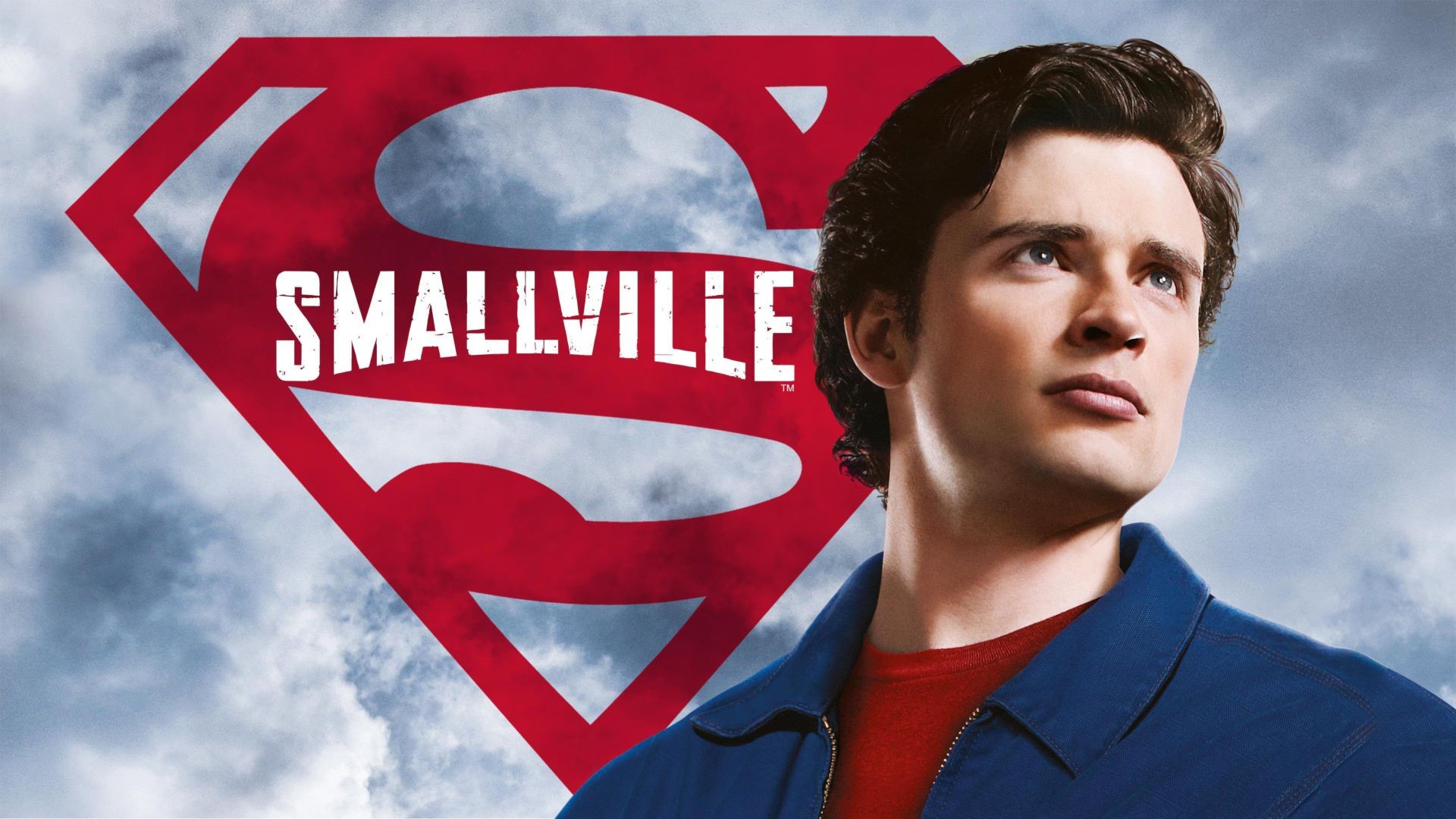
On May 13, 2011, Smallville concluded its decade-long run with a moment of cinematic triumph. As John Williams’ iconic score swelled, Tom Welling’s Clark Kent tore open his shirt to reveal the Superman emblem—a visual payoff that resonated deeply with fans. Fifteen years later, the series remains a cultural touchstone, not because it was flawless, but because it achieved something rare: it told the most human story ever told about the man beneath the cape.
While modern critics often criticize the show for treating comic book canon as a “piñata,” beating it into whatever shape the writers desired, this very freedom allowed Smallville to explore the character’s interior life in ways few other adaptations have dared. It was less a superhero origin story and more a coming-of-age drama where powers were secondary to personhood.
From Batman to Smallville: A Pivot That Changed TV History
The genesis of Smallville was almost entirely different. Created by Alfred Gough and Miles Millar, the initial concept was a prequel series focusing on Bruce Wayne’s journey from orphan to Batman. When Warner Bros. shelved that idea, the creators pivoted to Superman, applying the same structural blueprint: take a legendary hero, strip away the costume, and focus on the formative years.
This decision resulted in a hybrid genre—part superhero fantasy, part teen melodrama. For ten seasons, Clark Kent lived with his adoptive parents, Jonathan and Martha Kent, navigating high school, college, and early adulthood. He worked at the Daily Planet, though often as an unreliable intern rather than a star reporter. Crucially, he did not become Superman until the final episode.
This restraint was the show’s greatest strength. By delaying the transformation, the narrative focused on Clark’s moral development rather than his physical feats. The audience watched him learn why he should help people, not just how.
The Heart of the Show: Relationships Over Rogues
A superhero series is only as strong as its supporting cast, and Smallville excelled here. Clark’s journey was defined by his interactions with a tightly knit group of friends and frenemies, most notably:
- Pete Ross (Sam Jones III): The loyal best friend who grounded Clark in normalcy.
- Chloe Sullivan (Allison Mack): The ambitious reporter who often served as Clark’s moral compass and confidante.
- Lex Luthor (Michael Rosenbaum): Perhaps the show’s most significant achievement.
Rosenbaum’s portrayal of Lex Luthor received widespread acclaim, including praise from DC Studios co-CEO James Gunn, who called him the definitive version of the character. Unlike the stereotypical megalomaniac seen in other media, Smallville ’s Lex was a complex, layered figure. His arc was tragic, filled with moments where viewers genuinely wondered if he could choose a path of heroism alongside Clark. Ultimately, his descent into villainy felt earned and devastating, highlighting the tragedy of lost potential rather than just evil for evil’s sake.
Expanding the Universe: Supergirl and the Proto-Justice League
Smallville also served as a testing ground for broader DC lore, introducing characters who would later headline their own franchises.
Supergirl, played by Laura Vandervoort, arrived in Season 7 after an 18-year coma. Her storyline offered a fresh perspective on Earth culture and provided a more nuanced take on Kara Zor-El than the widely panned 1984 film Supergirl. This iteration undoubtedly influenced the later CW series and the upcoming 2026 film starring Milly Alcock.
The show also assembled a prototype Justice League, featuring:
* Green Arrow (Justin Hartley)
* Aquaman (Alan Ritchson)
* Cyborg (Lee Thompson Young)
* Bart Allen (Kyle Gallner), representing the Flash legacy
Notably, Batman and Wonder Woman were absent, and the show skipped Barry Allen and Wally West to include their descendant, Bart. While these choices baffled purists, they demonstrated the show’s willingness to reshape mythology for narrative convenience.
Embracing Creative Liberty: Why Canon Didn’t Matter
One of the most common criticisms of Smallville is its disregard for established comic book continuity. Clark’s powers manifested differently, his relationships evolved uniquely, and villains were often reimagined or merged.
- Doomsday became Davis Bloome (Sam Witwer), a paramedic with a split personality.
- General Zod (Callum Blue) possessed Lex Luthor’s body, creating a psychological horror element rarely seen in superhero media.
Creator Miles Millar defended these choices, noting that the show was never intended to be canon-compliant. “The whole premise of the show was not canon,” Millar told The Hollywood Reporter. He argued that such creative freedom is increasingly rare in modern superhero storytelling, where studios are often constrained by interconnected universe rules.
“I think what’s amazing, if you look at the history of comics and these characters, is they’re always evolving. We categorically would not be allowed to make that show and make those changes today.”
This perspective invites viewers to see Smallville not as a strict adaptation, but as an “Elseworlds” tale—a standalone exploration of what Clark Kent’s life might look like if prioritized character growth over factual accuracy. After all, comic book canon has always been fluid; treating it as rigid dogma misses the point of these enduring myths.
Legacy: The Best Clark Kent Story Ever Told
Despite its flaws—pacing issues, melodramatic subplots, and inconsistent power scaling—Smallville ’s legacy is secure. It paved the way for the Arrowverse and proved that long-form superhero storytelling could work on television.
But its true achievement lies in its character study. Over ten seasons, the show meticulously deconstructed Clark Kent. It showed us his doubts, his loves, his losses, and his quiet moments of indifference. It explored what makes him happy, sad, and ultimately, heroic.
In the end, Smallville succeeded because it understood that Superman’s greatest power isn’t flight or strength—it’s his humanity. By focusing on the boy who became a man, the series delivered a definitive portrait of Clark Kent, ensuring that even if the details changed, the heart of the character remained true.