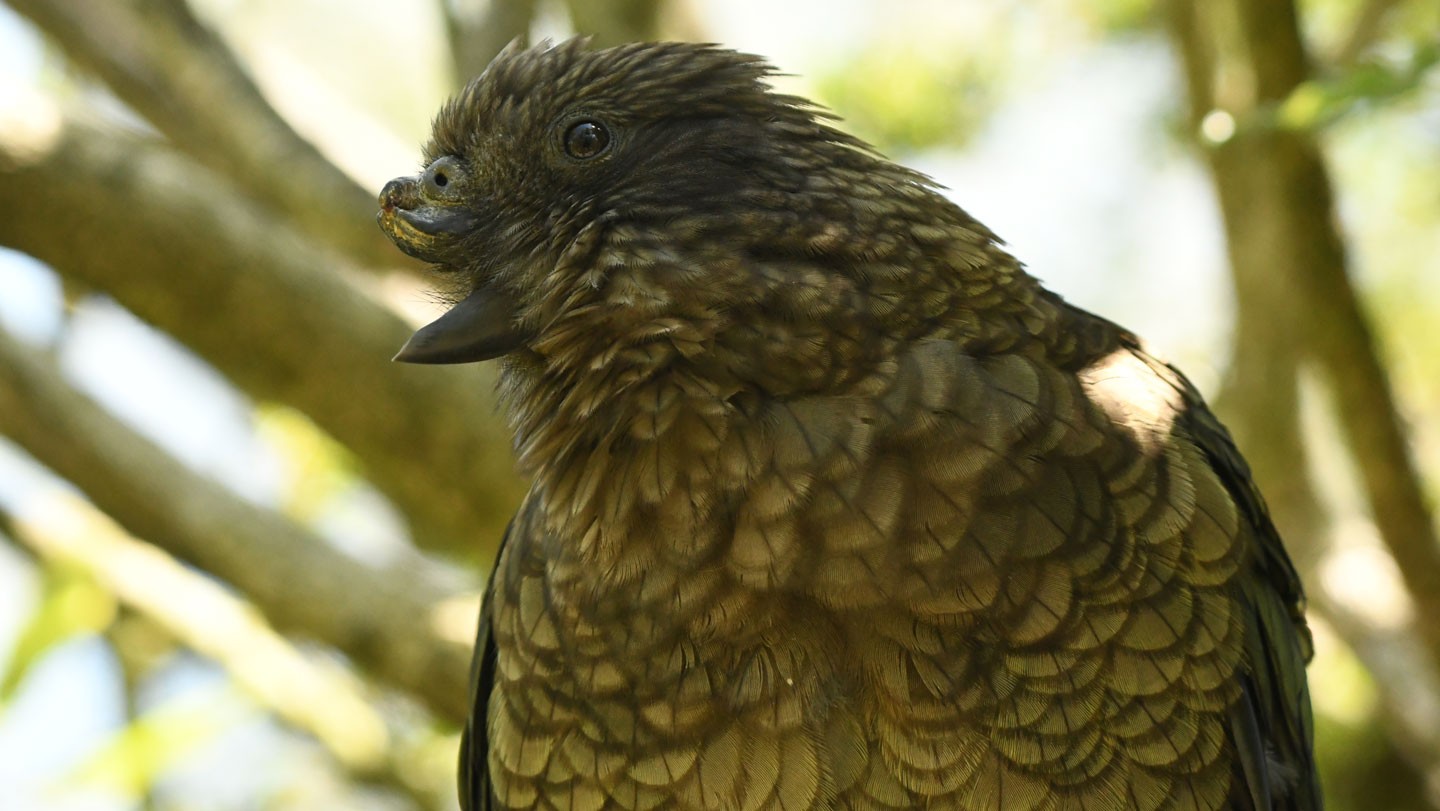
Bruce is not a typical parrot. He is a kea, New Zealand’s native alpine species, and he runs things his way. He has a disability, too, but it doesn’t hold him back. If anything, it helps.
“In nature, hierarchy is everything.”
Here is how the power structure works for this flock.
The Unlikely Boss
You might expect the boss to be the strongest male. Or the most aggressive. Bruce is neither, in the traditional sense. He has a physical disability from polio, a disease that affected his development. His wings are different. One is slightly malformed, a result of the viral attack on his nervous system back in the day.
He cannot fly.
That usually spells trouble in the animal kingdom. Grounded birds are vulnerable. Easy targets. But Bruce has flipped the script. He uses his position as a stationary anchor. The flock lands around him. They cluster tight. It feels safer there. With him.
It turns out that being unable to leave is a superpower for leadership.
Stress as a Weapon
This isn’t about friendship. It’s about stress.
When predators loom, or strangers approach, Bruce gets agitated. His agitation spikes his stress levels. He lets out calls. Sharp. Distressing. The other keas pick up on this. They get nervous. Their heart rates climb. They need to soothe themselves.
How do they do that?
They go to Bruce.
They land near him. They preen him. It’s a comforting act for them, yes, but also for him. He lets them clean his feathers. It’s a perk, in a dark way. He gets maintenance service; they get a dopamine hit of security.
It’s a symbiotic relationship built on anxiety.
A New Definition of Status
Behavioral ecologists used to think status was about muscle. Teeth. Claws. Size. They studied baboons in Tanzania, for example, where male dominance is loud and physical.
Keas don’t care about that.
Bruce is smaller. Weaker. Broken, even. Yet he sits at the top of the ranking. He commands attention not by fighting, but by being the calm center in a storm of nervous energy.
Is this innovation? In a biological sense, yes. He has adapted a weakness into a central role.
“It challenges everything we thought we knew about avian hierarchy.”
The flock follows him because he makes their behavior manageable. He is the system ’s anchor. Without him, the social structure frays. With him, they thrive. Even if it’s because they are terrified of being alone.
So next time you see a bird, remember. Power isn’t always loud. Sometimes, it just sits still. And waits.
Waiting for you to come close.