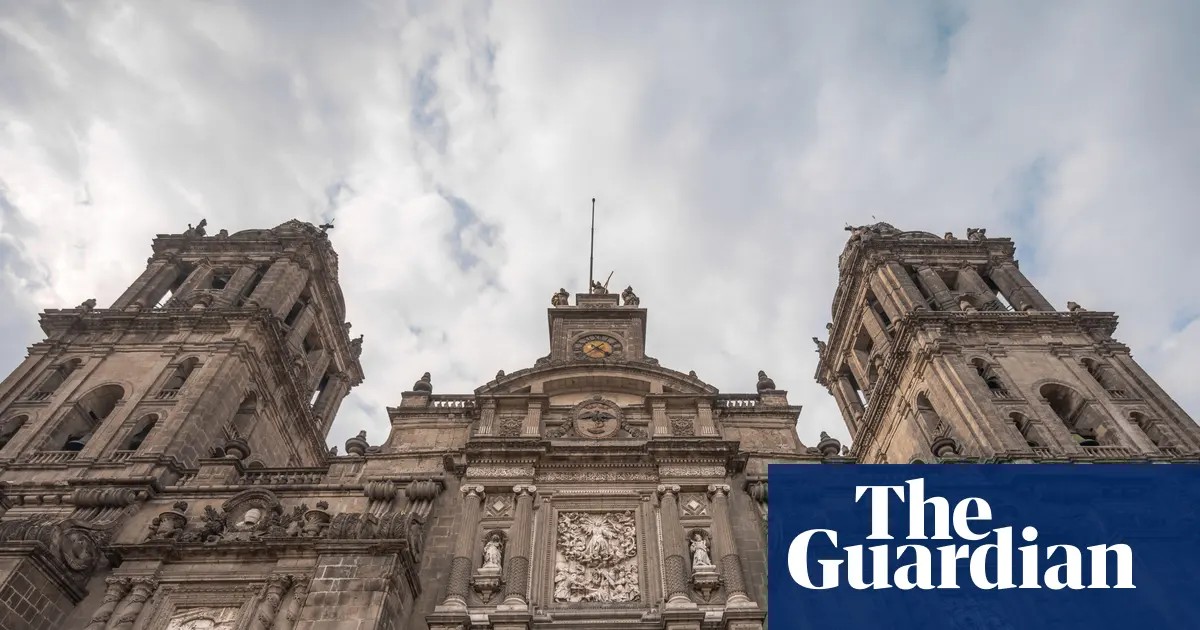
Walking through Mexico City’s central Zócalo plaza offers a disorienting glimpse into a geological reality. The city’s historic cathedral slumps to one side, while the adjacent Metropolitan Sanctuary tilts in the opposite direction. Even the National Palace appears off-kilter. These architectural quirks are not merely aesthetic oddities; they are visible symptoms of a catastrophic process that has plagued the capital for over a century: Mexico City is sinking into the ground.
Now, thanks to advanced space technology, scientists can track this descent in real time with unprecedented precision.
A New Lens on Subsidence
The monitoring is being conducted by NISAR (NASA-ISRO Synthetic Aperture Radar), a powerful satellite mission jointly developed by NASA and the Indian Space Research Organization (ISRO). Unlike previous sensors, NISAR can detect minute changes in Earth’s surface—even through dense vegetation or cloud cover—providing a high-resolution view of ground deformation.
“Nisar takes radar imaging observations of Earth to the next level,” explained Marin Govorčin, a scientist at NASA’s Jet Propulsion Laboratory. “It will see any change, big or small, that happens on Earth from week to week. No other imaging mission can claim this.”
While Mexico City’s sinking has been observed from space before, NISAR offers a broader and more detailed picture. It reveals how subsidence varies across different types of terrain and penetrates complex areas on the city’s outskirts that were previously difficult to study. This data is crucial for understanding the full scope of the crisis, which extends beyond the historic center to the sprawling metropolitan area.
The Scale of the Sink
The findings are alarming. NISAR data indicates that some parts of Mexico City, including the area around the city’s main airport, are sinking at a rate of more than 2 centimeters per month. This places the capital among the fastest-sinking cities in the world.
A stark example of this rapid descent is the Angel of Independence, a 36-meter monument on Paseo de la Reforma avenue. Built in 1910 to commemorate Mexico’s independence, the statue has required 14 steps to be added to its base over the decades to keep it level with the surrounding ground as the earth beneath it compacted.
The impact is not limited to landmarks. For a metropolis of approximately 22 million people, the consequences are widespread:
* Infrastructure Damage: Roads warp, and the underground metro system suffers structural stress.
* Utility Failures: Water distribution pipes and drainage systems crack and break.
* Historic Risk: Ancient buildings continue to tilt, threatening their structural integrity.
“It affects the entire urban infrastructure of the city: the streets, the pipes for water distribution, the water supply, the drainage pipes,” said Efraín Ovando Shelley, an engineer at Mexico’s National Autonomous University (UNAM).
The Root Cause: A Water Crisis
The sinking is not a natural geological accident but a direct result of human activity. First documented in 1925, the subsidence is driven by the over-exploitation of groundwater.
Mexico City was built on the bed of an ancient lake, meaning the soil beneath it is composed of soft, clay-like sediment. When water is pumped out of the underground aquifer faster than it can be naturally replenished by rain, the soil compacts under the weight of the city.
“The aquifer compacts under the weight of the city above it as water is withdrawn,” Govorčin noted. Currently, the underground aquifer provides about half of the capital’s water supply. However, the water table is dropping by approximately 40 centimeters per year.
This creates a vicious cycle :
1. As the city sinks, aging water pipes crack and break.
2. The capital loses an estimated 40% of its water due to leakage.
3. To compensate for the lost water, officials pump even more from the aquifer.
4. Increased pumping accelerates soil compaction, causing further sinking.
Compounding this issue is the climate crisis, which has led to years of low rainfall, reducing natural recharge rates and pushing the city closer to a scenario where taps in large swathes of the metropolis could run dry.
Broader Implications and Future Challenges
The technology behind NISAR holds promise far beyond Mexico City. Scientists believe the system will revolutionize the monitoring of various geological and environmental phenomena, including:
* Volcanic activity and earthquake deformation
* Landslides and glacier sliding
* Agricultural productivity and soil moisture
* Coastal flooding and forestry health
“This study of Mexico City speaks to the realm of possibilities that will open up thanks to the Nisar system,” said Darío Solano-Rojas, an engineer at UNAM. “And not just for sinking cities but also for studying volcanoes, for studying the deformation associated with earthquakes, for studying landslides.”
Despite the advanced monitoring capabilities, halting the sinking remains a daunting challenge. Currently, efforts are limited to reinforcing the foundations of historic buildings. Stopping the subsidence would require stopping groundwater extraction entirely—a logistical and political impossibility given the city’s dependence on this water source.
“To stop the sinking, we would have to stop water extraction,” Shelley said. “And if we stop water extraction, what water are we going to drink? The standard joke is that if we can’t drink water, well, let’s drink tequila.”
Conclusion
Mexico City’s descent is a stark warning of the consequences of unsustainable urban resource management. While NISAR provides the tools to monitor and understand the crisis with unprecedented clarity, the solution lies not in satellite imagery, but in addressing the fundamental water shortage that drives the ground beneath the city’s feet.