A long-lost piece of Australia’s prehistoric past has been rediscovered within the very walls of a museum. A fossil fragment, overlooked for over a century, has provided definitive proof that giant echidnas once inhabited the state of Victoria—filling a massive gap in the known geographical history of the species.
The Discovery of a “Missing” Piece
The breakthrough came when Tim Ziegler, collection manager of vertebrate palaeontology at the Museums Victoria Research Institute, was sorting through a tray of unsorted fossils. Among the debris was a small bone fragment, roughly the length of a finger, excavated from the Foul Air Cave in East Gippsland back in 1907.
For decades, this fragment had been misidentified, likely dismissed as nothing more than a limb bone from a small kangaroo. However, Ziegler noticed specific anatomical markers that told a different story:
– The distinct symmetry of the fossil.
– The specific arch of a palate.
– Internal air spaces characteristic of a respiratory system.
These features led to a startling realization: the fragment was actually part of a massive echidna beak.
Meet the Owen’s Giant Echidna
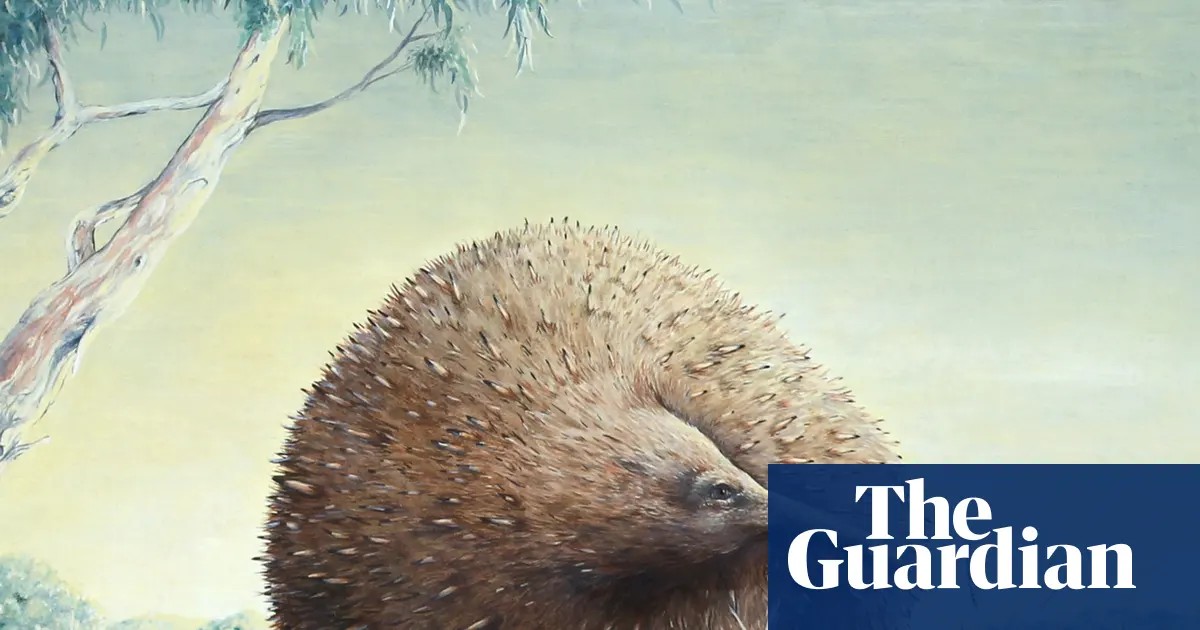
The species, known scientifically as Megalibgwilia owenii, was a titan of the Pleistocene epoch (which began roughly 2.5 million years ago). While modern echidnas are much smaller, this prehistoric relative was a formidable creature:
- Size: Approximately 1 metre in length.
- Weight: Up to 15kg—roughly twice the size of today’s echidnas.
- Build: Far more robust than the modern long-beaked echidnas found in New Guinea. Its bones featured deep muscle scars and large ligament attachments, suggesting immense physical strength.
This strength was likely essential for its survival. Scientists believe these animals used their powerful limbs to dig for larvae, hunt large beetles, or even tear bark from trees to reach food sources like bogong moths.
Closing a 1,000km Evolutionary Gap
Before this discovery, the distribution of the Owen’s giant echidna presented a significant mystery to paleontologists. While fossils had been found in Western Australia, South Australia, New South Wales, and Tasmania, there was a 1,000km void in the fossil record where Victoria should have been.
The fact that these animals were once found in Tasmania suggests that during the Pleistocene, land bridges likely connected these regions, allowing megafauna to migrate freely. The discovery of the Buchan specimen confirms that Victoria’s temperate, forested landscapes were indeed part of the giant echidna’s ancient territory.
“It turns out they were there all along. And we just needed the right moment to recognise their presence.” — Tim Ziegler
Why This Matters
This find is a reminder of how much of natural history remains hidden in plain sight. It highlights the importance of meticulous museum curation and the role of modern technology, such as 3D scanning, in re-evaluating historical collections. By identifying this “missing link,” researchers can now build a much more accurate map of how prehistoric life moved across the Australian continent during the Ice Age.
Conclusion: The rediscovery of the Megalibgwilia owenii fossil not only completes a major piece of Victoria’s prehistoric puzzle but also underscores the vital importance of preserving and re-examining museum archives to understand our planet’s evolutionary past.