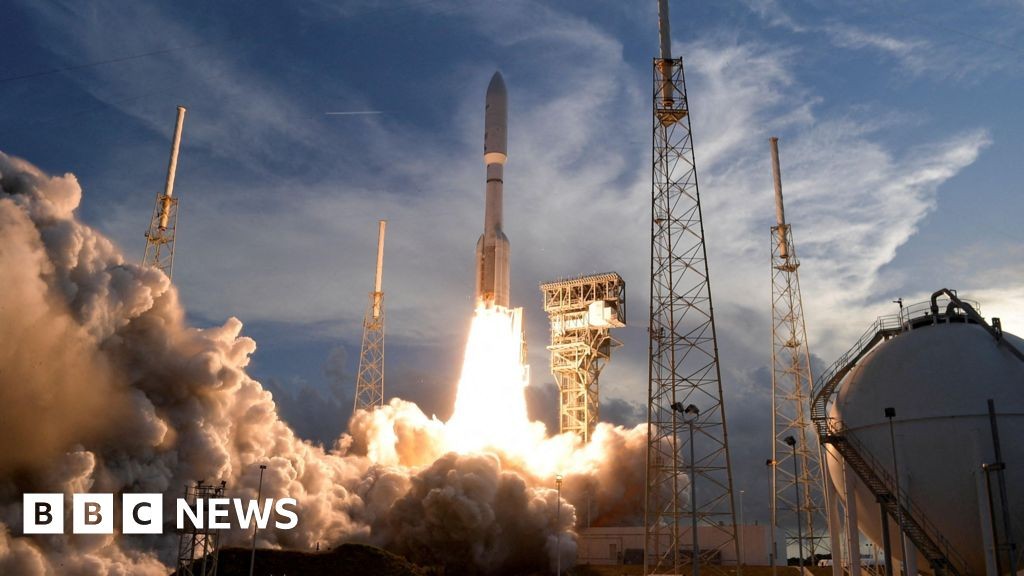
Amazon is making a massive leap into the space race, announcing an $11.57 billion acquisition of satellite firm Globalstar. This strategic move is designed to accelerate the “Amazon Leo” project, a long-term initiative aimed at providing global internet and mobile phone services through a massive constellation of satellites in low-earth orbit (LEO).
The Race for Low-Earth Orbit
The acquisition is a direct challenge to Elon Musk’s Starlink, which currently dominates the satellite internet market. While Amazon is investing heavily to catch up, the gap between the two competitors remains significant:
- Starlink (SpaceX): Operates over 10,000 active satellites serving more than 10 million customers. It is a massive revenue driver for SpaceX, which is eyeing a public listing with a valuation potentially exceeding $1 trillion.
- Amazon Leo: Currently operates only about 200 satellites. Even with Globalstar’s existing fleet of 50 satellites, Amazon must rapidly scale its production to reach its goal of thousands of satellites by 2028.
This rivalry marks a shift in the telecommunications landscape. As traditional terrestrial networks face limitations in remote or underserved areas, the battle for “space-based connectivity” has become the new frontier for global internet dominance.
Strategic Assets and Partnerships
By acquiring Globalstar, Amazon is not just buying hardware; it is absorbing a global infrastructure network. The deal includes operational hubs in the United States (Louisiana, Georgia, California), Ireland, Brazil, and France.
Perhaps most importantly, the deal secures Amazon’s relationship with Apple. Since 2022, Globalstar has provided the satellite technology that allows iPhone and Apple Watch users to access emergency “SOS” features in areas without cellular coverage. Amazon has confirmed an agreement with Apple to continue providing this critical functionality.
A Growing List of High-Stakes Clients
Amazon is not entering this market blindly. CEO Andy Jassy has already secured commitments from several major global entities that intend to integrate Leo satellite services into their operations once the constellation expands. Key partners include:
- Aviation: Delta Airlines and JetBlue.
- Telecommunications: AT&T and Vodafone.
- Government & Infrastructure: NASA and Australia’s National Broadband Network.
- Media: DIRECTV Latin America.
The Road Ahead
The primary challenge for Amazon will be the sheer scale of deployment required. To compete with Starlink’s established network, Amazon must transition from a niche player into a high-volume satellite manufacturer and operator by 2028.
The success of this acquisition depends on Amazon’s ability to rapidly deploy a “next generation” satellite system to bridge the massive gap between its current capabilities and the market leader.
Conclusion
Amazon’s $11.5 billion bet on Globalstar signals its intent to become a dominant force in global telecommunications. By leveraging existing partnerships with Apple and major airlines, the company aims to transform from a retail giant into a critical provider of the world’s orbital digital infrastructure.