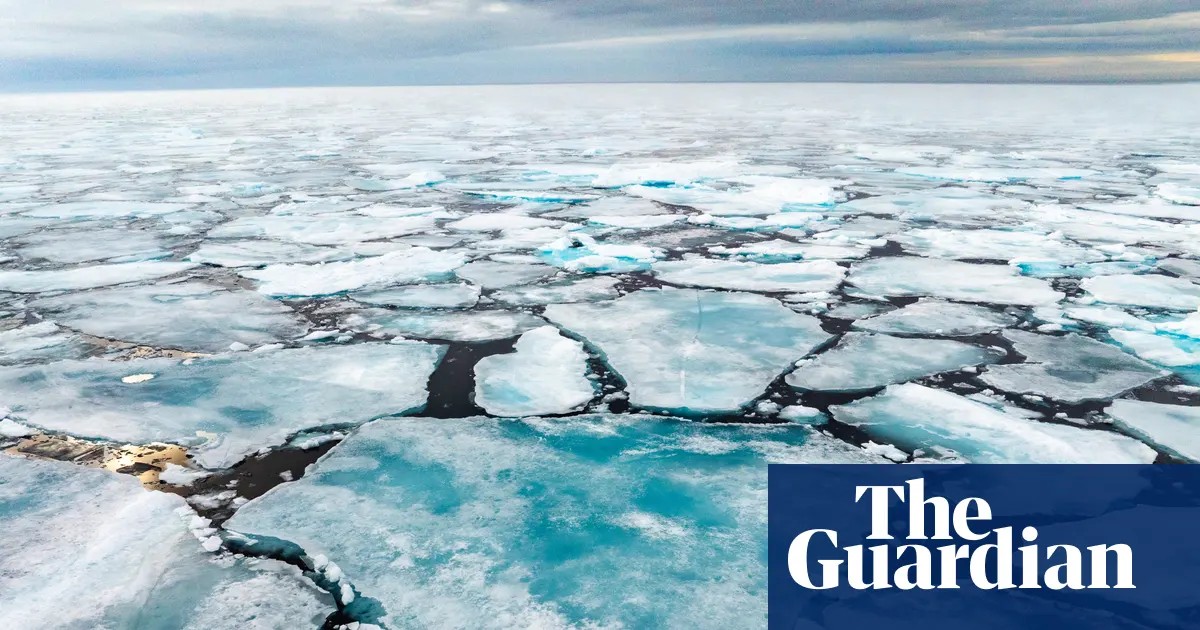
The Arctic isn’t just losing ice. It is shedding it. And the brakes were cut.
For years, scientists watched something weird happen. The rapid decline of sea ice seemed to stall. From 2005 to 2o24, satellite data showed no statistically significant drop in extent. Global temps kept climbing. Ice stayed put. It looked like a glitch in the climate model. A reprieve.
Researchers guessed natural ocean currents were buffering the heat. They said the slowdown was temporary. A deep breath before the plunge.
That breath was held for about two years.
Now, the pause is over. And it has been replaced by a free fall.
A new study confirms the previous “stabilization” was fleeting. In fact, 2025 saw the largest year-to-year winter decline on record. The data is stark. Between 2024 and 25, Arctic sea ice shrank by 5.8%.
This isn’t just another bad year. It is the fastest winter loss ever documented.
How the temporary pause fooled us
Why did the slowdown happen in the first place? It wasn’t global warming failing to work. It was nature’s own chaotic variance.
Dr Duo Chan from the University of Southampton notes that what looked like a halt in the early 2020 was merely a blip. A temporary dip in a steepening curve.
“Short-term recoveries can temporarily obscure the larger, longer-term direction of change. The low extents in 2025 show the loss has not stopped.”
The previous findings suggested that natural ocean current fluctuations were counteracting rising temperatures. But that balance sheet is balanced no longer. The buffer is gone. Now, the melt rate is likely doubling the long-term average. We are back to the old, faster trajectory of decline.
The physical cost of missing ice
Why does this matter beyond polar coordinates? Because winter sea ice is an insulator.
It sits between the relatively warm Arctic Ocean and the freezing atmosphere above. Less ice means a thinner barrier. More heat. More moisture. It leaks into the air.
Dr Alessandro Silvano, co-author on the paper, calls the 2025 drop unusual. But he says it is physically plausible under current warming trends.
This isn’t an isolated event. It is a feedback loop. When the ice goes, the ocean heats the air. That changes pressure patterns. It alters storm development. It shifts large-scale atmospheric circulation.
In other words, the Arctic’s meltdown doesn’t stay in the Arctic.
Where is this heading?
The researchers warn this is a signal flare.
Since satellite measurements began in 1979, September sea ice (the annual minimum) has halved. But the winter minimums are dropping faster now. The 2025 data highlights a new reality: the “pause” was a distraction.
The climate crisis isn’t slowing down. It’s accelerating in ways we didn’t expect because we got distracted by the temporary halt.
Chan points out that 2025 and the upcoming 2026 extents are low. Very low. They prove that the direction is unchanged. We are still in a warming climate. The ice is still going.
And it’s going faster.