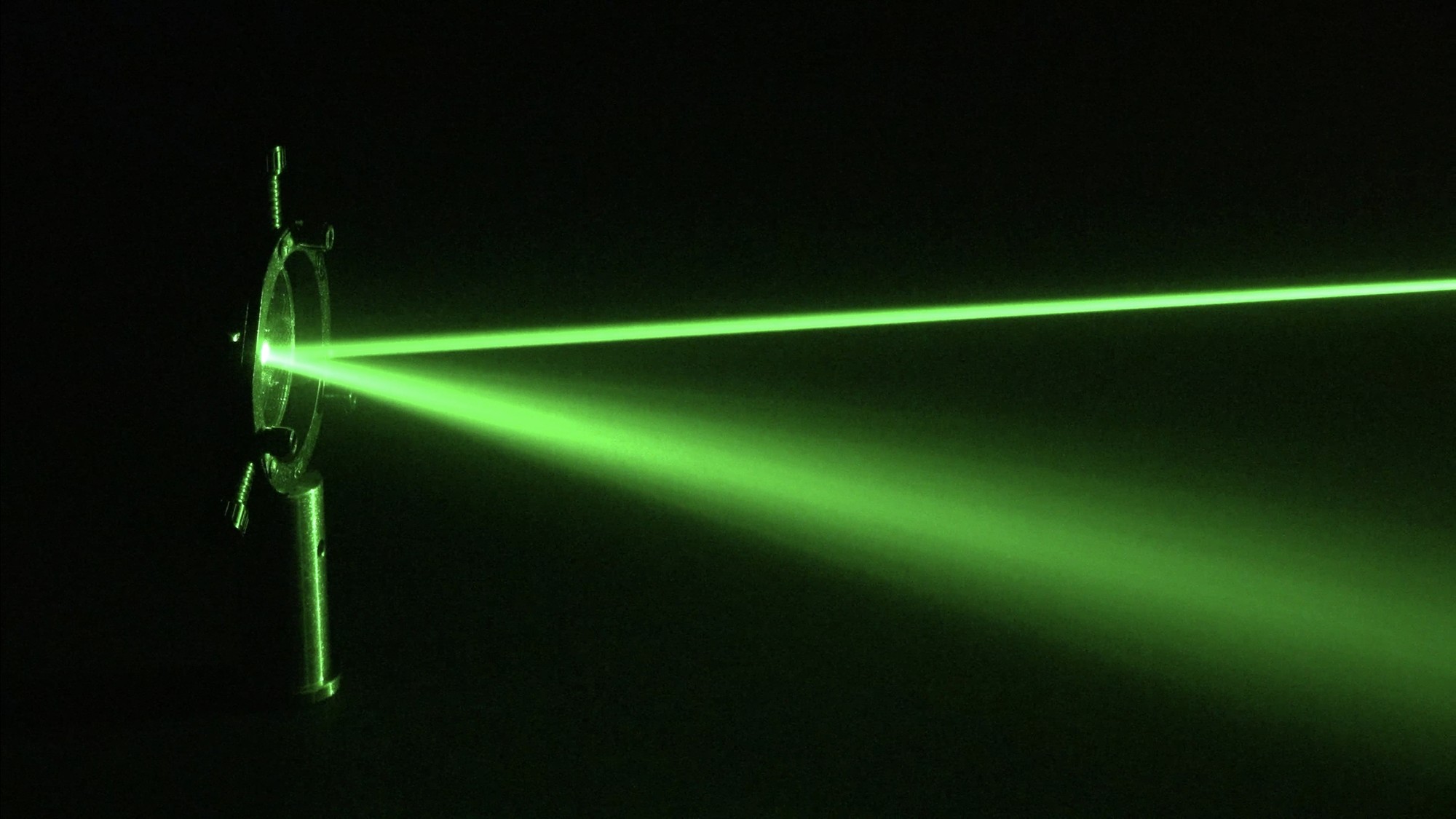
Drones are stuck in a rut. They fly for a bit. Then they land. Battery life remains the hard ceiling on what unmanned aerial vehicles can actually achieve. But a team of Chinese researchers is testing a radical solution: high-powered lasers charging drones mid-flight.
The results? Real. Practical. And surprisingly efficient.
A laser cell that actually works on a flying drone
This isn’t just another lab curiosity about solar materials. The study, published July 29 in Matter & Light, bridges the gap between physics and flight engineering. The team included researchers from Tsinghua University and the Civil Aviation University of China.
They mounted a specialized receiver on the underside of a drone’s wing. Think of it as a solar panel, but tuned specifically for laser light. When hit, it converted the beam into electricity. That electricity spun the propellers. The drone stayed airborne.
“The receiver is what’s known as a perovstrite laser cell-thermoelectric [PLC-TE] tandem device,” explained the team. Perovskite materials capture a wider spectrum of light than traditional silicon. They’re promising. But turning that promise into flight-ready hardware was the real challenge.
Under a green laser beam, the device converted 38.49% of the light into electricity. Compare that to the U.S. Department of Energy’s recorded peak of 34% for perovskite-silicon tandems. The Chinese prototype outperformed existing benchmarks.
But there was a catch.
The heat problem no one wanted to ignore
Laser power doesn’t come without thermal consequences. The drone overheated.
“When we tested the device under a high power laser, the thermal camera showed temperatures of 80 to 90 degrees Celsius,” said study senior author Jianhua Han. That’s 176 to 194 Fahrenheit. Far too hot for sensitive electronics and certainly not ideal for flight safety.
The solution wasn’t better materials alone. It was engineering.
The team injected nanocrystals made from antimony tri selenide into the PLC-TE design. These crystals act as a thermal barrier. They trap the heat. They prevent it from damaging the device or degrading its efficiency.
Added benefit? The airflow from the spinning propellers helped cool the receiver’s underside. Simple. Effective. Natural convection doing the heavy lifting alongside advanced nanotechnology.
“Previous studies largely focused on the materials… We wanted to think beyond the laboratory… It isn’t just a materials science problem. It’s an engineering one.” — Jianhua Han
Why indefinite flight matters (and where it’s headed)
Imagine a drone inspecting a wildfire. Or monitoring a disaster zone. It doesn’t need to land. It doesn’t need a battery swap. It just keeps flying, fed by a laser from below.
Reconnaissance. Logistics. Disaster relief. These are the sectors screaming for longer endurance.
But real-world application requires more than just efficiency. The system needs real-time tracking. Precise targeting. The laser has to hit a moving target in the sky with pinpoint accuracy before this tech leaves the test bed.
Next steps involve outdoor testing on real, lightweight drones. Military interest is already high. Wireless power transmission offers a strategic edge. If a drone can stay airborne indefinitely, its operational envelope expands dramatically.
The broader context of laser power beaming
The U.S. is playing its own hand. DARPA’s Persistent Optical Wireless Energy Relay program recently beamed 800 watts over 5.3 miles in June 2025. Private firms like PowerLight Technologies are promising kilowatt-level delivery to drones at 5,000 feet.
Consider the current limitations. The RQ-11 Raven drone, a staple for hand-launched recon, maxes out at 60 to 90 minutes of flight time. After that? It’s grounded. Laser charging changes that math entirely.
It’s not magic. It’s physics, engineering, and a lot of thermal management. The technology exists. The hurdles are logistical, not theoretical. We’re closer than you think to drones that simply don’t run out of juice.
The sky isn’t the limit anymore. It’s just another highway.