Biologists have stumbled upon a new species of blind fish lurking in the dark underbelly of a former WWII chemical weapons site in Alabama. The find is shocking because the cave had been studied extensively. Or so everyone thought.
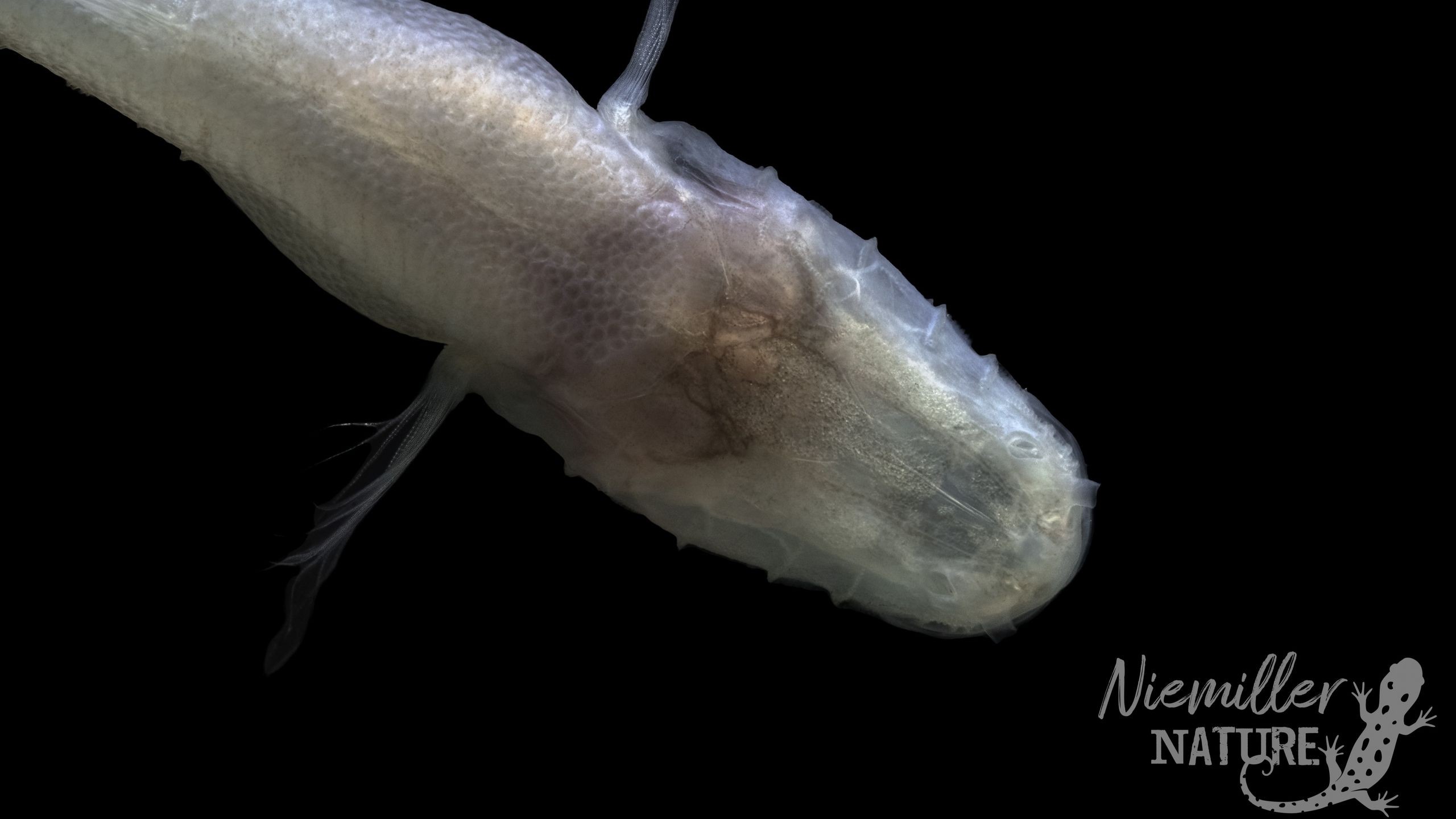
The fish has been named Demogorgonichthys arcanUS. The name references the monster from Stranger Things and the Greek underworld demon. They are likely some of the rarest vertebrates on Earth.
The location is Bobcat Cave, part of the U.S. Army’s Redstone Arsenal. This base was a hub for chemical weapons production during the Second World War. After the war ended, the site buried vast quantities of munitions, including British mustard gas and nerve agents recovered from Nazi Germany. It remains a zone of ongoing cleanup and restricted access.
A Discovery in Plain Sight
The fish was found by chance in early 2025 during a routine survey of the cave’s largest chamber, dubbed the Shrimp Room. Matthew Niemiller, who leads the cave biology lab at the University of Alabama in Huntsville, slipped on the mud. He fell into a deeper pool.
“During my graceful plummet, I disturbed a cagefish and crayfish underneath a rock ledge,” Niemiller told Live Science.
Silt clouded the view quickly. He managed to snap photos with an underwater camera. Days later, he reviewed the images. Something was off.
The fish didn’t look like the southern cavefish (Typhlichthys subterrane ), which was already known to live in the cave. The new species had a pronounced hump behind its head. A longer, flatter snout. Unbranched fin rays.
Niemiller and his colleagues at Auburn, Alabama, and Mississippi State universities returned before a storm hit. They needed clear water to confirm their sighting. Nearly half the cavefish they saw were the new species.
How Demon Cavefish Evolved Blindness
Genetic analysis revealed this creature does not fit into any known cavefish group. It is distinct.
The fish carries unique disabling mutations in rhodopsin. This is the light-sensitive protein responsible for dim light vision. The mutation matters for two reasons.
First, it illustrates “use it or lose it” at a molecular level. In total darkness, eyes are useless. Natural selection stops maintaining the vision genes. Mutations accumulate.
Second, the specific break in the rhodopsin gene differs from that of the southern cavefish living right alongside it. This proves the species lost their vision independently. It is a rare example of convergent evolution. Different species arriving at the same physical trait—blindness—separately.
Why Redstone Arsenal Matters
The history of the base above directly impacts the life below. Researchers have found elevated levels of trace metals in the cave water compared to typical subterranean habitats. Chemical contamination is a constant threat.
However, the military’s restricted status offers a shield. Access is limited. Human disturbance is low. This protection might be the only reason the population hasn’t collapsed yet.
A bigger threat comes from surface water. Runoff from the nearby city of Huntsville seeps into the cave’s groundwater. Sediment and urban contaminants flow through the system. Since the demon cavefish are restricted to this single cave system, they are incredibly vulnerable to extinction.
Conservation Status: Critically Endangered?
The researchers concluded the fish meets the criteria for “critically endangered” under the International Union for Conservation and Nature (IUCN) Red List. The exact population count is unknown. Many likely live in inaccessible parts of the water-filled aquifer beneath the cave.
“Any single survey is a snapshot, not a census,” Niemiller explained. “It’s known from just one cave system… by every measure we use, [it] qualifies as critically imperiled.”
There is a sliver of good news. Bobcat Cave already hosts the endangered Alabama Cave Shrimp (Palaemonias alabamae ). Since 1990, officials have monitored water quality and conducted biological surveys to save the shrimp.
These efforts inadvertently protect the new fish too. The water quality standards protecting the shrimp’s habitat are doing the same for Demogorgonichthys arcana.
“What protects the shrimp’s water protects the fish’s water too,” Niemiller said.
The cave remains a secret repository of both history and biology. Chemical weapons buried decades ago. A new species living in the dark. All protected by the very restrictions designed to keep people away.
Whether this fragile equilibrium holds against changing surface runoff is another question entirely. The water flows. The mutations accumulate. We wait to see if the “demon” survives the world above it.