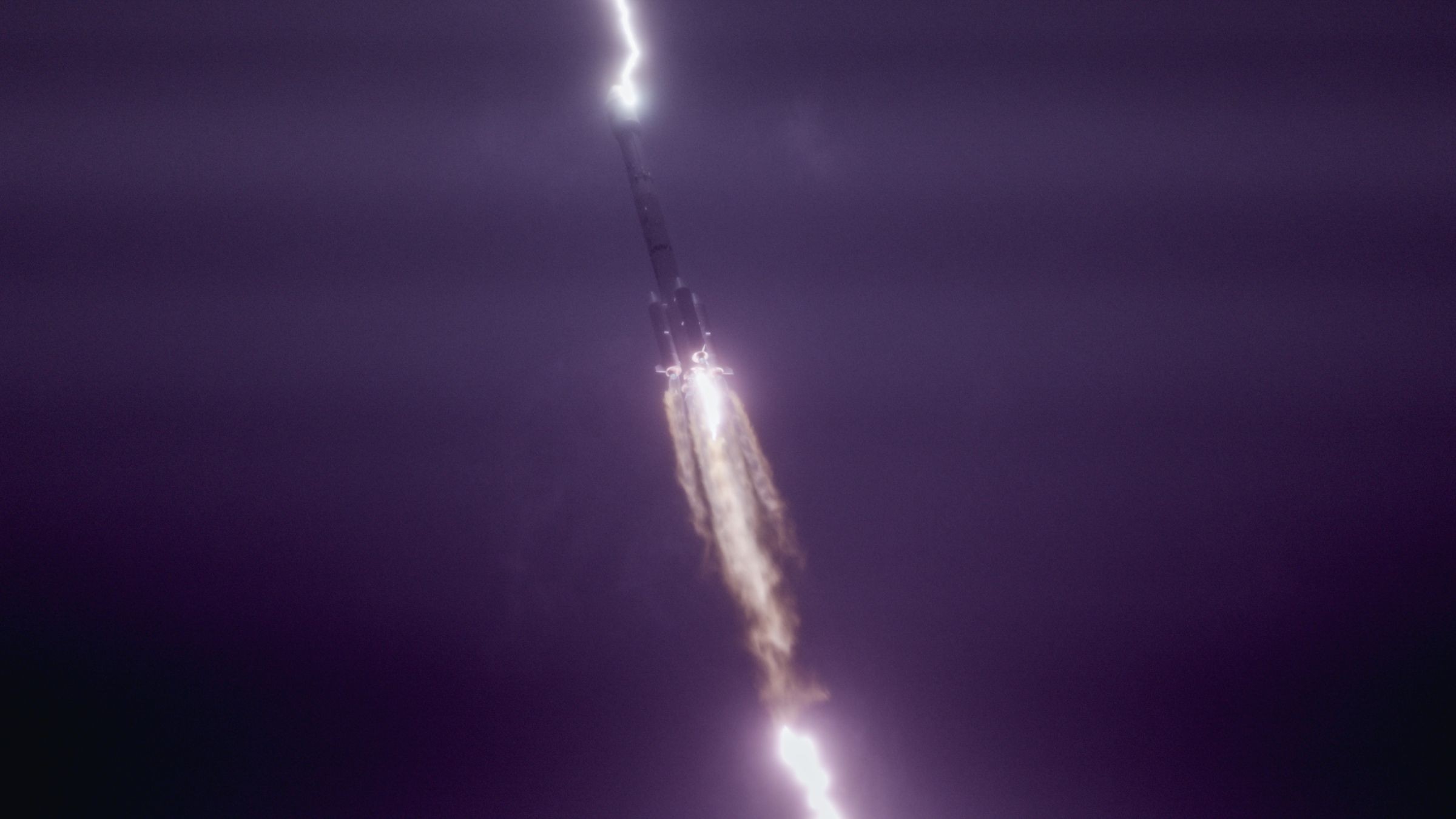
The sky over southwest China turned white. It happened in the blink of an eye—right after lift-off.
Hundreds of spectators stood their ground, umbrellas up, raincoats hooded tight. They came to watch a rocket climb. What they saw instead was terrifying. A bolt of electricity, jagged and furious, slammed into the ascending Long March 3B. It didn’t just hit; it wrapped around the fuselage, surging through the exhaust plume and down toward the ground.
People gasped. You could hear it in the video.
Then came the cheers.
The rocket kept going.
Despite taking at least 100 million volts directly in the chest, the uncrewed vehicle didn’t falter. It punched through the atmosphere, reached orbit, and dropped its payload perfectly on target. The mission was a total success. The strike? Barely mentioned in the official report.
Why the Long March 3B Survived the Bolt
The launchpad at the Xichang Satellite Launch Center was damp, but the weather must have been “good enough” for the team at the state-owned China Aerospace Science and TTechnology Corp (CASC). They lifted off around 8 p.m. on July 23, carrying the Tianlian-2 (06), a geostationary relay satellite. Its job? Keeping communication links alive for China’s Tiangong space station.
Thirty seconds in, the sky struck back.
Space.com and Live Science captured the moment clearly. The crowd watched the lightning arc across the metal skin of the spacecraft. It looked catastrophic. It felt catastrophic.
But modern rockets are built to handle this. Their shells act like Faraday cages.
Here is how it works: The outer skin of the vehicle is highly conductive. When lightning hits, the massive electrical charge doesn’t penetrate deep. It travels around the exterior, flowing off the tailpipe and back into the atmosphere or ground. The sensitive electronics inside? They stay safe. The crew—if there were any—would stay safe.
Commercial airplanes do the same thing. They get hit by lightning at least once a year on average, according to the National WeatherService. Pilots barely notice. Rockets, however, face far more violent conditions.
So why launch in lightning risk? You don’t, usually. Launch teams monitor weather obsessively. They scrub for storms. But sometimes, the window is small. Sometimes, the storm is close. In this case, the engineering held up. The strike didn’t damage critical infrastructure.
How Rocket Lightning Strikes Compare to Apollo and Soyuz
Is this the first time a rocket has been hit? Definitely not.
It is hard to count every strike. But history is filled with bolts.
The most famous case? Apollo 12.
In November 1969, the Saturn V carrying Charles Conrad, Alan Bean, and Richard Gordon didn’t just fly—it flew through hell. Shortly after liftoff, lightning struck twice. The spacecraft shook. Alarms rang. Nonessential instruments suffered permanent effects from the electrical surge. The crew thought they were dying.
But the guidance systems held. The engine logic held. They landed on the moon anyway.
Then there was 2019. A Russian Soyuz rocket, carrying a communications satellite, got hit while climbing to low Earth orbit. Ars Technica reported it clearly. No disaster. Just another day in spaceflight.
These events are rare enough to make headlines. They are common enough to be engineering problems.
Why Do Rockets Still Get Struck Despite Safety Measures?
You might think launchpads are designed to divert lightning. They are.
Most modern pads are surrounded by lightning towers. These structures attract strikes away from the standing rocket before it ever ignites. That’s why strikes on the pad, like the one that hit NASA’s Space Launch System during a wet dress rehearsal for Artemis I in 2022, are now exceedingly rare.
But in flight? You can’t tower-divert what happens 30 seconds in. You have to rely on design.
And sometimes, design isn’t enough.
Take Atlas-Centaur AC-67.
In 1987, this rocket lifted off from Cape Canaveral. Florida. 48 seconds up. Lightning struck. The result? Total destruction.
A NASA report later explained the failure. The electrical discharge triggered a “single-word memory alteration” in the navigational computer. One bit flip. The computer confused its own code. The rocket veered sideways. It broke apart.
So why did the Chinese Long March 3B survive while AC-67 failed? Better shielding. Redundant systems. Stronger software logic. Or perhaps just better luck.
What Happens Next?
CASC called the July 23 launch a “complete success.” They didn’t talk about the lightning. Why mention it if it didn’t change the outcome?
The Tianlian-2 (06) is now in orbit. It supports the Tiangong station. The mission proceeded as planned.
But the video of the strike remains. The gasps of the crowd remain. It’s a reminder of how fragile these metal tubes are, even as they defy physics to leave the planet.
We send humans and hardware into the atmosphere’s most volatile layer. We trust in copper skins and grounded codes.
Did the lightning change anything? Technically, no.
Philosophically?
It’s a sharp reminder that the sky still fights back. And usually, we win. But not always. The Atlas-Centaur is still down there, rusting on the ocean floor. Waiting.