Standard crostic crosswords may seem too easy for your taste. When you need a linguistic maze that forces your mind into tighter, more unexpected shapes, Acrostic Puzzles is the logical next step. These are not just fillers; they are mental gymnastics that can take hours, days or even weeks of your life.
Also called anacrostics or crostic crosswords, these games are a strange middle ground between traditional grid-based Crosswords and the tension of hangman. The start oneing point is deceptively simple, but execution-heavy. You start one with a list of cryptic or simple clues. Answer the question “What is the capital of Belarus?” You solve it – Minsk – and write the answer into a blank line.
Then comes the twist.
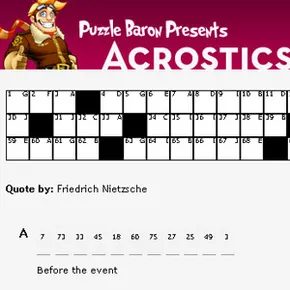
You take these letters and transfer them into a specific chart or grid. This grid is marked with alphanumeric codes such as K26 or B4. Each code corresponds to a specific letter position in your solved answers. It’s a mapping exercise. The grid itself looks like a standard crossword with black and white squares, but the mechanics are completely different.
The ultimate goal? The first letter of each word in the completed grid spells out a famous quote or saying. In some digital versions, the rule is more lenient. Every letter in the solved answers can contribute to the final phrase, not just the initials. This variation keeps you on your toes and forces you to track multiple letter positions of several letters at once.
If the description sounds abstract, don’t worry. This is the nature of the beast. The best way to understand how to solve acrostic puzzles is to just start one. You don’t have to pay for access. Many sites offer free play without lengthy registration forms or personal information. You can jump straight in.
However, a word of caution. Not all acrostics are created equal. Whether you’re playing online or flipping through a print magazine, the rules can change. Some versions are strict; others are flexible. Always read the instructions before you start one. Skipping this step is a fast track to frustration. Despite the clear rules, these puzzles are designed to be difficult. They will test your patience. But for puzzle enthusiasts, that struggle is the entire point.
In the next section, we’ll delve into the history of these dastardly word games and trace their origins. For now, you have a puzzle to crack.

These alphabet puzzles don’t start out as simple brain teasers. They have been hidden in plain sight for centuries. You find them in religious texts. Poetry. gravestones. Private letters. The term itself is a mix of languages. It has its roots in the Greek word akrostikhis.
This word is a combination of akros (edge) and stikhos (line of verse). It’s simple enough.
An acrostic is a series of lines in which certain letters (usually the first ones— reveal a hidden message when read vertically. Writers don’t always wave the flag. They don’t announce the code. This makes this technique a sneaky way to add content that only a few insiders can understand.
Consider then-California Governor Arnold Schwarzenegger’s 2003 veto letter. He was furious. The state legislature had stalled on issues he cared about. He wrote a letter expressing his displeasure.
Normal reading? A political complaint.
Acrostic reading? A completely different story.
Look at the first letter of each line. It spells out an obscene phrase. This was clearly aimed at his political opponents.
Schwarzenegger’s team denied this was intentional. They called it a mistake. But that’s hard to swallow. Mathematicians crunched the numbers. It is highly unlikely that this particular sequence occurred by chance. This was no accident. It was a message. 🤫
Not every acrostic is a political slap. There is also pure poetry. For example, consider this simple verse:
S hines brightly
U p in the sky
N ice and warm on my skin
Read down the left side. That word is sun. It’s a subtle play on words. It fits well with the theme, without shouting it.
Teachers use them in different ways. These are memory tools. A tool to help students remember facts.
Want to list the bones of the human skull? Forget boring anatomy lists. Remember the following sentence:
old Ppeople from Ffamily Texas E**S spiders
The first letter corresponds directly to the bones: occipital, parietal, frontal, temporal, ethmoid and sphenoid. This is stupid. It’s memorable. it works.
アクロスティック詩は単なる言葉遊びではありません。 これらは、読者に依存して機能するコミュニケーションの形式です。 彼らは注意に報います。 彼らは怠惰を罰します。
次のページでは、この形式がどのように進化したかを見ていきます。 他の例も見てきました。 彼らがなぜ固執するのかを私たちは理解しています。
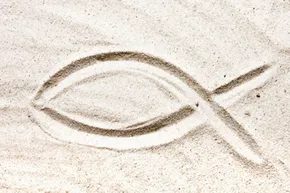
Acrostic poetry is not new. For centuries they have been kept in obscurity, but from time to time they come into the spotlight. Let’s take Greek acrostic poetry as an example. I esous Ch ristos, Th eou Y ios, S oter. Translated as Jesus Christ, God’s Son, Savior. Here’s the trick though. In Greek, “th” and “ch” are one letter. If we reduce these words to the first letter, we get ICHTHYS. This means “fish” in Greek. No wonder the fish symbol is so common in early Christian art.
These little Word Games don’t just happen quietly. They’ve drawn in the heavy hitters of history. For example, Lewis Carroll included this work in Through the Looking Glass. The last chapter has a poem about Alice Pleasance Liddell. She is known as the heroine of the movie “Alice’s Adventures in Wonderland”. Carroll was making sure her full name stayed tucked inside his story.
Edgar Allan Poe was also a fan. He didn’t just use acrostic poetry; He named one of his poems “Acrostic”. The hidden message spelled out the name of the woman he admired, “Elizabeth.” It’s not subtle, but it’s effective.
Beyond Simple First Letters
您已经知道并非所有离合诗都是谜题。 有些只是形式上的变体。 考虑双离合诗 。 在这里,每行的第一个和 最后一个字母拼写相同的单词或短语。 还有另一个版本,最后一个字母也拼写这个单词,但倒着拼写。 神秘词从最后一行的末尾开始,一直向上。
这些属于多重离合诗 的范畴。 但有些人更进一步。 看看威廉·布朗的诗《看哪,上帝啊》。 突出显示特定字母,忽略其余字母,然后出现三个不同的短语。 其中之一是经典的圣经台词:“上帝啊,我的上帝,为什么离弃我?”
这种特殊的多重离合诗进一步突破了界限。 将这些突出显示的字母堆叠在一起,形成三个十字。 它是文本诗歌,同时也是视觉神学。 布朗的信念不只是可以阅读的,更是值得阅读的。 他们被看到了。
The Rise of the Acrostic Puzzle
拼图爱好者采用这种形式并不奇怪。 这是一种伪装成文字游戏的心理锻炼。 人们享受解码隐藏信息的挑战。 现在我们已经了解了文学根源,让我们看看这些诗歌是如何变成实际的谜题的。 是什么让离合诗谜题起作用? 为什么它获得如此大的关注? 我们将在下一节中探讨这一点。
The Origin of the Acrostic Puzzle
Acrostics as a literary device are ancient. The puzzle version? That’s a modern invention. No one has a concrete name for who first decided to turn wordplay into a grid, but the format emerged in print during the mid-19th century. Queen Victoria was a known enthusiast. She wrote her own. Her involvement likely sparked the trend, historians suggest.
Elizabeth Kingsley changed the game entirely. She introduced the modern acrostic puzzle in the Saturday Review in March 1934. She called them Double Crostics. The mechanics were specific. Solvers filled a grid to reveal a famous quote. The first letters of the answers spelled out the title and author of a book or poem. It was a double layer of decryption.
The format clicked. The New York Times hired Kingsley to write them. She ran the column from May 1943 through the end of 1952. Her tenure established a standard. The Times acrostics became known for their difficulty. They sit alongside the paper’s legendary crosswords in terms of reputation.
Who Solves Them Today?
Kingsley’s legacy is narrow. Since she left, only four other creators have held the pen for the Times. The list includes Doris Wortman, Thomas Middleton, and the current duo, Emily Cox and Henry Rathvon. That’s it. A tiny pool of experts maintaining a high bar.
Fans take this seriously. The puzzles appear every two weeks. When they don’t, readers complain. The Times gets flooded with calls and comments when substitute puzzles take their place. It’s a dedicated following. Similar to Sudoku or standard crosswords, acrostics appeal to people who want to exercise their brains. But the loyalty here is intense.
Where to Play
You can still buy physical books. Publishers release collections. You’ll find them in large bookstores or through online retailers. Books work. But they aren’t the fastest route. The internet is quicker. A simple search leads to sites where you can start immediately. The New York Times website is a primary option.
Mobile access is spotty. There are no Android apps available at the moment. iOS users have choices. The Apple App Store offers both free and paid versions of Crostix. You can also print puzzles at home from various websites. Digital or paper. The choice is yours.
You probably want to try one now. But be careful. Strategy matters more than you think.
Cracking the code for acrostic puzzles
When Hangman seems too easy and crossword puzzles take up too much space, acrostic puzzles are good for mental gymnastics. They offer the same satisfaction as Wheel of Fortune, but without the studio lights. Some are gentle warm-up exercises. Others will test your will to live. But if you have a decent vocabulary and can think logically, you can beat them.
The goal is always a hidden quote. But before you start guessing, you need to understand the rules of the grid.
A line break is not a word boundary. Only black squares stop the word. If you assume that a newline ends a word, you fail. The last quote is horizontal. Never read vertically. The vertical columns are just random letters. There are no punctuation marks in the grid. No dashes. No apostrophes.
Start by looking for clues. Fill in the ones you know. When you play online, the software does the heavy lifting. It moves the letters to the chart. If you’re on paper, use a pencil. Erasers are your best friend.
Word fragments appear as you type answers. You can often guess the missing parts. If you are sure, fill in the grid. Then move these letters back to the hint area. This feedback loop will help you solve the next problem. It’s like starting a fire with wet wood. Slowly at first. Then suddenly it starts.
However, sometimes the letters don’t make sense. You see a sequence that is not a word. Stop. Check your previous answers. Maybe you chose the wrong synonym. Words with the same meaning often have the same number of letters. This is a common trap. If you are playing online, be aware that the puzzle may have a typo.
The clues range from the trivial to the impossible. When you hit a wall, Google is there. It is fine to look things up. Everyone does it.
Why your brain loves (or hates) these puzzles.
If you cheat, you lose the point. The real value of acrostic puzzles lies in the cognitive maintenance.
Some experts claim that these puzzles keep the brain sharp. They claim to improve word fluency. This is the ability to recall words quickly from memory. It activates the speech and language centers of your mind. Some researchers suspect that regular mental challenges can delay diseases like Alzheimer’s. The science is not clear.
But one thing is clear. If you skip the fight, you skip the benefit. Mental exercise comes from overcoming an obstacle. Don’t think about avoiding it.
So, enjoy the game. Celebrate victories. And if you get stuck, don’t hesitate to check the answer. Remember that you are part of a very large, very confused crowd.