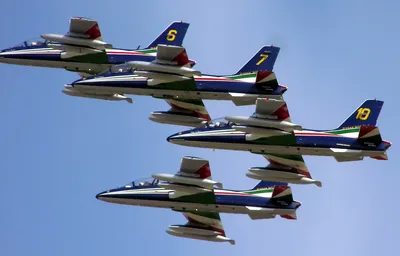
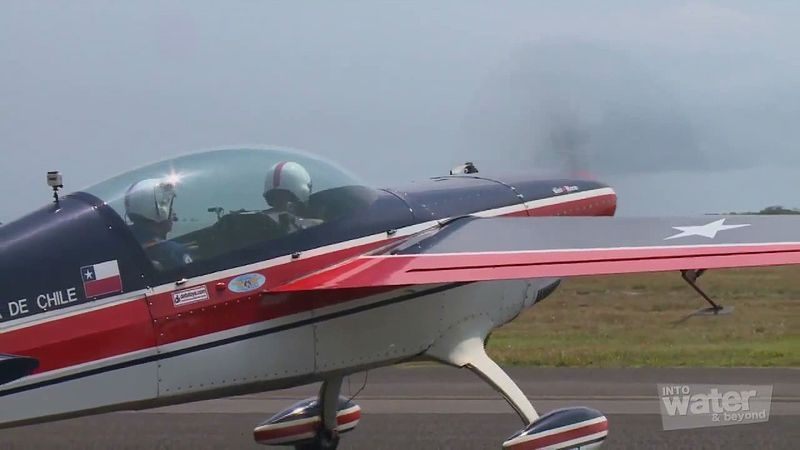
Aerobatics is the art of flying an aircraft in precise control while maintaining unusual attitudes. Think about that. It is not just flying. It is flying with the horizon as a reference but ignoring it for a moment to defy it. The term itself is a bit of a historical accident. It entered the lexicon in early 1914. The Aeroplane, a British magazine, suggested the word. At first, it meant stunt flying. Any wild maneuver counted.
Aerobatics has come to denote the precise and accurate execution of defined maneuvers of varying difficulty.
Today, the definition has shifted. It is not about chaos. It is about order. The organized sport of aerobatics changed everything. Now the term refers to the exact, accurate execution of specific maneuvers. These range from simple to impossibly difficult.
The Maneuvers That Define the Sky
You know the famous ones. Rolls are basic. Loops are iconic. Stall turns, also known as hammerheads, require stopping the plane in mid-air and pivoting. Tailslides are another classic. They demand precise control. The aircraft must be flown under strict command. The pilot decides the relationship between the axes and the reference.
The transition from stunt to sport was gradual. People still use the old definition loosely. They see a plane upside down and shout “aerobatics.” But the modern meaning is stricter. It is about precision. It is about accuracy. It is about defining the maneuver and hitting it every time.
Why does this matter? Because the difference between a stunt and a sport is intent. A stunt is for show. Aerobatics is for score. The pilot must execute the maneuver correctly. The difficulty varies. But the requirement remains the same. Control. Precision. Accuracy.
The sky is full of these moments. They happen fast. You miss them if you blink. But they are there. Defined. Executed. Perfectly.
Or close to it.
How aerobatics evolved from war tactics to Olympic spectacle
It starts with being upside down. That’s the core trick of the whole circus. Adolphe Pégoud did it first on September 1, 1913. He was flying for Louis Blériot, proving you could keep the wings level even when gravity pulled you toward the ground. A few weeks later, Petr Nesterov looped the loop. September 9, 1913. Or August 27, by the old calendar. The timeline matters less than the audacity.
Before the Great War, pilots were just messengers. They looked over trenches and took notes. Nobody expected them to pull Gs. That changed in 1915. Fighter planes finally worked. Aerial combat wasn’t a game anymore. It was a slaughter. Pilots realized that if you could fly inverted, loop, or spin, you survived. The enemy died.
There were no manuals. You learned from buddies who didn’t die, or you learned from your own near-misses. Military trainers actually frowned on this stuff. They called it reckless. But the cockpit doesn’t care about regulations. It cares about survival.
Barnstormers and early rules
The war ended. The guns went silent. But the pilots? They kept flying.
In America, barnstormers took to the sky. Rural towns got their first taste of stunt flying. Over in Europe, the best combat pilots were hired by aircraft makers. They flew public air shows to sell products. This shift from war to commerce sparked the first competitions.
Rules had to be written. Notations needed standardization. Judging criteria had to exist. You can’t award points for “looking cool.”
The first World Cup of aerobatics happened in June 1934 in Paris. Nine entries. Six countries. All European. Aerobatics also made it into the 1936 Berlin Olympics. For a brief moment, it was global sport.
The golden age of danger
World War II loomed. A new generation of pilots stepped up. Alfred Fronval and Marcel Doret in France. Ernst Udet in Germany. František Malkovský in Czechoslovakia. They were the stars. Then they were replaced by even wilder pilots.
Michel Détroyat. František Novák. Gerhard Fieseler. Otto von Hagenburg. Willi Stör. Two Romanians, Alex Papana and Prince Constantin Cantacuzino, added some flair.
Meanwhile, in the United States, Jimmy Doolittle pulled off the outside loop in 1927. Negative loop. Hard to do. Harder to show off. He later joined the air show circuit with Al Williams, Freddie Lund, Joe Mackey, Tex Rankin, and Len Povey.
The Freddie Lund Trophy became the big prize in the U.S. from 1931 to 1941. Mike Murphy won it three times. He later dominated international postwar competitions under the FAI.
The machines changed
You need the right tool for the job. Competitive aerobatics relies on piston engines. Reinforced frames. High power-to-weight ratio. The wings must generate lift upside down. The fuel and oil systems must work without gravity helping them.
The Pitts Special biplane dominated from the 1940s through the 1970s. It was popular. It was rugged.
But there’s a problem with biplanes in competition. Precision matters. Judges need to see the plane clearly. Biplanes have double wings. It’s cluttered. Monoplanes won out in the 1980s. Cleaner lines. Better visibility. Better scores.
Organized chaos
1960 marked the official beginning of global order. The International Aerobatics Commission (CIVA) was founded under the FAI. It became the governing body.
Britain’s Lockheed Trophy contests ran from 1955 to 1965. They paved the way for the first FAI World Aerobatic Championship. That happened in August 1960 in Bratislava, Czechoslovakia.
Today, CIVA runs World and Continental Championships. Unlimited level. Alternating years with Advanced level. Introduced in 1995, the Advanced category restricts power and performance. It levels the playing field.
Domestic clubs compete locally. The U.S. International Aerobatic Club holds the largest domestic contest. Fond du Lac, Wisconsin. It happens right after the EAA fly-in in Oshkosh. Participant numbers are massive.
Glider pilots have their own championships too. Specialized aerobatically rated gliders are used. No engine. Just skill and aerodynamics. The sky remains the same. The tricks just get harder.
How Modern Aerobatic Scoring Works
You watch a pilot pull a loop, a roll, and a stall turn in one breathless sequence. It looks chaotic. It isn’t. It’s math.
At the highest level, specifically under FAI international championships, you don’t just fly. You follow a script. Every figure is prescribed. Every maneuver has a value.
The pilot enters the “aerobatic box.” This isn’t a physical cage. It’s an imaginary cube of airspace measuring 1,000 metres on each side. If you fly below the minimum safety limit or outside those lines, you get penalized. Hard.
Judges watch closely. They’re looking for precision. Accuracy. Correctness.
Any deviation costs points.
The Math Behind the Maneuvers
How do judges decide who wins? It’s not just vibes.
The FAI Aerobatic Catalogue assigns point values to every single maneuver. A single vertical roll might be worth a few points. But when you link figures together, the difficulty skyrockets.
Take a complex figure. It might start with a vertical half-roll on the climb. Then a stall-turn rotation at the apex. Then another half-roll on the descent.
Here’s the trick. You don’t just guess the difficulty. You add up the K factors of each component maneuver. The result is the difficulty coefficient (K factor) for the whole sequence.
Judges give a mark from 0 to 10. Ten is perfect. Zero is a crash.
Your final score is simple multiplication:
K factor x Judge’s mark = Total points
One judge’s 9 becomes a huge number when multiplied by a high K factor. A judge’s 4 on the same figure? The score collapses.
Why Championships Take Two Weeks
Imagine 100 pilots.
Each flies three or four sequences.
Add in weather delays. Rain. Wind. The unpredictability of flying outdoors.
You need two full weeks to run a World Aerobatic Championship.
It’s efficient for fairness. It’s terrible for spectators.
By the time you see the scores, the pilot is long gone. The drama is dead.
The individual scores aren’t published until after all pilots have finished their sequence. You sit there. You wait. You wonder who won.
The Rise of Grand Prix Style Events
People got bored.
Pilots and organizers wanted more than just a spreadsheet at the end of the month. They wanted drama. They wanted speed.
Enter the international Grand Prix-style tournaments.
These aren’t for everyone. They invite a small number of top-level pilots. The stakes are higher. The pace is faster.
Judges hold up score cards as they allocate marks. You see the 9. You see the 4. You see the tension in real-time.
Fewer sequences. Shorter flights.
The whole thing wraps up in a few days.
Is this better for the sport? Maybe.
It keeps the money flowing. It keeps fans watching. But purists argue it loses the endurance test.
Competition aerobatics is changing. It has to.
If it doesn’t adapt, it fades.
We’ll see what comes next.