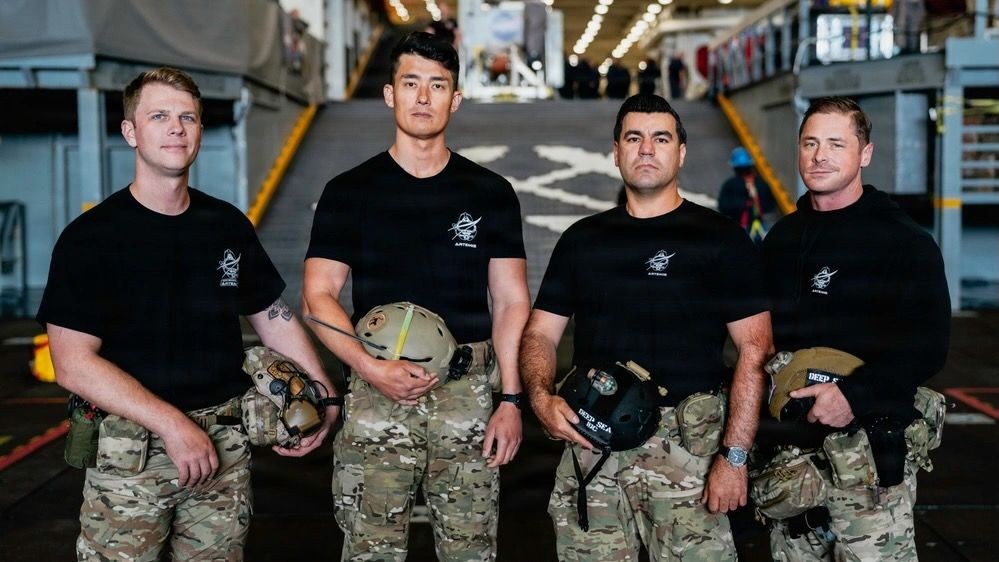
Following a historic 10-day journey around the moon, the crew of NASA’s Artemis 2 mission has officially returned to Earth. While the world watched the splashdown, a specialized four-man U.S. Navy dive medical team provided the critical first point of contact, marking a significant evolution in how humanity recovers astronauts from deep space.
A New Protocol for Deep Space Recovery
As the Orion spacecraft, aptly named “Integrity,” splashed down in the Pacific Ocean on April 10, the recovery process moved beyond traditional maritime assistance. For the first time in NASA history, a dedicated dive medical team was tasked with physically entering the Orion capsule at sea to assist a returning lunar crew.
Operating from the USS John P. Murtha, the team consisted of:
– Lt. Cmdr. Jesse Wang (Team Lead)
– Senior Chief Hospital Corpsman Laddy Aldridge
– Chief Hospital Corpsman Vlad Link
– Hospital Corpsman 1st Class Steve Kapala
This shift in protocol is vital because deep-space missions like Artemis 2 subject crews to unique physiological stresses—including prolonged microgravity and radiation exposure—that require immediate, specialized medical assessment the moment the hatch is opened.
Precision Under Pressure
The recovery was a highly choreographed operation. Once the spacecraft was stabilized with flotation collars in the open ocean, the team executed a rapid sequence of tasks:
- Entry and Assessment: Senior Chief Aldridge was the first to climb into the capsule, performing immediate health checks on astronauts Reid Wiseman, Victor Glover, Christina Koch, and Jeremy Hansen.
- Individualized Care: Each corpsman was assigned to a specific astronaut to monitor their condition following the intense stresses of reentry.
- Safe Extraction: The team guided the crew out of the capsule and onto a recovery platform, where they were subsequently hoisted by helicopters for transport to the USS John P. Murtha.
“It is surreal to play a part in safely recovering the astronauts from the capsule to get them home safe to their families,” said Steve Kapala, highlighting the high stakes of the mission.
Why This Matters for Future Missions
While Navy divers have supported NASA since the Apollo era, the Artemis 2 recovery represents a leap in complexity. The transition from Low Earth Orbit (LEO) missions to lunar missions requires a much more intensive medical interface during the “transition phase”—the period between exiting the spacecraft and returning to a stable terrestrial environment.
The success of this mission was the result of years of preparation, including extensive rehearsals using Orion mockups in open water. This level of training ensures that as NASA prepares for even more ambitious lunar and Martian endeavors, the bridge between space and Earth remains secure and medically sound.
Conclusion
The successful recovery of the Artemis 2 crew underscores the vital synergy between NASA’s space exploration goals and the U.S. Navy’s specialized medical expertise. This mission sets a new standard for the safety and medical protocols required for the next era of deep-space travel.