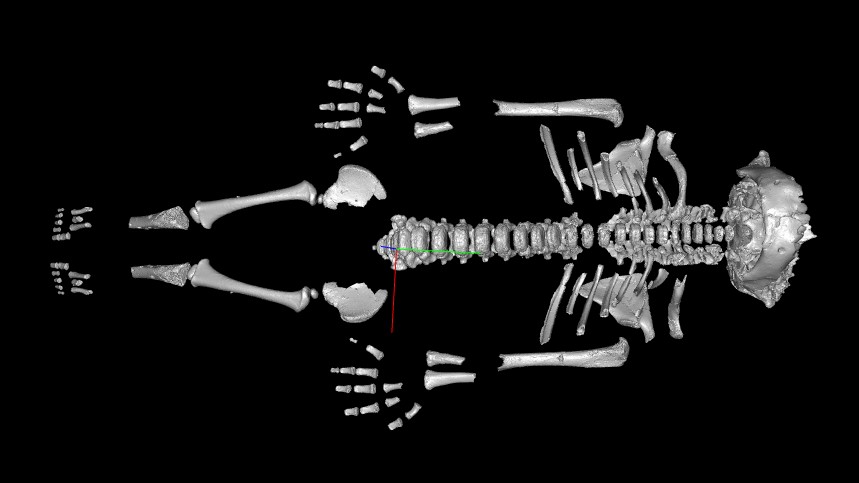
New research into ancient human biology suggests that Neanderthal children followed a significantly different developmental path than modern humans (Homo sapiens ). By analyzing a rare specimen from the Amud Cave, scientists have uncovered evidence that Neanderthal toddlers grew much faster than their modern counterparts—a biological trait that likely served as a survival mechanism against the unforties of the Ice Age.
The Amud 7 Discovery
The foundation of this study is the Amud 7 skeleton, a partial remains of a Neanderthal child discovered in northern Israel during the 1990s. Though the skeleton was recovered in over 100 fragments—including pieces of the skull, chest, arms, and legs—it provided enough anatomical data to offer a rare glimpse into Neanderthal childhood.
The discovery also offers a profound look into early human behavior. The child was found placed in a cave wall niche, covered by the jaw of a red deer, suggesting the possibility of a symbolic burial offering. Based on associated stone tools, researchers estimate these Neanderthals lived between 51,000 and 56,000 years ago.
A Discrepancy in Development
Determining the age of ancient children is a complex process. Archaeologists typically rely on two primary metrics: dental development (the eruption and growth of teeth) and skeletal growth (the size and maturity of bones).
When researchers applied these metrics to the Amud 7 specimen, they encountered a striking contradiction:
- Teeth: The development of the lower front teeth suggested the child was approximately 6 months old.
- Bones: The size and structure of the bones were more consistent with a modern human toddler aged 14 months.
This discrepancy reveals a fundamental difference in how Neanderthals developed compared to modern humans.
Different Evolutionary Strategies
The study, published in Current Biology, outlines a distinct “growth trajectory” for Neanderthals. While newborn Neanderthals were largely comparable to modern human infants in terms of bone length and tooth formation, their development diverged sharply during the toddler years (ages 1 to 6).
The Neanderthal Growth Pattern:
- Infancy: Newborns show similar scales to Homo sapiens, though Neanderthals possessed significantly larger skulls.
- Toddlerhood (The Acceleration Phase): Neanderthal bodies grew much faster than their teeth. In contrast, modern human children grow more proportionately, with teeth and bones developing in tandem.
- Later Childhood: The growth rates eventually leveled out, with Neanderthals’ development eventually mirroring the trajectory of modern humans.
“This suggests an evolutionary strategy emphasizing accelerated development in the early years of life, likely advantageous in the harsh environments Neanderthals inhabited.”
Why This Matters: Survival Through Speed
This rapid physical development was likely an evolutionary adaptation to environmental pressure. In the cold, high-risk climates inhabited by Neanderthals, a longer period of physical vulnerability could be fatal. By accelerating body growth during the first few years of life, Neanderthals may have reached physical maturity and independence more quickly, increasing their chances of surviving a demanding landscape.
While these findings provide a breakthrough in understanding our extinct cousins, researchers note that the sample size remains small. Further study of other Neanderthal juvenile remains is required to determine if this rapid growth was a universal trait of the species or a specific adaptation to certain ecological niches.
Conclusion
The accelerated growth of Neanderthal toddlers suggests a specialized biological response to life in harsh environments, marking a distinct evolutionary departure from the slower, more proportional development seen in modern humans.