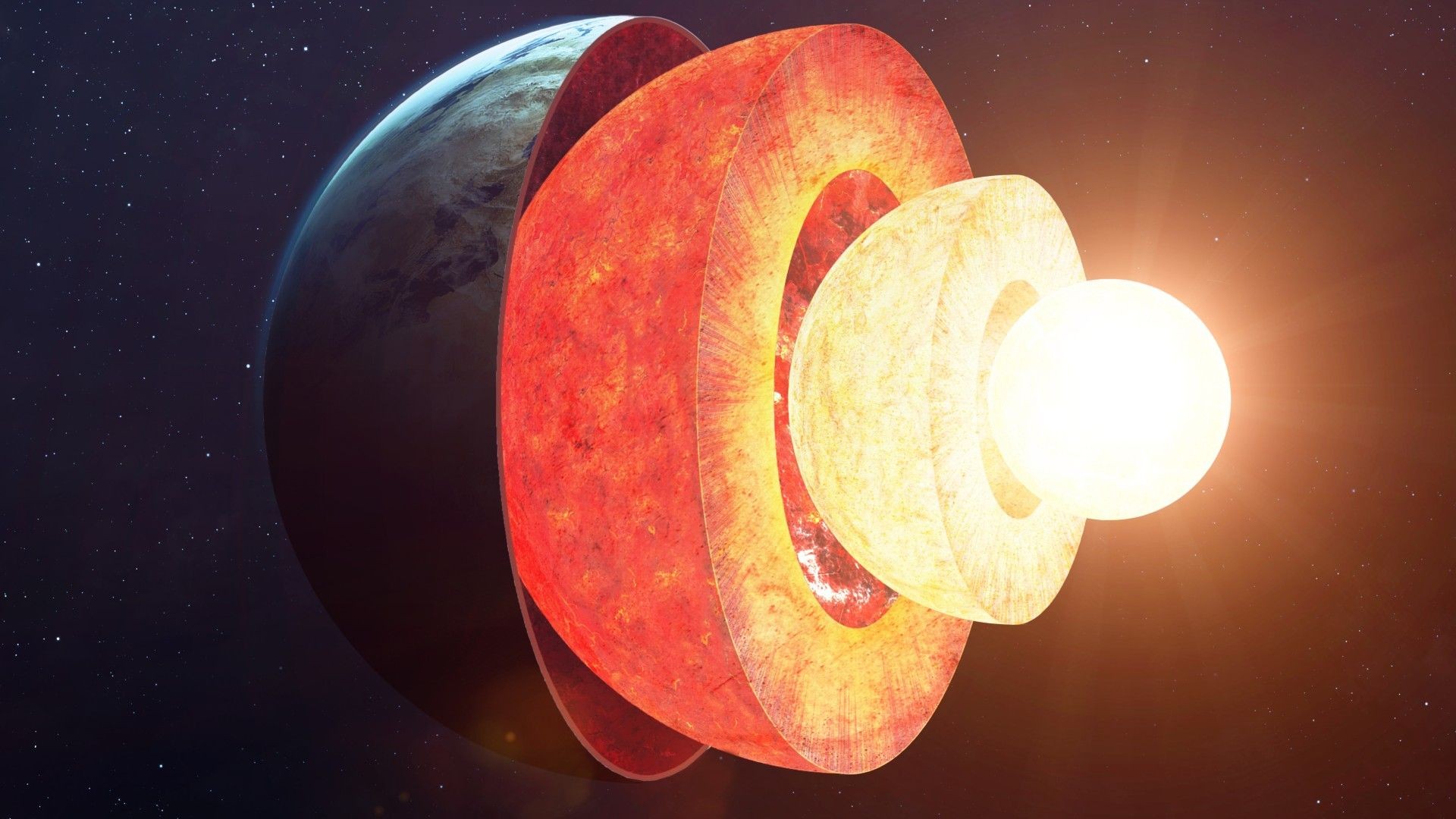
We assumed everyone lived like us.
Rocky planet means a specific recipe. Iron sinks. Rock floats on top. A thin blanket of atmosphere sits on the roof. It works for Earth.
We projected this geometry onto the entire galaxy.
It was arrogant, really. And wrong.
The new reality check arrived in a paper submitted to The Astrophysical Journal.
Most worlds aren’t like Earth. The crowd leaders are sub-Neptunes. Bigger than home. Smaller than the giant gas neighbor Neptune. Their siblings, super-Earths, probably blew off their hydrogen eons ago. The old textbooks said these places formed the same way we did. Just more gas piled on top later. Iron in the center. Silicates above it. Hydrogen capping the stack.
Here is the problem with that story.
Heat breaks it.
Above 4,000 Kelvin, chemistry gets sloppy. Or rather. It gets intimate.
Hydrogen and molten rock stop playing oil and water.
They mix. Fully miscible. One fluid.
If a planet grabs less than 1% hydrogen by mass.
Fine. It forms an iron core. Like Earth.
Add more than 1%.
Everything dissolves.
The entire interior becomes a churning, homogeneous soup of iron. Silicate. And hydrogen.
No core. No distinct mantle layers. Just a blend swirling down to the final few thousand kilometers of the center
This changes everything about how we think these things live and die.
The structure dictates the cooling rate. The grip on the atmosphere. The way the planet swells and shrinks over billions of years
Old models treated planets like layer cakes. This new framework explains two puzzles those models couldn’t solve
One puzzle is the radius gap
The Kepler Space Telescope and now JWST showed us a void in the data. Not many planets sit in that specific size range between super-Earth and sub-Neoptune
The second puzzle involves orbit
Planets with different orbital periods show radii patterns that make sense only if they are leaking
Think about it
Young sub-Neptunes trap that hydrogen inside their rocky bodies
As the planet ages it cools down. The region where things mix shrinks
What happens to that trapped hydrogen?
It bubbles out. Literally. Over hundreds of millions of years
The hydrogen exsolves from the interior and escapes into the upper envelope
There is a way to test this. Not just theory
Young planets should still be puffing themselves out with that released gas
Standard models predict they should have collapsed by now. These new ideas say they will look slightly puffy for longer than expected
We have started finding cosmic toddlers. Planets orbiting very young stars. Just tens of millions of years old.
JWST can measure that puffiness now
The science is messy though
We can’t easily replicate 4,000+ Kelvin and extreme pressure in a lab to check the chemistry directly
Our experiments are catching up. But not quite there yet
The heat budgets are guesses. Small errors there break the predictions. The method itself is statistical. We look at the crowd of known planets and work backward. Not a deterministic blueprint
But the implication is stark
The core is an exception. Not the rule.
Earth might be the strange outlier in the cosmic census
A small dense metal heart?
Maybe. But for the most common type of world?
That doesn’t exist.