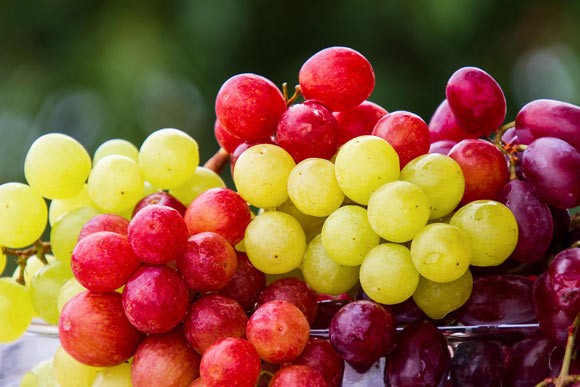
New research points to a simple truth: eating grapes actually helps your skin fight back against environmental damage. How? By rewriting how your genes work.
Led by researchers at Western New England University, the study dives deep into those hundreds of natural plant compounds found in the fruit. You probably know some of them. Quercetin. Anthocyanins. And that celebrity ingredient we keep seeing everywhere, resveratrol.
For a while now, scientists have linked regular grape eating to better heart health, less inflammation, and even sharper brains in older folks. Now, they’re adding skin health to that list.
John Pezzuto, the lead professor behind this work, puts it plainly. He considers grapes a superfood that triggers a specific response in human DNA.
“We observed this with the largest organ,” Pezzuto says. “The skin.”
And it’s not just skin deep. The gene expression changes suggest that eating grapes affects tissues throughout the body—liver, muscle, kidneys, maybe even the brain. It gives us a window into how whole foods, not just isolated nutrients, actually drive overall health.
It is an exciting time for this kind of research. We’re finally past the era of just guessing at nutrient effects. We can look at the data and see the complex patterns of nutrigenomic responses happening in real time.
The methodology was straightforward, if a bit tedious for the participants.
The Two-Week Experiment
Human volunteers ate the equivalent of three servings of grapes a day. Two weeks straight.
Before they started, and after the two weeks ended, the researchers checked the gene activity in their skin. They did this under two conditions. One with normal light exposure, one with a low dose of ultraviolet (UV) radiation to simulate sun stress.
Here’s the twist. Everyone is different.
At the start, the baseline gene expression in each person’s skin was unique. When they added grape consumption to the mix, that pattern changed. When they added UV exposure, it changed again. But each person remained distinct from every other subject.
Still, there was a clear thread connecting the changes.
When researchers looked for common functions triggered by the grapes, they found a pattern pointing to better skin keratinization and cornification. In plain English? These are processes that build a tougher barrier. Your skin gets better at shielding itself.
The data backed it up. When the skin was zapped with that low-dose UV, those who had eaten the grapes produced less malondialdehyde. That’s a chemical marker for oxidative stress. Less stress means less damage.
“Based primarily on transcriptomic data, our results support the notion that grain consumption is beneficial for skin health.”
It’s worth noting that we aren’t seeing the whole picture yet. Noncoding RNAs and epigenetic factors still need more study. The jury isn’t fully out on every single mechanism, but the direction is clear.
The paper appeared in ACS Nutrition Science, published online in May 2026.
So. Do grapes make your skin healthier? The evidence says yes. Do you have to start eating them now? Well, you didn’t before, and your genes might appreciate it.
At least until the next study tells us to stop.