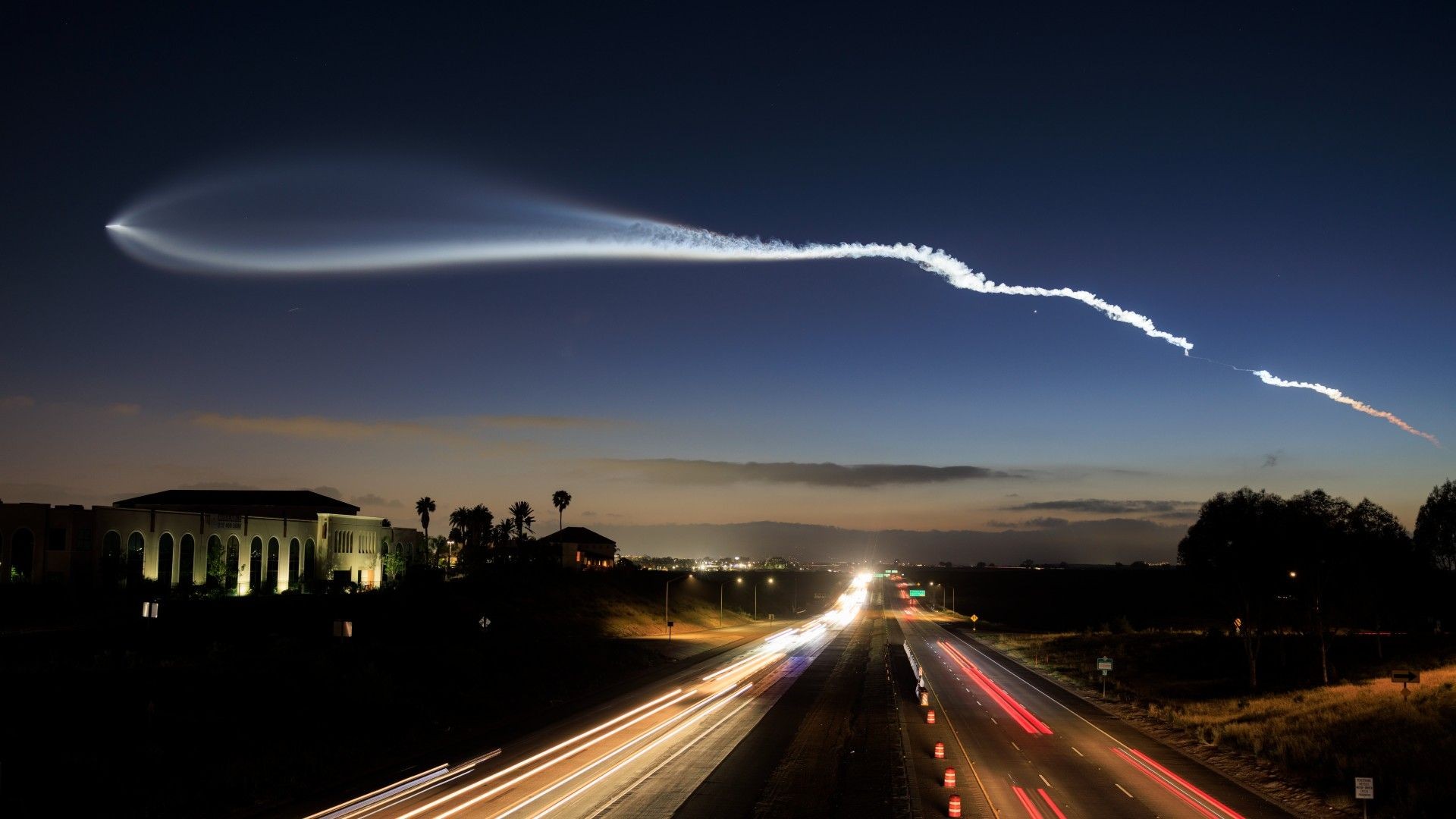
Space industry fanatics love a dream.
They picture it. Millions of satellites circling Earth. Internet for the forgotten. Data centers floating in orbit. Solar power beamed down like a sci-fi trick. It’s a shiny, aggressive vision. One they’re convinced is coming fast.
Atmospheric researchers are not smiling.
Since 2020 began the era of mega-constellations. The high-altitude air didn’t just change. It worsened. Significantly. We’re talking dangerous pollutants. Not from cars or factories. From the rockets going up. And the debris burning coming down.
The math is ugly.
Eloise Marais from University College London put it plainly. The global space sector is on track to release more climate-altering chemicals by 2030 than the entire United Kingdom currently emits. And that’s based on “conservative” estimates. If the space bosses get their way? If they actually build what they’re promising? The pollution won’t just exist. It will sit in the higher atmospheric layers. Waiting. Accumulating.
The space industry pollution is like a small scale unregulated geoengineering experiment
That quote hits hard because geoengineering usually implies control. Planning. Deliberate intervention. We’re throwing things at the sky and seeing what sticks. Or rather, seeing what breaks.
Think of Stratospheric Aerosol Injection. The fancy term for sprinkling light-reflecting dust into the second layer of our atmosphere to bounce heat away. Scientists study this. They worry about rain patterns changing. Droughts appearing. Weather going weird and wrong.
Now imagine doing it accidentally. By mistake.
Marais leads the team watching the sky bleed black carbon. Her latest study drops a number that should scare regulators: by 2029. Pollution from launching mega-constellation satellites. Think SpaceX’s Starlink. Amazon’s Kuiper. The Chinese fleets Guowang and Qianfan. They’ll account for over 40% of all space sector pollution.
Why so much?
Turnover.
Old satellites died and were buried or forgotten. These new ones are disposable tech. Limited lifespan. Replaced every five years. Faster tech needs more launches. More de-orbiting. More fire. More soot inserted into layers of atmosphere that should remain pristine.
Most of these rides use Falcon 9. Which burns kerosene.
“This produces black carbon,” Marais explained.
Bad enough on Earth. Terrible in the upper atmosphere. That black carbon stays up there for two to three years. It has 540 times the climate effect of the same particle emitted from a car exhaust pipe. 540. Think about that multiplier. A ship’s smokestack isn’t playing the same game as a rocket leaving the thermosphere.
Re-entries make it worse.
Satellites burn up. They shed aluminum oxides. Which tears holes in the ozone.
The team runs climate models. They calculate the damage. Not guesses. Math.
“The model tells us exactly how much ozone is destroyed and how much climate shifts.”
And yet.
The models use conservative numbers. Why? Because the actual growth of satellites is outpacing their expectations. The sky is getting crowded faster than the scientists can write the paper on it.
ESA says 15,000 active satellites are up there right now.
Three times more than in 2020.
Starlink is the whale here. Over 10,000 units alone.
New players are circling. Amazon. Chinese operators. Everyone wants a piece of the orbital pie. By 2030. Expect 100,000 objects. Maybe more. Decades of steep growth ahead.
Is this regulated?
No.
Marais worries about the point of no return. Not when pollution equals geoengineering intent. We are only one-hundredth of that concentration right now. One percent. But it accumulates. It stays. The chemistry doesn’t reset.
We treat the upper atmosphere like a trash can that never gets emptied.
She asks for seriousness. For rules on launches and re-entries. For funding to study the mess we are making. Because currently. We’re racing toward a limit without knowing where it is.
We can’t keep up. The space industry moves at warp speed. Science moves at the speed of data collection. And data. Right now. Is lagging.
Who’s going to tell the rockets to slow down?
There also needs to far more funding funneled in research study this we cannot keep up