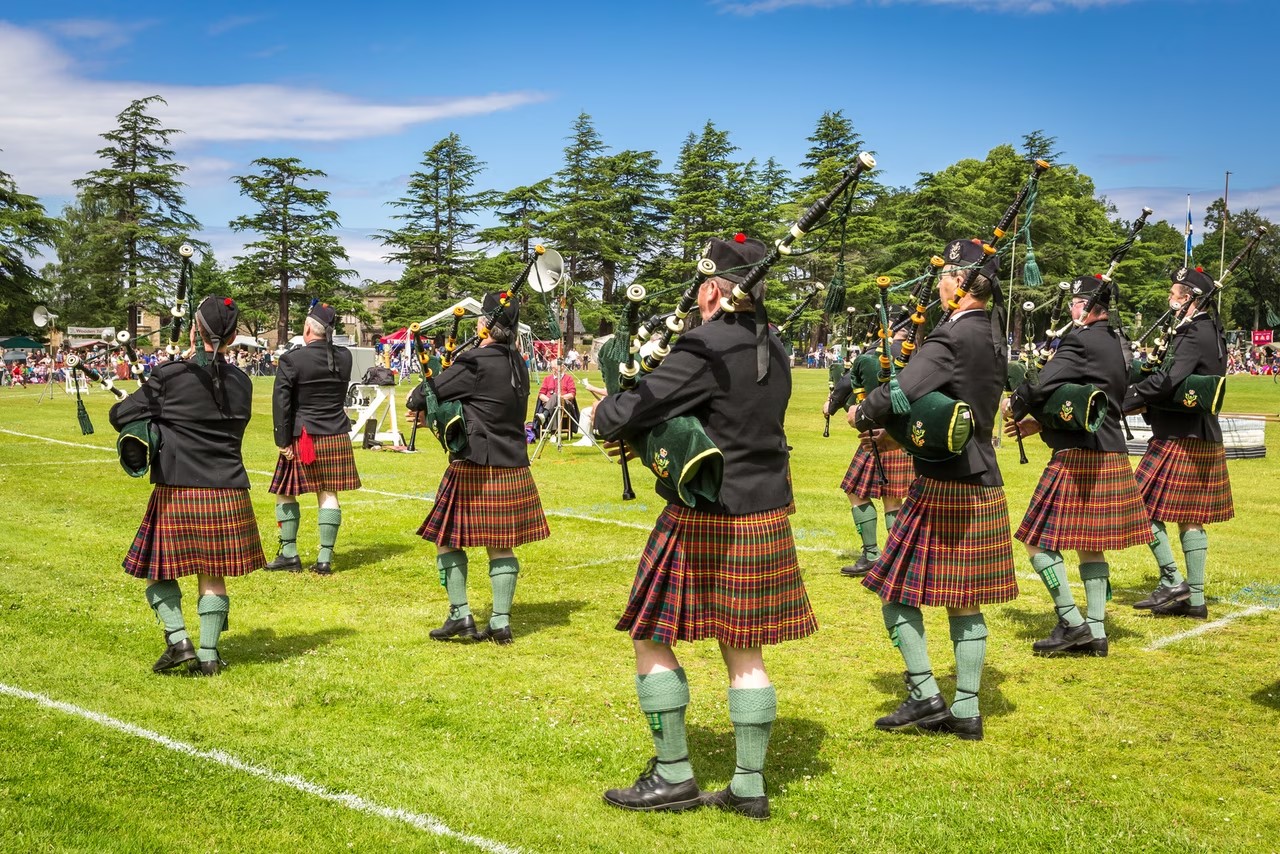
For generations, the rhythm of the Scottish summer has been set by villages in the north. These gatherings stretch from May to September, traditionally winding down under the watchful eye of the monarchy at the Royal Highland Gathering in Braemar. But look closer. The real gravitational pull isn’t in the north. It is Dunoon.
Located in western Scotland, this small town hosts the most significant Highland Games during the final weekend of August. The numbers don’t lie. Approximately 3,500 participants descend on the area. About 20,000 spectators follow. They come from everywhere. The prestige of these events has crossed oceans, with competitions now popping up in Germany, Switzerland, France, and the United States.
Beyond the Heavy Lifting
What exactly happens when thousands of people converge on a quiet coastal town?
It starts with brute strength. The games are anchored by events that test raw power. You have tug-of-war, which remains a staple. Then there is the caber toss. Throwing a massive tree trunk end-over-end has become the visual shorthand for the entire Highland Games experience. If you’ve seen an image of these games, it was likely someone struggling with a log.
But reducing the event to mere athleticism misses the point.
These gatherings are primarily celebrations of Gaelic culture and society. The air fills with traditional dance and music. The bagpipe competitions are legendary, drawing purists and enthusiasts who understand the nuance of the scale. It is a sensory overload of tartan, melody, and history.
The Quirky Reality of Tradition
There is also humor involved. A lot of it.
Consider the sheep’s fat throwing competition. Yes, you read that correctly. It sounds absurd, but it is a recognized event. It highlights the eccentric, self-deprecating spirit of Scottish tradition. The games are not just about surviving the elements or lifting heavy objects. They are about community. They are about showing up, participating in rituals that have survived centuries, and occasionally throwing innards for fun.
Why does this matter today?
In an era of digital isolation, these events are physical anchors. They connect people to land, to history, and to each other in a way that scrolling through a screen never can. The caber toss is impressive. The bagpipes are beautiful. But the real story is the gathering itself. The fact that people still travel thousands of miles to stand in a field and watch a man try to balance a log on his shoulder is a testament to something enduring.
The season ends in Braemar. The glory might be there. But the heart beats strongest in Dunoon.
The Kilt’s Enduring Role in Highland Games
The Highland Games we know today are largely a Victorian invention. While the competitions have older roots, they crystallized into their modern format during the 19th century. This transformation wasn’t just about sport. It was a deliberate cultural project led by the British aristocracy. They wanted to romanticize Scottish heritage. They wanted to package it for consumption.
Amidst this reconstructed tradition, one element remains stubbornly authentic. It is not the bagpipes, which were revived largely because royalty liked the sound. It is not the specific athletic events, many of which were standardized or invented to fit the festival format. It is the kilt.
The tartan is the visual anchor of the event. Without it, the pageantry falls apart. The kilt is not merely a costume for the games. It is the non-negotiable dress code. Participants wear it regardless of the event. Pipers, dancers, and heavy lifters all don the wool skirt. It creates a unified visual identity.
This uniformity serves a purpose. It signals membership in a specific cultural lineage. Even if the games themselves are somewhat staged, the attire grounds them in reality. You cannot separate the visual spectacle from the garment. The pleats, the buckles, the sporran—they are all required. To show up without one is to miss the point entirely.
The aristocracy of the 1800s may have engineered the festival structure. But they could not replace the symbol that already existed. The kilt survived the invention of the games. It dictates the look of them. It remains the primary identifier of Scottishness in this context.
Why does this matter now? Because the visual language persists. When you see Highland Games today, you are seeing a direct line to that 19th-century revival. The sport has changed. The rules have evolved. But the clothing has not. It acts as a constant reminder of where these events came from. It ties the modern spectator to the historical narrative.
The kilt is more than fabric. It is an assertion of identity. It forces a recognition of heritage that the games themselves try to curate. You can question the authenticity of the competitions. It is much harder to dismiss the attire. It stands firm.