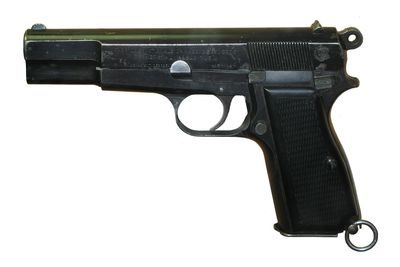
It’s a weapon you hold in one hand. That’s the defining physical trait. But the name? That’s a bit more tangled.
Some historians trace the word “pistol” back to Pistoia, Italy. This city in Tuscany was a manufacturing hub for early handguns. The connection dates to the late 15th century. If this theory holds up, the name is simply a geographic label. It’s the city that gave the gun its identity.
Others argue the term comes from the Italian word pistole, meaning a small coin. Early firearms were expensive. They cost as much as a large gold coin. The nickname stuck.
Regardless of the etymology, the design remained consistent. Small. Compact. Meant for close-range defense. The one-hand requirement dictated everything about its construction. The grip. The barrel length. The trigger pull.
It wasn’t just about convenience. It was about portability. You could hide it in a coat. You could draw it quickly. That changed how people fought. And how they defended themselves.
The pistol didn’t just change warfare. It changed daily life. For the first time, personal defense wasn’t reserved for soldiers with long muskets. It was available to civilians. A shift that still echoes today.
The Evolution of the Handgun: From Muzzle-Loaders to Semiautomatics
The story of the handgun really begins in the 1500s. Before then, guns were heavy, slow shoulder weapons. But by the 16th century, people wanted something they could carry in a pocket or hold with one hand. The result was the single-shot pistol.
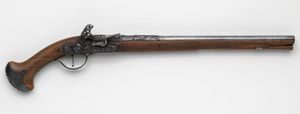
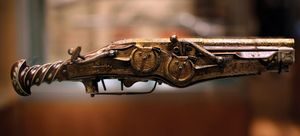
These early arms were crude. You loaded them from the front, down the barrel. Muzzle-loading. Ignition came from a flintlock or a wheel-lock. Both systems were complicated and often failed in the rain. But they worked. And they evolved alongside the musket.
Manufacturers built them in every size imaginable. There were massive “horse” pistols for cavalry charges. Then there were tiny pocket pistols. Some were so small they fit into a lady’s muff. Personal protection was the primary goal for the smaller versions. Military use drove the larger ones.
The Shift to Percussion
For three hundred years, the basic design didn’t change much. That changed in the 1830s. A new ignition system arrived: percussion.
It was simpler than flint. And it was more reliable in wet weather. This small mechanical shift had a huge consequence. It allowed for more complex designs. Suddenly, makers could experiment with repeating pistols.
Two types dominated this era. The pepperbox. Multiple barrels that rotated. The revolver. A single barrel with a revolving cylinder. Both relied on the reliability of the percussion cap to fire multiple shots without reloading after each one.
The Metallic Cartridge Revolution
The real game-changer came in the 1860s. The self-contained metallic cartridge.
Before this, you loaded powder and a ball separately. Then you rammed it down. It was slow. And messy. The metallic cartridge combined the bullet, powder, and primer into one sealed unit. This allowed breech loading. You didn’t need to crawl to the front of the gun. You could load from the back.
This convenience killed the muzzle-loader. And it cleared the path for something else. Self-loading pistols.
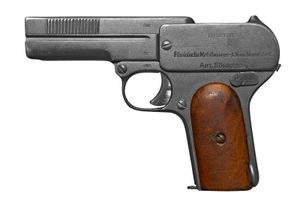
By the late 19th and early 20th centuries, the mechanism harnessed the energy of the fired cartridge. It cycled the next round automatically. Semiautomatic pistols were born.
This shift created the modern handgun industry. Companies like Colt, Mauser, Luger, Browning, Smith & Wesson, and Beretta didn’t just make better guns. They defined the architecture of personal defense for the next century. The single-shot flintlock was gone. The stage was set for the iconic shapes we recognize today.
But the race wasn’t over. Performance, accuracy, and capacity continued to climb. The materials changed. The engineering tightened. Yet the core principle remained the same. A small firearm that puts lead downrange fast.
The pepperbox and the early revolvers are museum pieces now. But they paved the way for the steel and polymer tools in holsters today. The evolution from muzzle to breech to automatic wasn’t just about speed. It was about making violence accessible. And efficient.
Which came first? The need for concealable defense or the military requirement for cavalry fire power? The history suggests they fed off each other. Pocket pistols grew as warfare got faster. And warfare got faster because the pistol improved
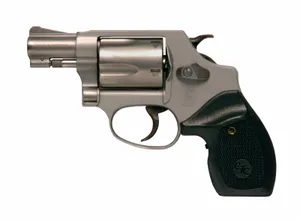
The word pistol has stretched over centuries to mean almost any handheld firearm. But arms authorities draw a line. They separate revolvers and semiautomatic pistols from the historical single-shot version. The distinction matters. It defines how the weapon works.
How Revolvers Work
Revolvers are repeating handguns. They have a multichambered cylinder behind a single barrel. When you pull the trigger, the cylinder turns. It brings each cartridge into alignment with the barrel, one by one. Simple mechanics. Reliable physics.
This design has kept revolvers alive for centuries. No complex feeding mechanism to jam. Just a spinning cylinder and a hammer.
How Semiautomatic Pistols Work
Semiautomatic pistols use recoil energy. When you fire a bullet, the kick of the shot moves the mechanism. This action strips the next cartridge from a magazine. Usually, the magazine sits in the butt of the pistol. It feeds successive cartridges into the barrel automatically.
Enthusiasts of this type predicted the end of the revolver. They thought the older design would vanish. They were wrong.
Why Both Types Persist
There is little evidence that revolvers are disappearing. Security forces around the world still use both weapons. Police departments carry them. Military units train with them.
Sport shooters and target athletes rely on both types too. The market is not shrinking for either. It is bifurcating.
The debate between revolver and semiautomatic pistol is not about which will win. It is about which fits the user’s need.
Which One Should You Choose?
The choice depends on the goal. Revolvers offer simplicity. Less to go wrong. Semiautomatics offer capacity. More rounds before reloading.
Both are valid. Both are used. The history of the pistol is not a linear march toward one design. It is a branching path.
Curiosity about these mechanisms reveals more than just gun mechanics. It shows how technology adapts. Not every innovation kills the old way. Sometimes they just sit side by side.
Why do we keep two distinct systems? Because function dictates form. And function rarely agrees.