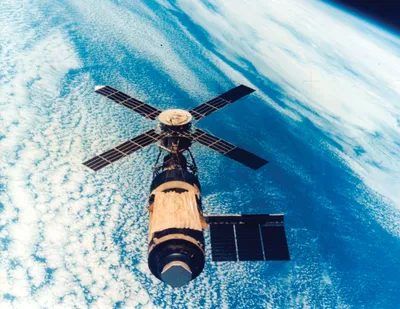
The United States didn’t just stumble into orbit. It built a laboratory there. Skylab launched on May 14, 1973. It was the first U.S. space station. Three crews visited. They didn’t just float around. They worked.
The mission had three main goals. First, they studied how the human body reacts to space. Second, they looked at the Sun. Third, they mapped Earth from above.
These weren’t casual visits. The astronauts conducted serious investigations. They measured how weightlessness affects muscles and bones. They studied solar flares with new precision. They took the first detailed photos of Earth’s resources.
Skylab proved we could stay in space longer. It showed we could do science there. Not just flag-planting. Real science.
The station orbited for six years. It burned up in 1979. But the data remained. The questions it answered opened doors. The ones it raised led to the ISS.
We still use that knowledge. Every time we send people to orbit, we carry Skylab’s lessons with us.
How Skylab Evolved from Apollo to an Orbital Laboratory
Skylab wasn’t built from scratch. It was an adaptation. A direct result of the Apollo Applications Program, launched by NASA in 1965. The goal was simple in theory: take the hardware built for moon landings and twist it into a tool for science.
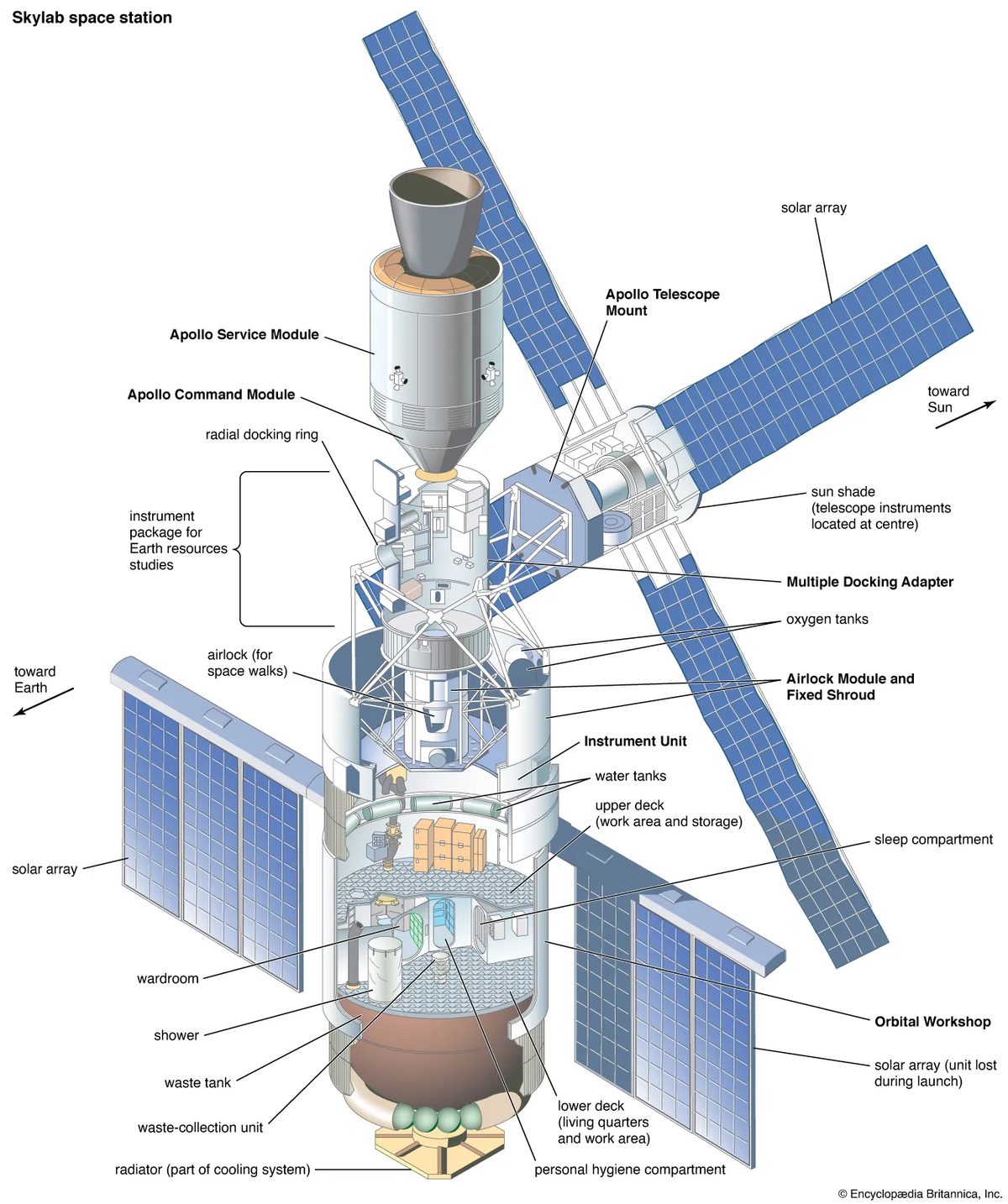
The plan was straightforward enough. Use the Saturn V rocket. Specifically, the third stage. NASA stripped it down, added two decks, and turned that empty shell into a ready-to-use orbital workshop. It became the first long-term manned platform in space.
The crews didn’t launch in Skylab itself. They arrived in Apollo command and service modules. These ships ferried the astronauts up there. They also brought small amounts of supplies. Think of it as a taxi service to a house you built in orbit.
Size, Mass, and the Limits of Consumables
The scale of the station was massive for its time. Skylab stretched 30.2 meters long. That is 99 feet. Its diameter was 6.7 meters. Or 22 feet. It weighed about 75,000 kilograms. 165,000 pounds.
It was big. And it was roomy. But it had a fatal flaw common to first-generation space stations: it ran out of things. Consumables. Water. Air. Power. It shared this limitation with the Soviet Union’s early Salyut stations.
Yet Skylab offered more. More room. More research capability. The extra space allowed for experiments that cramped quarters would have crushed.
The Solar Eye in Space
The heart of the operation was the Apollo Telescope Mount. It wasn’t just one lens. It was a suite of component telescopes. A cluster of devices designed to watch the Sun.
Why the Sun? Because Earth’s atmosphere blocks much of the electromagnetic spectrum. From space, you can see it all. Visible light. X-rays. Broad ranges of radiation that ground-based telescopes simply cannot access.
“Skylab made use of a Saturn V Moon rocket, whose third stage was outfitted with two decks as a habitat and ready-to-use orbital workshop.”
This setup allowed scientists to study solar flares, coronal mass ejections, and the sun’s magnetic field in ways that had never been done before. The data collected here reshaped our understanding of solar physics. It wasn’t just about looking. It was about measuring the stars’ heartbeat.
The station stood for years. Watching. Recording. Waiting for the next crew.
The improvised fix that kept Skylab alive
The launch didn’t go exactly to plan. During ascent, a stray thermal meteoroid shield tore away, taking one of the side-mounted solar panels with it. The other panel jammed open, failing to deploy fully. Power levels were critical. Without a fix, the station would cook itself.
The first three-man crew arrived to a crisis. They deployed an improvised sunshade, essentially a massive parasol, to block solar radiation and cool the interior. Later, they reinforced it with an additional sun shield. While they were at it, they managed to free the jammed solar array, squeezing out every bit of electricity the station could generate.
This 28-day mission wasn’t just about survival. It set a new endurance record for humans in space. But the real story is how they pulled off the repair with limited resources and extreme heat.
Longer stays, higher records
Skylab didn’t stop at one crew. Two more three-man teams followed.
The second mission lasted 59 days. The final crew stayed for an astonishing 84 days. Each mission broke the previous endurance record, proving that humans could live and work in orbit for months at a time. These weren’t just trips; they were tests of human resilience and engineering adaptability.
“Each of the three Skylab missions set a new space endurance record.”
Why Skylab fell back to Earth
Plans called for Skylab to be boosted to a higher orbit by one of the first Space Shuttle missions. The idea was simple: extend its life. But solar activity increased faster than predicted. This heightened activity heated the upper atmosphere, creating more drag. The orbit degraded rapidly.
On July 11, 1979, Skylab could not be saved. It re-entered the atmosphere. The station broke apart, scattering debris across the southeastern Indian Ocean and Western Australia. It was a dramatic, public end to America’s first space station.
The chronology of these flights shows the progression from emergency response to sustained habitation, culminating in a fiery return.
| mission | crew | dates | notes |
|---|---|---|---|

It wasn’t just a lab. It was a statement.
When the United States launched Skylab into orbit on May 14, 1973, it wasn’t just stacking hardware on a rocket. It was proving that humans could live up there. For years, we’d been flying in and out. Short hops. Apollo missions were glorious, but they were brief. Skylab changed the game. It stayed.
The station itself was a bit of a disaster at launch. The micrometeoroid shield ripped off, taking one of the two solar arrays with it. Temperatures inside soared. But the ground crews fixed it. They patched it up. And when the first crew arrived, they found a working habitat.
Breaking the Endurance Barrier
The crew of Skylab 2 didn’t just visit. They stayed.
Charles Conrad, Joseph Kerwin, and Paul Weitz launched on May 25, 1973. They weren’t tourists. They were workers. And they pushed the limits of human endurance in a way no one had before.
Twenty-eight days. One hour.
That was the new record. Before this, the longest time spent in space by a human crew was measured in days, not weeks. The Apollo missions had capped out around ten or eleven days. Skylab 2 nearly tripled that. It proved that astronauts weren’t just fragile visitors to space. They were resilient workers.
Why does this matter now? Because we are doing it again.
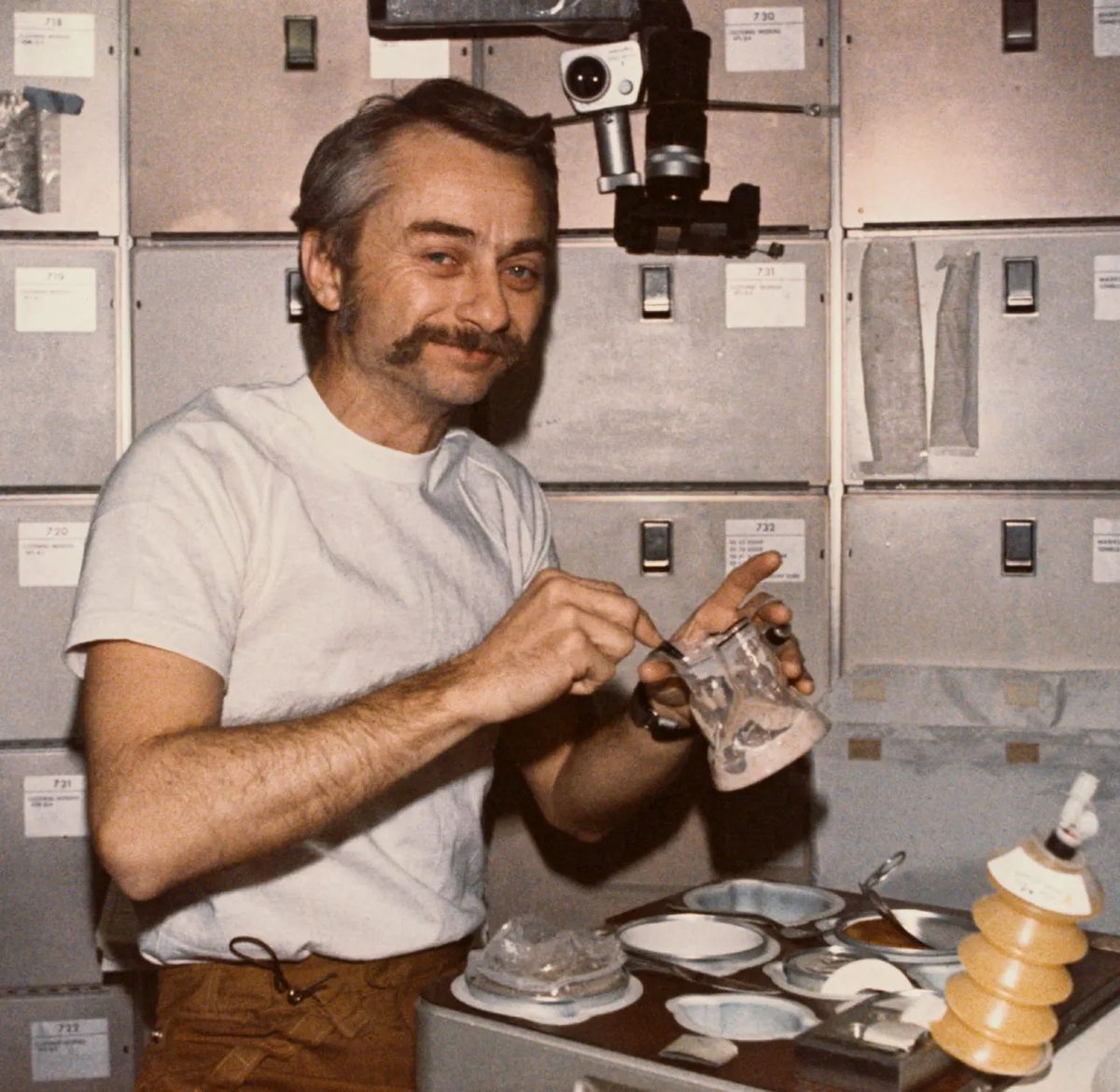
Today, the International Space Station (ISS) is a permanent fixture. But Skylab was the prototype for the long-duration mission. It taught us how to manage waste. How to exercise to keep bones from weakening. How to eat when you’re not in a rush. How to repair a station in zero gravity.
The data collected by Conrad, Kerwin, and Weitz didn’t disappear. It informed every mission that followed. It showed us that the human body could adapt, but it also showed us how much it struggled. The microgravity environment took a toll. Muscle atrophy. Fluid shifts. Vision changes. These weren’t theoretical problems anymore. They were daily realities.
The Science of Staying
Skylab wasn’t just about living. It was about doing science.
The crew conducted over 300 experiments. They studied the sun. They observed Earth. They tested medical procedures.
One of the most significant findings came from the biomedical experiments. Kerwin, a physician, led the charge in understanding how the body reacts to long-term spaceflight. The results were clear. Without exercise, the body decays. Fast.
This isn’t just history. It’s the blueprint for Mars.
If we want to send humans to Mars, we need to solve the problems Skylab encountered. How do you keep astronauts healthy for a three-year trip? How do you keep them sane? Skylab provided the first real-world data. It wasn’t perfect. The station had issues. The crew had to improvise. But they survived. They thrived, even.
The legacy of Skylab 2 isn’t just the 28-day record. It’s the proof of concept. Humans can live in space for extended periods. We can work. We can think. We can contribute.
It wasn’t the end.

Setting the Stage for the Long Haul
The pressure in space isn’t just about staying alive. It’s about staying sane when you’re trapped in a tin can for months. Skylab 3 pushed the boundaries of human endurance, but it was Skylab 4 that proved we could handle the real test. The crew of Alan Bean, Owen Garriott, and Jack Lousma set a new space endurance record of 59 days and 11 hours. That’s a long time to live with only three other people.
Then came the main event.
The Ultimate Test of Patience
Skylab 4 didn’t just break records. It shattered them. Gerald Carr, Edward Gibson, and William Pogue launched on November 16, 1973. They didn’t come back until February 8, 1974. That’s 84 days and one hour.
Think about that duration.
Most people can’t wait 84 hours for a delayed flight without losing their minds. This crew had to live inside their entire world for nearly three months.
The new space endurance record of 84 days 1 hour wasn’t just a number. It was a psychological marathon.
Why Duration Matters More Than You Think
You might wonder why scientists cared so much about how long astronauts could stay up there. The answer lies in biology. And bureaucracy.
The original Skylab plans were cut short. Solar flares had damaged the station early on. Repairs were rushed. The third mission was supposed to be a quick fix. It wasn’t.
The crew found the station in disarray. Sunshades were torn. Instruments were broken. They had to improvise. They fixed things. They worked harder. And because they worked so efficiently, NASA decided to keep them longer.
This shift from a short visit to a long-term occupation changed everything. It proved that humans could adapt to severe constraints. It showed we could perform complex tasks under extreme fatigue.
The Human Element
Alan Bean and Owen Garriott had already done this. They knew the drill. Jack Lousma was the commander, but the dynamic was different on Skylab 4. The crew had to manage their own time. NASA didn’t micromanage them from the ground in real-time. They gave them a checklist and left them to figure out the rest.
Gerald Carr, Edward Gibson, and William Pogue had to balance scientific observation with station maintenance. They didn’t just float around. They dug. They swept. They repaired. They observed the sun. They mapped the earth.
The physical toll was real. Muscle atrophy. Bone density loss. But the mental toll was worse. Isolation. Routine. The same walls. The same food. The same sounds.
What We Learned
The 84-day mission taught us that spaceflight isn’t just about technology. It’s about psychology. It’s about how you structure your day when you have no sunrises or sunsets to guide you.
Skylab 4 showed that humans are resilient. But it also showed how fragile our routine really is. We need structure. We need purpose. Without it, the mind wanders. And when the mind wanders, mistakes happen.
The record stands. But the real legacy isn’t the number of days. It’s the